 Gretchen Stuppy Carlson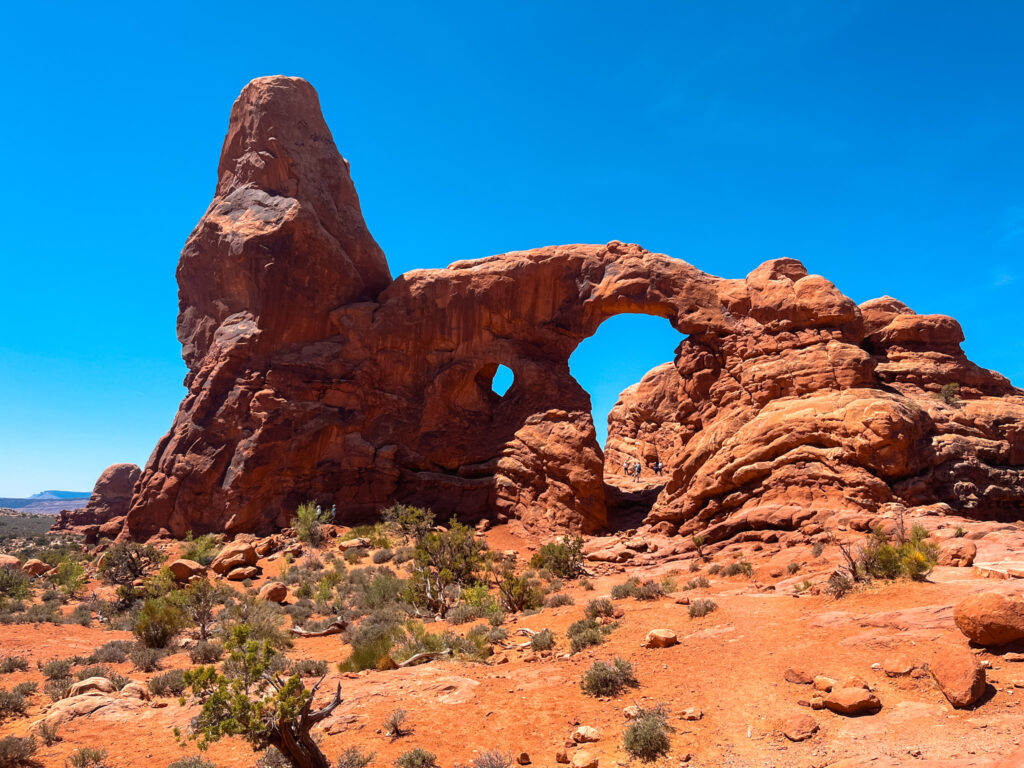
One of the most common mistakes visitors make when the visit Arches National Park is packing for the wrong version of the desert. People picture endless heat and blue skies, and while that’s absolutely true in July, it tells only part of the story.
Arches sits at 4,000–5,000 feet elevation in the high desert of southeastern Utah, which means the weather can be dramatically different depending on when you visit. In this Arches packing guide, the focus in on how to pack smart for your season and you’ll be comfortable, safe, and free to focus on the incredible landscape around you.
We’ve visited in several seasons and while each season has it’s highlights, the best way for making the most of the park is packing the right gear.
Looking for more to plan your Arches National Park Adventure? See all our Arches Guides or check out my guides to all our National Parks.
You can also get a copy of the Arches Planning Guide over on my newsletter or check out my Arches Dining guide.
Our National Parks are full of epic hikes, sweeping vistas, and amazing ecosystems.  If you like our parks, you'll love our National Parks Journal Newsletter or you can explore exactly how we plan a National Parks Trip.

Want downloadable itinerary, video guides and more?  Join the Club.
Links below may be affiliate links.
Arches Packing List
Here is a general packing list, but it’s important to pack based on the season. Scroll down for details for packing for each season. You can shop for specific gear in my favroite Day Hiking gear list.
Clothing: by layer
- Moisture-wicking base layer top (short or long sleeve depending on season)
- Moisture-wicking underwear & socks (wool or synthetic — no cotton)
- Hiking pants or shorts (convertible zip-off pants are great for spring/fall)
- Light fleece or midlayer jacket
- Packable down jacket (fall/winter/early spring mornings)
- Windproof/waterproof shell jacket (spring especially)
- Wide-brimmed sun hat (summer/spring non-negotiable)
- Warm beanie (winter/early spring starts)
- Gloves (winter)
- UV-protective sun hoodie (a summer game-changer on exposed trails)
- Gaiters (already listed under park-specific — move it here)
- Buff/neck gaiter (versatile — sun protection in summer, warmth in winter)
A few other gaps worth filling beyond clothing:
- Daypack — it’s in the affiliate links but not the actual list
- Trekking poles — listed twice (essentials + affiliate links) but never explained when to use them (Devils Garden primitive trail, Delicate Arch slickrock)
- Blister kit — surprisingly important given the sandy, gritty terrain
- Lip balm with SPF — the dry desert air wrecks lips fast, worth a specific callout
- Emergency whistle — lightweight and worth including for families especially
- Portable phone charger/power bank — people use GPS and cameras heavily
- Cash — no ATMs in the park, Moab options are limited
What NOT to Pack
- ❌ Cotton clothing (holdssweat, gets cold, chafes)
- ❌ Flip flops or fashion sneakers (the slickrock will end your day)
- ❌ Glass bottles (not banned but impractical on rocky trails)
- ❌ Drones (prohibited in all national parks)
- ❌ Pets on most trails (dogs are not allowed on Delicate Arch, Devils Garden primitive loop, or most Arches trails)
See my specific Suggestions on Clothing and Gear.
Spring Arches Packing Guide: March through May
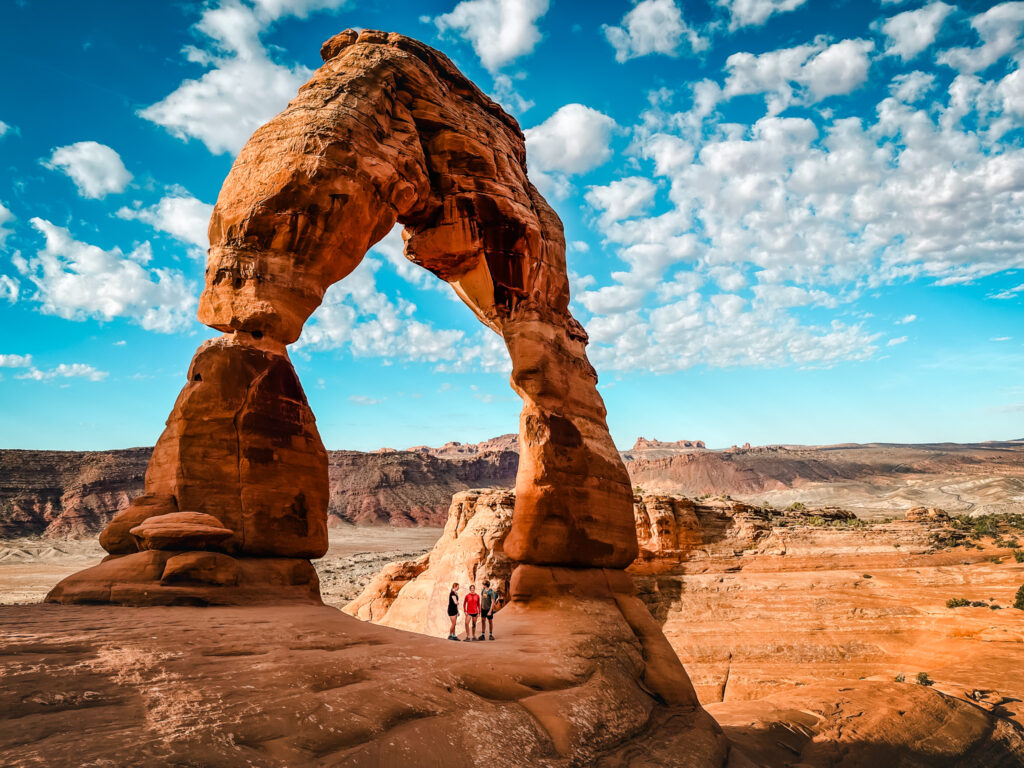
Spring is one of the best times to visit Arches and one of the trickiest to pack for. Daytime temperatures are generally pleasant, think 60s and 70s°F, but mornings can be genuinely cold, sometimes below freezing in early March. Afternoons warm up quickly, and by May you’ll start to feel the first real heat of the season on exposed slickrock trails like Delicate Arch.
Spring also brings the highest chance of afternoon thunderstorms, which can roll in fast and turn dry washes into flash flood zones with very little warning. Wind is another factor: strong gusts are common across the open canyon country and can make it feel much colder than the thermometer suggests.
What this means for your pack: Layer, layer, layer. A moisture-wicking base layer, a light fleece or down jacket for morning starts, and a packable rain shell should all be in your bag. Sturdy hiking shoes with grip are important as trails can be wet and slippery from overnight rain. Bring sun protection even on cloudy days, the UV intensity at elevation is no joke, and spring clouds give a false sense of security.
Want the complete Arches plan in one place? The Arches National Park Itinerary Bundle includes a 25-page guidebook, 1-day, 2-day, and half-day itineraries, 4 planning videos, and bonus guides for where to stay, eat, and what to pack. Every decision is already made — you just show up and experience it.

Learn more about the Itinerary.
Summer Arches Packing Guide: June through August
Summer at Arches is intense. Temperatures regularly exceed 100°F on the exposed red rock, and the slickrock surface itself can reach temperatures that are dangerous to sit or fall on. The National Park Service has actually closed certain trails during peak heat hours in recent summers, and heat-related rescues in the park are unfortunately common.
That said, summer is also the most visited season, and with the right preparation, it’s still a wonderful time to experience the park. The key is completely restructuring your day around the heat. Plan to be on trail by 6–7 AM and off exposed trails by 11 AM. Use the midday hours for driving the scenic road, visiting cooler spots like Sand Dune Arch, or retreating to Moab for lunch and a rest. Return to the park in the late afternoon when temps begin to drop and the light turns golden.
What this means for your pack: Hydration is your number one priority, bring a minimum of 3 liters of water per person per day, and consider a hydration pack so you’re drinking constantly without having to stop and dig through your bag. A wide-brimmed hat, UV-protective sunglasses, and SPF 50+ sunscreen are non-negotiable. Lightweight, light-colored, moisture-wicking clothing will make a real difference in how you feel on trail. Pack electrolyte tablets or a sports drink mix: sweating heavily in dry desert air means you can become seriously dehydrated without feeling thirsty.
Fall Arches Packing Guide: September through November
Fall is arguably the single best time to visit Arches, and your packing situation is much more forgiving than summer. September can still be warm, upper 80s°F, but it cools noticeably as the month progresses. By October and November you’re looking at near-perfect hiking weather: warm sunny afternoons in the 60s and cool crisp mornings. The crowds thin significantly after Labor Day, timed entry requirements ease up, and the light takes on a gorgeous warm quality that photographers dream about.
The main thing to watch for in fall is the temperature swing between day and night. A beautiful 70°F afternoon can drop to the low 30s°F after sunset, especially in October and November. If you’re camping or planning an early morning hike, this will catch you off guard if you’re not prepared. We spent a VERY cold night in Arches National Park in the fall.
What this means for your pack: Fall (similar to spring) is the most versatile season: you’ll want layers that you can add and shed throughout the day. A light down jacket or fleece is essential for mornings and evenings. Comfortable, broken-in hiking shoes are perfect for the dry, stable trail conditions. Sun protection is still important even as temps cool. This is the season where you can afford to lighten your pack slightly compared to summer, but don’t leave the water at home: you still need at least 2 liters per person on any moderate hike (bring this with you as water is limited within the park.
Winter Arches Packing Guide: December through February
Winter at Arches is a hidden gem that not enough people take advantage of. The crowds virtually disappear, and the sight of snow-dusted red arches under a deep blue sky is honestly one of the most beautiful things you can see in any national park. Temperatures during the day are manageable, typically 30s to 50s°F, and most of the main trails remain hikeable, though icy patches are common in the morning.
The biggest challenge in winter is the cold, particularly on early morning hikes and after the sun drops below the canyon walls in the afternoon. Wind chill can make it feel significantly colder than the air temperature, and wet or icy conditions on slickrock can make certain sections of trail genuinely treacherous without the right gear.
What this means for your pack: Warm layers are your priority. A good base layer, insulating mid-layer, and a windproof outer shell will cover most conditions. Microspikes for your hiking shoes are highly recommended: they’re lightweight, pack flat, and could save you from a nasty fall on icy slickrock. Hand warmers are a great addition for early starts. Gaiters help if there’s snow on the trail. The good news is that hydration needs are lower in winter, but don’t skip the water entirely: cold, dry air is still dehydrating, and you may not notice yourself getting thirsty.
One Thing That Never Changes: Regardless of Season
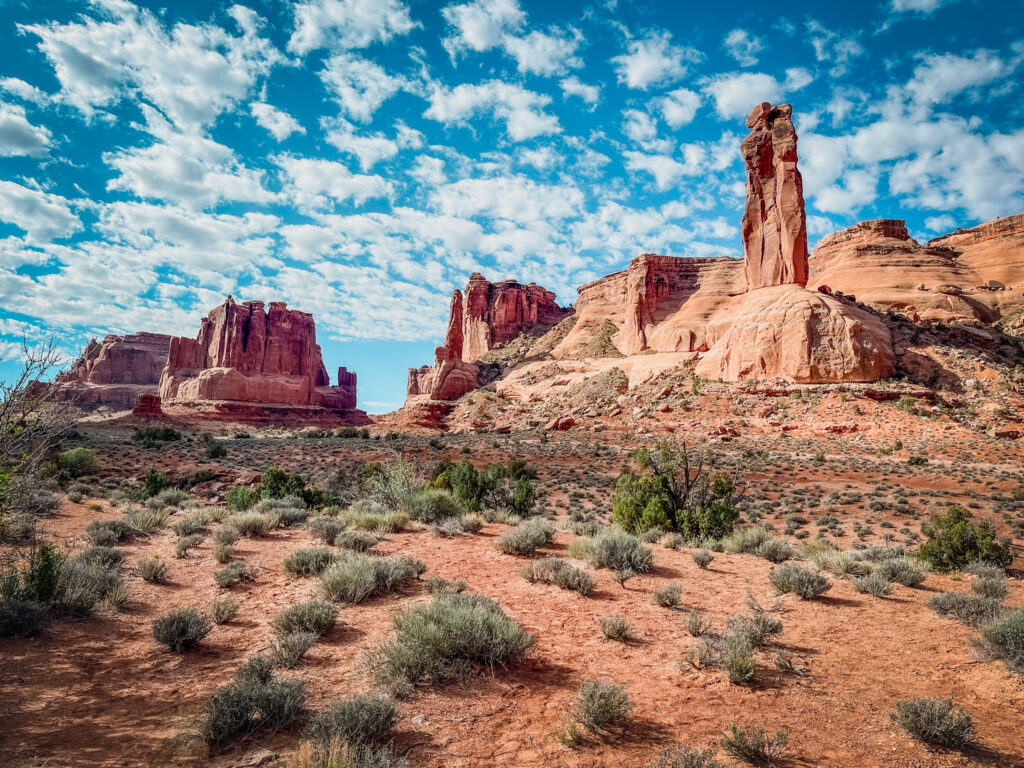
No matter when you visit, there are a few things every single visitor to Arches should always have: water (always more than you think you need), sun protection, a paper or offline map (cell service is essentially nonexistent in the park), and sturdy closed-toe shoes. The terrain at Arches is uneven, rocky, and in places quite exposed — flip flops and fashion sneakers have ended more than a few trips early.
Pack for the season, respect the desert, and Arches will reward you with an experience you’ll be talking about for years.