 Gretchen Stuppy Carlson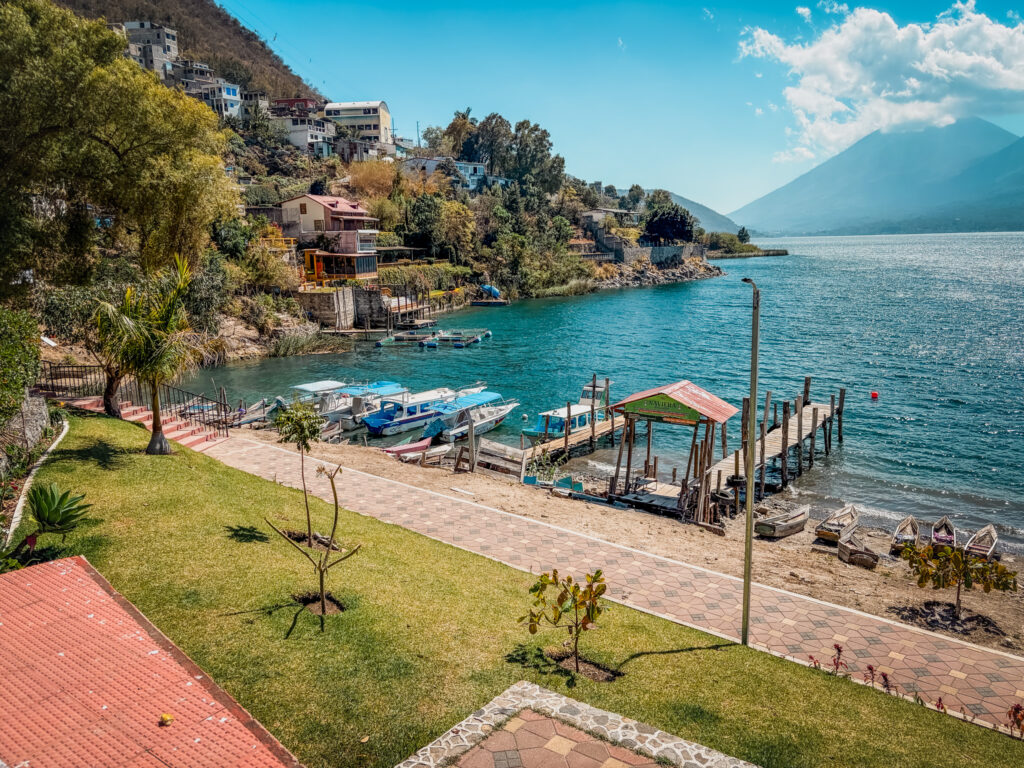
San Antonio Palopó is not on everyone’s list of towns to visit in Lake Atitlan, BUT it offers a more authentic experience and is an easy place to get to from Panajachel. There are no splashy murals greeting you at the dock, no bustling restaurant rows, no crowds of day-trippers filling the lanes. What there is, quietly and persistently, is something rarer on Lake Atitlán: a village where you can genuinely feel like the only outsider in town. Tucked just a few minutes south of Santa Catarina Palopó along the eastern shore, San Antonio sits at the end of the paved road, and in many ways, at the beginning of a different pace entirely.
We visited Santa Antinio Palopo after stopping at Santa Catarina and enjoyed lunch, a walk around town, and a tour of a ceramics studio. The town is hilly and there is a waterfront restoration project going on so the town is poised to grow over the next few years.
It is one of the most authentically inhabited villages on the lake, and that’s precisely the point.
Want more guides to Guatemala or other parts of Central America? Check out our most recent Guatemala itinerary or see my guide to the other towns of Lake Atitlan.
How to Get to San Antonio Palopó
San Antonio is easy enough to reach, though it requires a little more intention than its neighbor Santa Catarina.
By tuk-tuk from Panajachel: The full ride takes about 25–30 minutes along the paved eastern shore road and costs around Q25–35. You can flag down a tuk-tuk on Panajachel’s Calle Santander or arrange one through your hotel. Many people combine this with a stop in Santa Catarina on the way. You can also take a ride in a fletes or simply pickup truck with benches in the back.

By tuk-tuk from Santa Catarina Palopó: If you’re already in Santa Catarina, the ride to San Antonio takes only about 10 minutes and costs next to nothing Q10 or less. This is the most natural way to combine the two villages in a single day.
By boat from Panajachel: Public lanchas (water taxis) serve San Antonio, though the boat stop is less central than in some other villages. The ride takes around 20 minutes and costs approximately Q30 each way. Check departure times at the main Panajachel dock; boats typically start running from 6:30am.
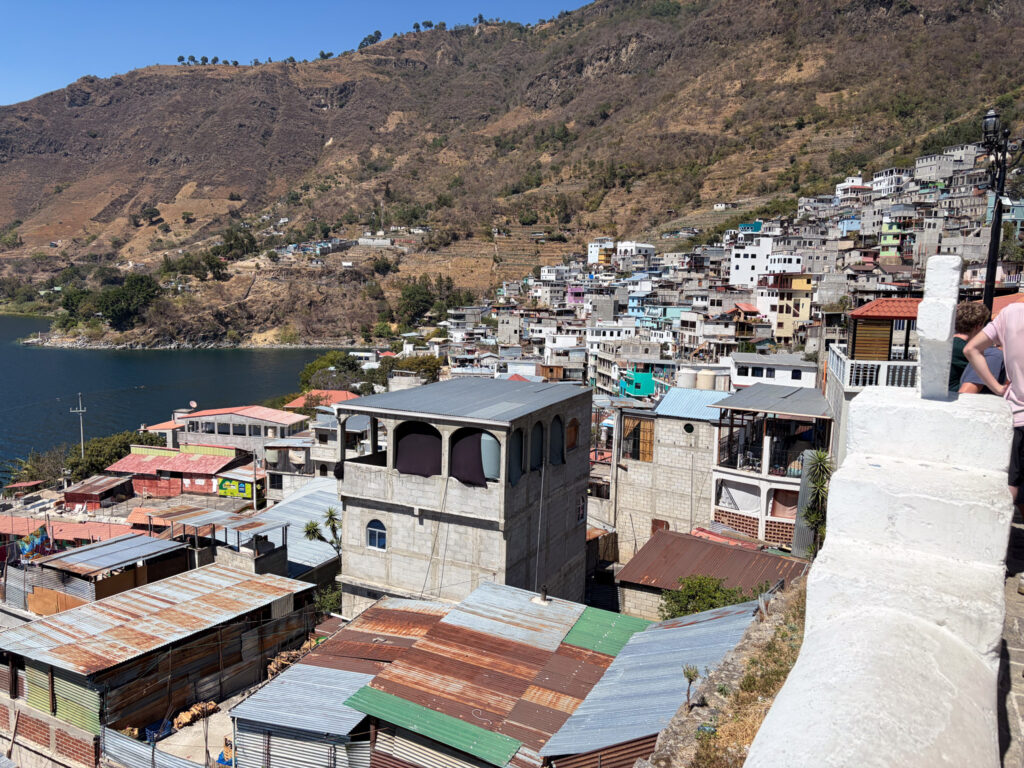
Once you’re in the village you can walk the the lakeside lower road (under construction), where the ceramic workshops are clustered, and the steeper upper streets, where the market, church, and residential lanes wind uphill with increasingly good views.
What we did in San Antonio Palopó
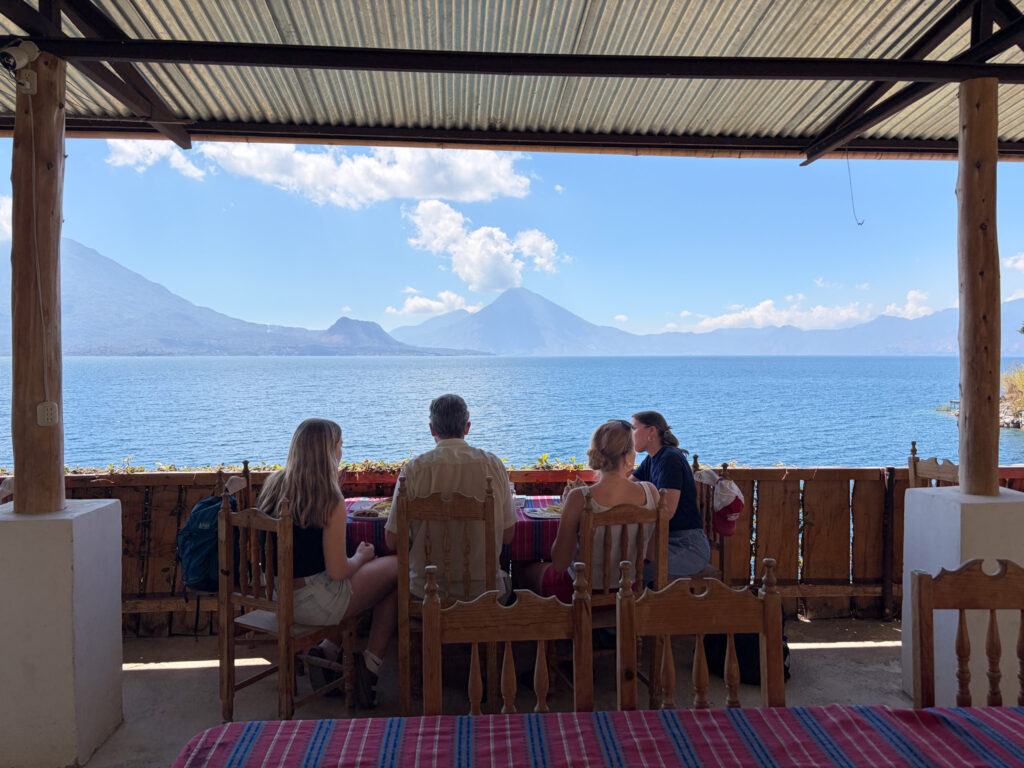
We arrived in the town just before lunch after visiting Santa Catarina for the morning. Our collectivo dropped us off right at Paulina’s restaurant and we stopped in for a leisurly lunch. The view from here is worth the meal!
After lunch, we wandered into town starting with the upper road. This makes a nice walking loop. The road climbs a bit to the church for some good views and then descends steeply to the water. The entire waterfront was under construction during our visit and is already offering a beautiful walkways. As we walked along the waterfront, a man called asking if we were looking for a pottery studio.
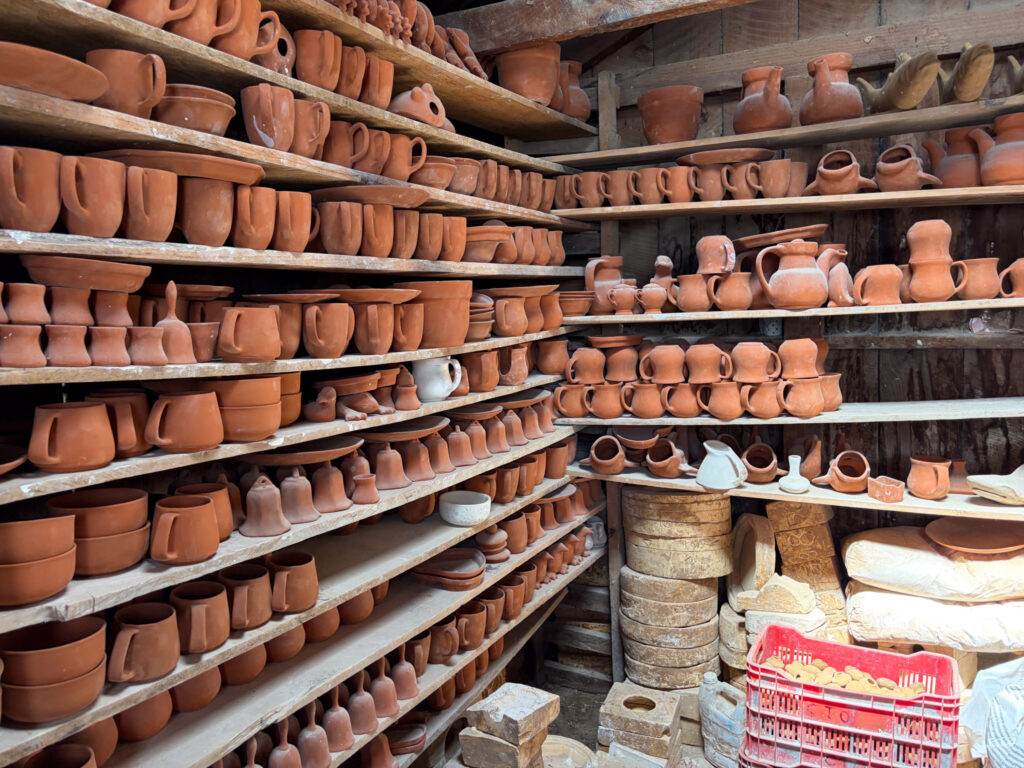
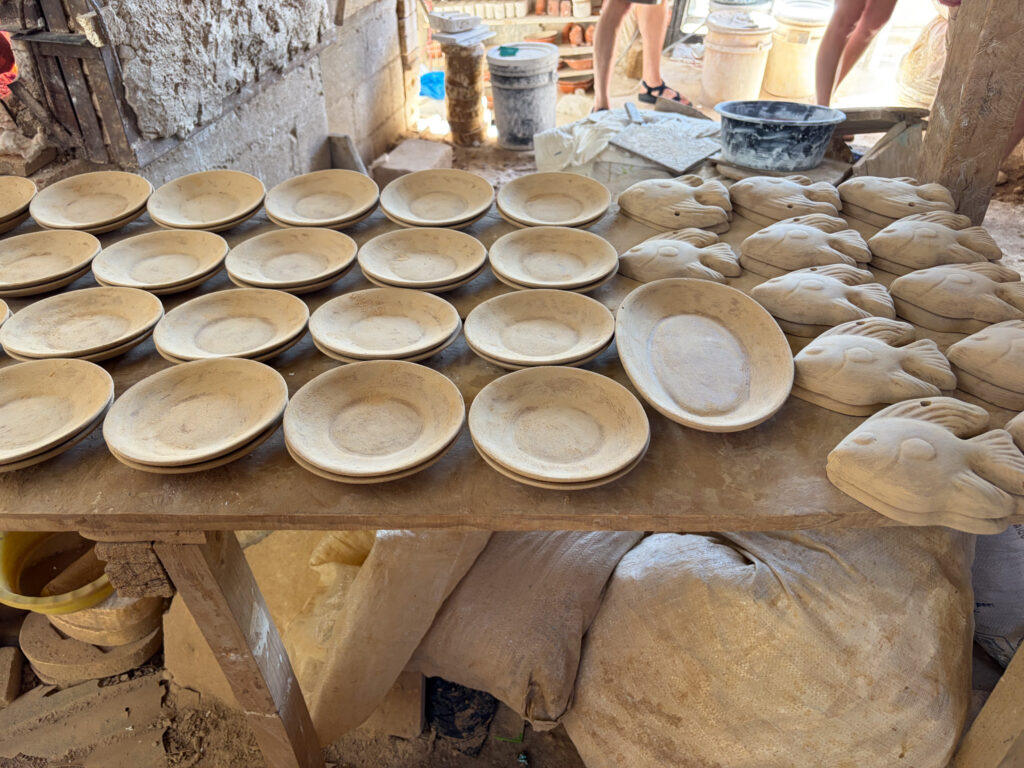
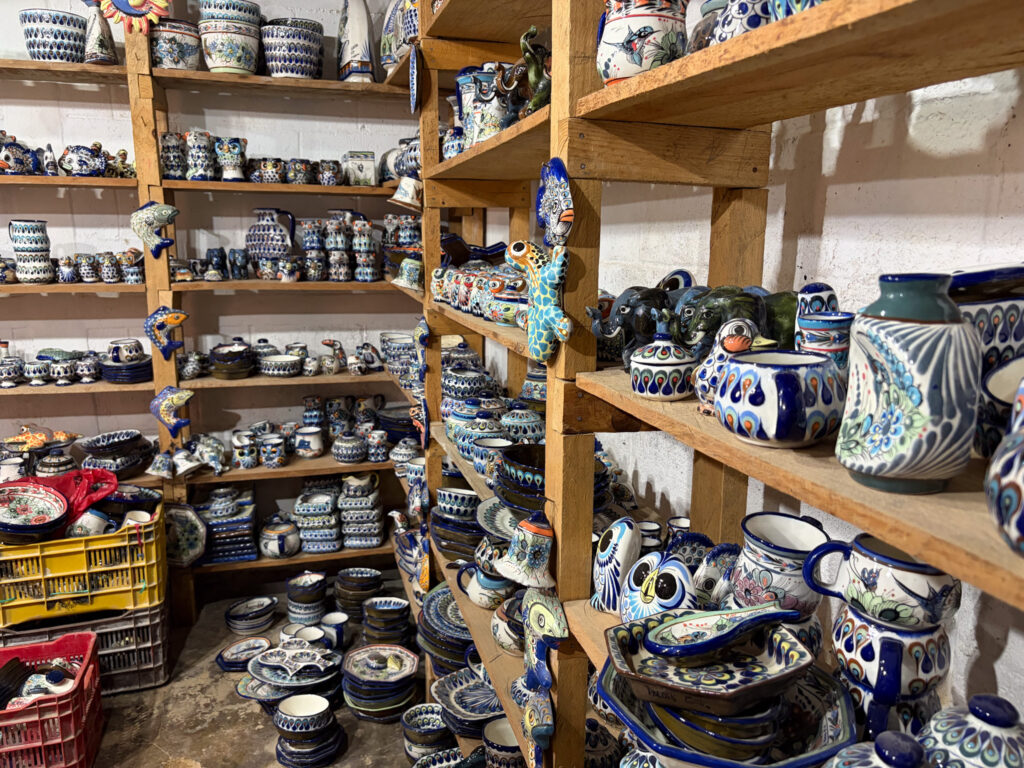
After a short walk up a alley, he took us on a short tour through the studio from making the pottery, to firing it, to painting it. It is impressive to see what they can manage in a small space. We bought some pottery directly from their shop (there is no payment for the tour, but either a purchase or a donation is expected).
On the way out of town, we passed a soccer ‘field’ with a few kids playing. They challenged our kids to a game and they spent 20 minutes in a heated game. From here we headed back up to meet our collectivo to drive back to our rental house near Panajachel.
What to Do in San Antonio Palopó
Visit the Ceramic Workshops
This is what San Antonio is known for. The village has been producing distinctive hand-painted ceramics for centuries, a tradition rooted in the unusually high-quality clay found in the riverbeds around Lake Atitlán. Local accounts trace the craft back to the Kaqchikel Maya as early as 1200 AD, and modern artisans have refined and continued those techniques to this day.
The ceramics themselves are immediately recognizable: bold blues and greens, intricate geometric patterns, and a hand-painted quality that means no two pieces are exactly alike. You’ll find everything from small decorative tiles to larger serving ware, all made by local families. Simply walk along the waterfront and someone will ask if you want to visit a studio (many are hidden up the alleys).
The workshops are concentrated along the lower lakeside road. Several are open to visitors and allow you to watch the painting process up close. If you’re serious about buying, and at these prices and quality, you probably will be, buying directly from the workshops puts money straight in the hands of the makers, and the prices are generally lower than what you’d find in Panajachel or Antigua.
Watch the Weavers
The town’s women are known for intricate huipiles, embroidered blouses traditionally worn with a striped skirt. The textile cooperatives are scattered through the upper streets and welcome visitors who want to observe or purchase directly.
Visit the Church of San Antonio de Padua
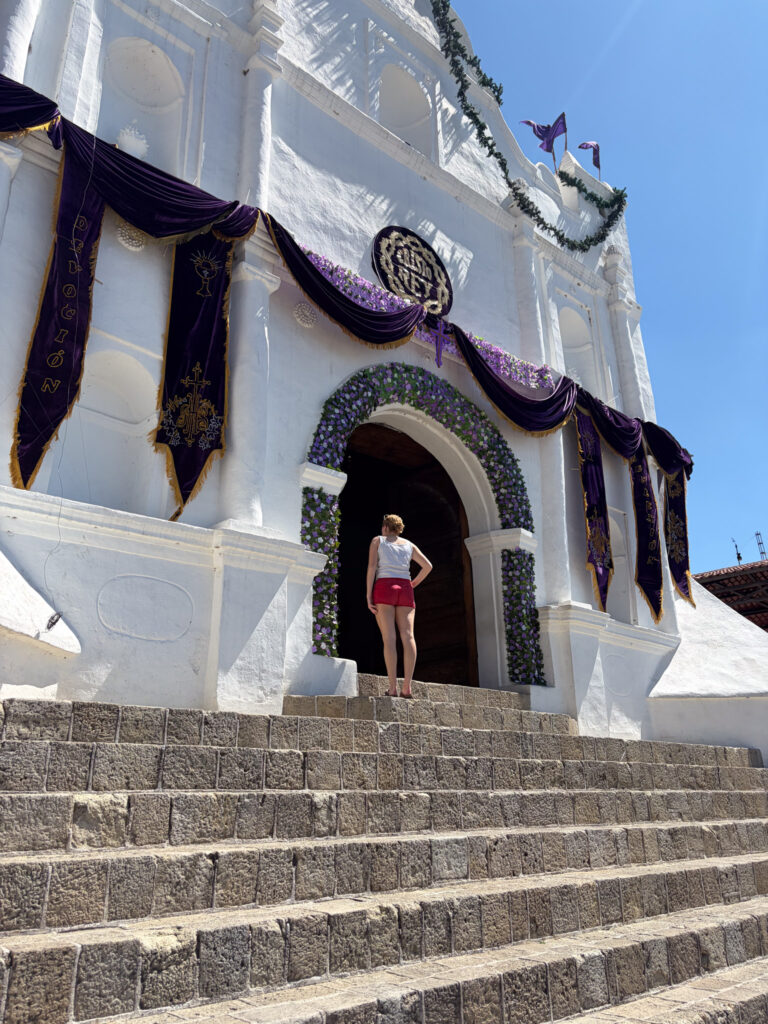
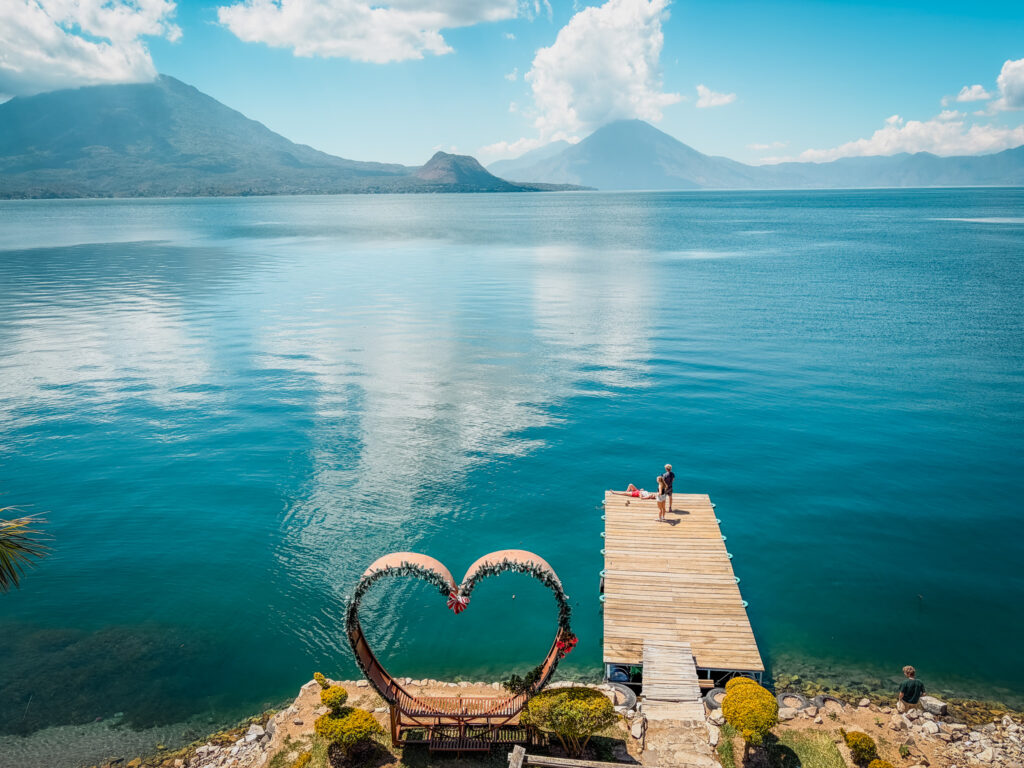
The colonial whitewashed church at the top of the village is one of the most photogenic on the eastern shore. It sits on a natural terrace with a wide view over the lake and the three volcanoes, Atitlán, Tolimán, and San Pedro, and the combination of the brilliant white facade against that volcanic skyline is hard to forget.
The church square doubles as the social heart of San Antonio. On market days (Thursdays and Sundays), the area has local vendors selling produce, textiles, and goods that are very much intended for residents rather than tourists.
Hike to Mirador Kaqasiiwaan
For those who want to earn their views, the hike up to the mirador above San Antonio takes approximately 1.5 hours and is moderately challenging. The reward is a sweeping panorama over the entire lake with all three volcanoes visible on a clear day.
Day Trip to Santa Catarina Palopó
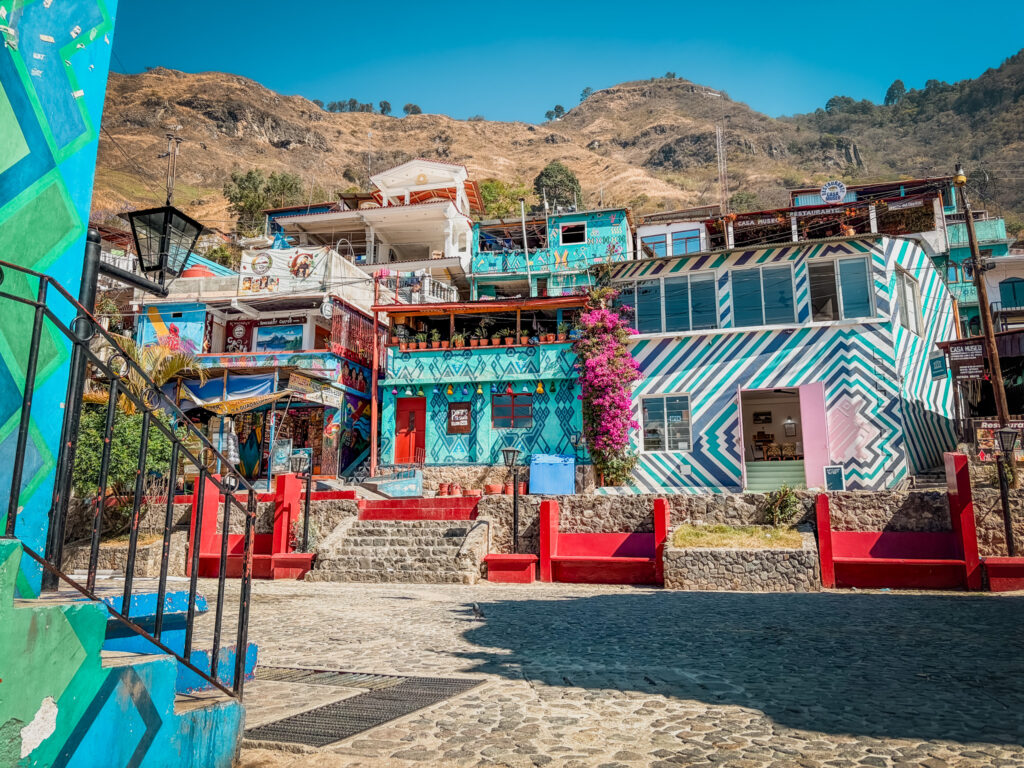
San Antonio and Santa Catarina are natural companions, close enough to combine in a half-day, different enough to be worth visiting separately. Where San Antonio is earthy and traditional, Santa Catarina has reinvented itself with a striking community mural project that has painted almost every surface in deep blues and teals.
Where to Stay in San Antonio Palopó
Most visitors treat San Antonio as a day trip from Panajachel, which makes practical sense, but it is possible to stay in the town. Here are a few
High-end: Casa Palopó is the standout property in the area: a boutique hotel of serious quality, affiliated with the Relais & Châteaux group, with impeccable rooms and views that make the price feel justified. It’s actually situated between Santa Catarina and San Antonio, making it a good base for exploring both. If budget allows, it’s one of the finest stays on the lake.
Mid-range: Atitlán Oasis Eco Hotel and Spa Kaalpul offers a more affordable lakeside option directly in San Antonio, with good views and the kind of peaceful setting that’s hard to find in busier lake towns. Reviews consistently praise the staff and the sense of being genuinely away from it all.
Budget: Options within the village are limited. Terrazas del Lago is a simple, affordable choice with some rooms offering lake views. For a wider range of budget accommodation, base yourself in Panajachel.
What to Eat and Drink
San Antonio is not a dining destination. There are a handful of small comedores around the market square serving straightforward Guatemalan food: rice, beans, eggs, fresh tortillas, grilled meat, at prices that reflect a local rather than tourist economy.
There are a growing number of restaurants as this becomes a more popular town to visit. We ate a good meal at Paulinas’ Restaurants right when you get to town – the food was good, but the view from here is fantastic.
Exploring Beyond San Antonio
San Antonio’s position at the end of the paved road makes it a natural endpoint on the eastern shore — but that doesn’t mean it’s the end of the story.
Santa Catarina Palopó is the obvious pairing, just a short tuk-tuk north. The mural project there provides a striking visual contrast to San Antonio’s quieter aesthetic, and combining the two villages in a single day is one of the best ways to spend a morning on the eastern shore.
Panajachel remains the logistical hub: 25–30 minutes by tuk-tuk, and the place to find ATMs, restaurants, boat connections, and anything else you need. Most visitors use it as their practical base even while day-tripping to San Antonio.
The western shore towns, San Marcos, San Juan, San Pedro, Santa Cruz, and Jaibalito, are all accessible by public lancha from Panajachel. They offer a completely different energy from the quieter eastern shore, and a full day on that side of the lake is worth building into your itinerary.
Is San Antonio Palopó Worth Visiting?
Yes – especially if you’ve already seen Santa Catarina and want to understand what this side of the lake looks like without the Instagram crowds. We really enjoyed the authentic feel to this town and the ceramics tradition.
It pairs best with Santa Catarina as part of an eastern shore day and should definintely be part of your visit to Lake Atitaln.
Looking for more Lake Atitlán guides? See our posts on Panajachel, San Juan La Laguna, San Pedro La Laguna, San Marcos, Santa Catarina Palopó, and our complete Guatemala itinerary.