 Gretchen Stuppy Carlson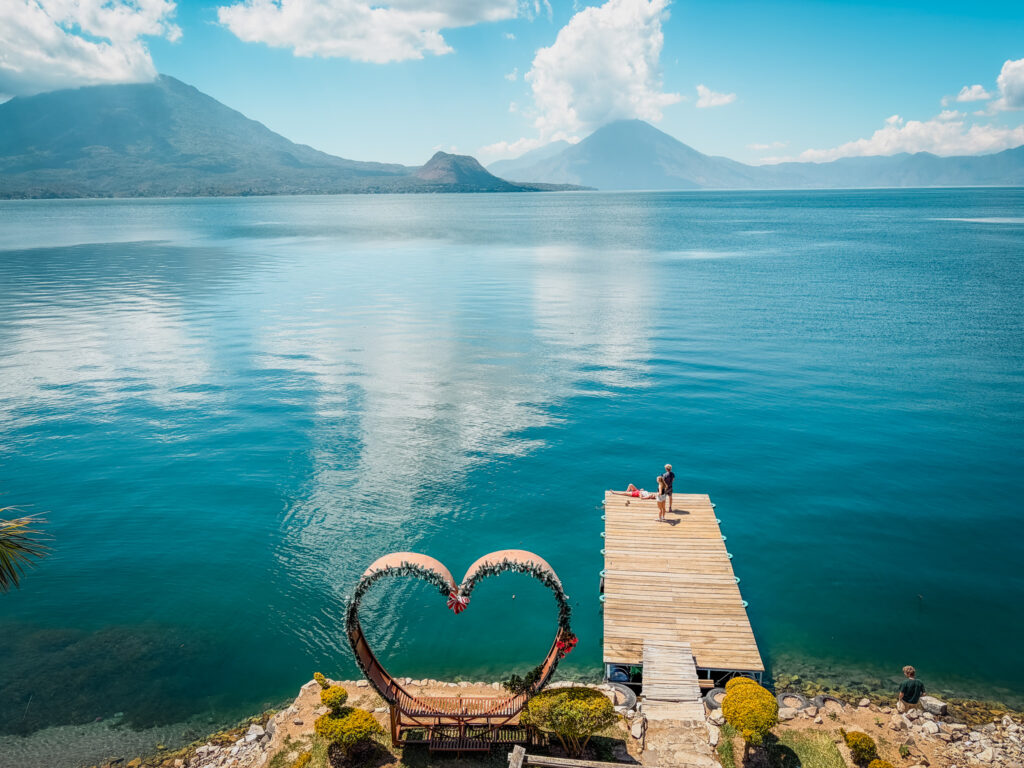
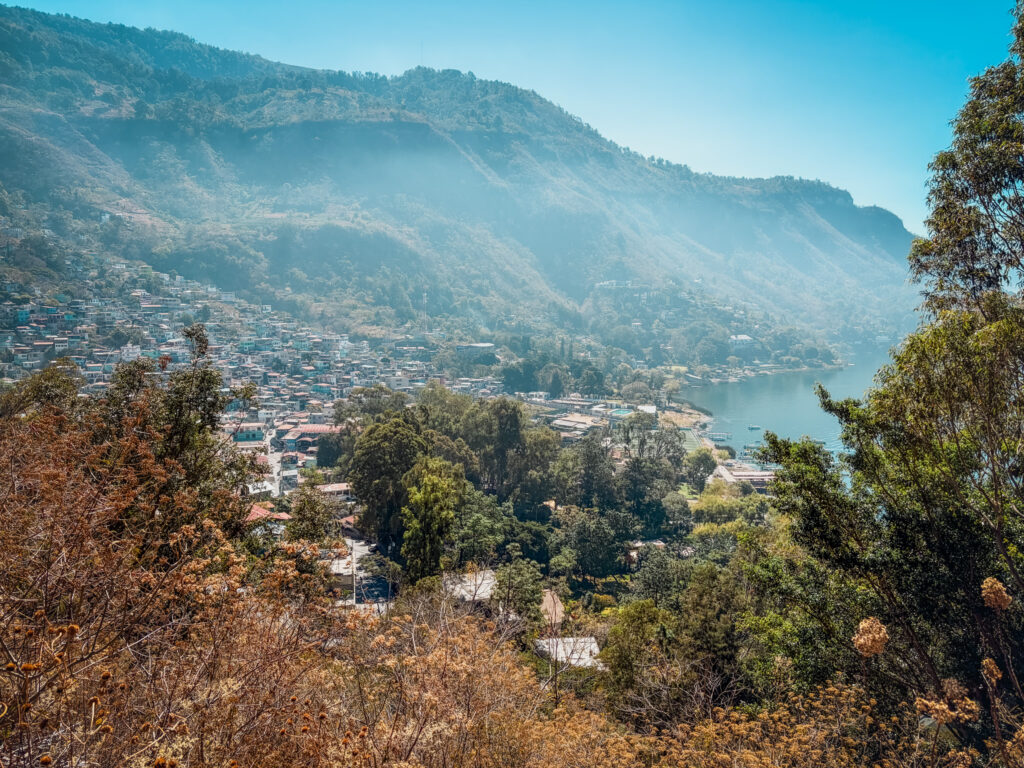
Lake Atitlan is one of my favorite lakes to explore around the world (right up there with Lake Bled in Slovenia). Lake Atitlan is a large lake ringed by volcanos with a series of towns each with their own culture and unique vibe. If you are looking to visit the Lake , most people start with trying to decide where to stay on Lake Atitlan and where to visit during your stay. Below I break down a complete guide to the towns of Lake Atitlan with some highlights of what expect, where to stay and more.
You can also see our most recent itinerary to Guatemala or see all our guides to Guatamala.
I’ve spent decades exploring family adventures, epic hikes, and National Parks across the world. For more inspiration, check out my National Parks Page or see some of my favorite destinations to plan your next adventure and make sure to join my weekly newsletter.
Getting to Lake Atitlán
The closest major airport is La Aurora International Airport (GUA) in Guatemala City, and it’s about a 3–4 hour drive from the lake depending on traffic. The easiest way to get to the lake is to book a private or shared shuttle. This is relatively inexpesive. You can also book a shuttle from Antigua (about 2.5 hours away).
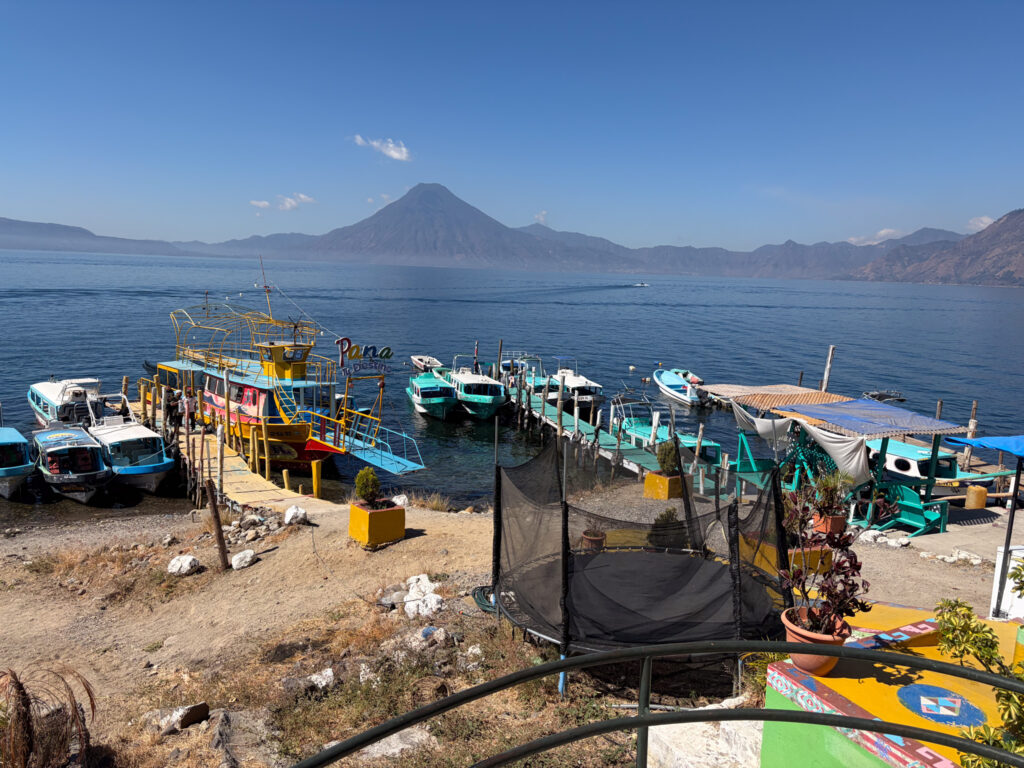
The shuttle will take you to Panajachel (“Pana”) and from here you will need to take a boat to the other towns on the lake. Boat rides take 10-30 minutes and run starting at 6:30 am. You can get the boats right at the ferry dock. In 2026 the boat rides were about 25-30 Q each way.
Quick Comparison at a Glance
If you only have 1-2 days, stay in Panajachel and day trip out to the towns. If you are looking for something special, I recommend Jaibalito, If you want a more authentic experience consider Santa Catarina.
| Town | Best For | Budget Level |
|---|---|---|
| Panajachel | First-timers, convenience | Mid–High |
| San Pedro | Backpackers, nightlife, Spanish schools | Budget |
| San Juan | Art, culture, authenticity | Budget–Mid |
| San Marcos | Yoga, wellness, swimming | Mid–High |
| Santa Cruz | Solitude, hiking, kayaking | Budget–Mid |
| Jaibalito | Total escape | Budget–Luxury |
| Santiago Atitlán | Indigenous culture, day trips | Budget |
| San Lucas Tolimán | Coffee, off the beaten path | Budget |
| Santa Catalina and Antonio | Weaving, color and pottery | Budget |
The Towns of Lake Atitlan
Panajachel (“Pana”)
Vibe: The hub tourist-forward, convenient, chaotic on weekends.
Panajachel serves as the lake’s commercial hub and main entry point. It’s the gateway to the other towns because all roads basically lead through here and many locals actually live here. The town offers the lake’s only proper supermarket, multiple ATMs, pharmacies, and the widest range of restaurants. The main road – Santander runs from the highway down to the lake, lined with textile shops, tour agencies, restaurants, and souvenir vendors.
Highlights: There is a lot to do here and I honestly enjoyed seeing a town that wasn’t cleaned up for the tourists. Panajachel is unashamedly itself. You can take a Mayan cooking class, a sunset ATV tour up into the mountains, or even a sunset cruise from one of the docks. The Atitlan Nature Reserve just outside town offers hiking, a butterfly pavilion, ziplines, and beach access. It’s also a great place to stay if you only have a little time in the area.
Drawbacks: Not as beautiful or clean as other villages, with a bit of a party scene and noise. Of all the Lake Atitlán towns, Panajachel feels the most similar to a generic tourist destination. You also won’t save money by staying here.
Where to Stay: My top recommendation (if you can afford it) is Hotel Atitlan. Rooms are over $200 but there is a pool and incredible views right on the lake. Villa Santa Catarina is another great option and you can often find rooms for just under $100. There is a pool and great views. There are a number of budget options in town – our friends stayed at Hotel-Villas JABEL TINAMIT and liked it.
San Pedro La Laguna
Vibe: Backpacker central, lively, social, and affordable.
San Pedro sits on the lake’s northwest shore and attracts backpackers, Spanish students, and budget travelers. It’s the most developed town after Panajachel, with ATMs, pharmacies, reliable WiFi, and good shuttle connections.
Highlights: The Indian Nose sunrise hike departs from here, as does the San Pedro Volcano trail. San Pedro is also home to Lake Atitlan Spanish School.
Drawbacks: San Pedro is a bit of a party town and it also lacks the looming volcano views that are quintessential to the lake experience. It can feel loud and busy compared to the quieter villages.
Where to stay: Mikaso Hotel is a beautiful traditional Guatemalan property right on the lake with stunning views. There are plenty of solid budget hostels in San Pedro. Hostel dorms typically start around $8-10 USD per night.
Read our complete Guide to San Pedro.

San Juan La Laguna
Vibe: Artsy, authentic, and colorful the “jewel of the lake.”
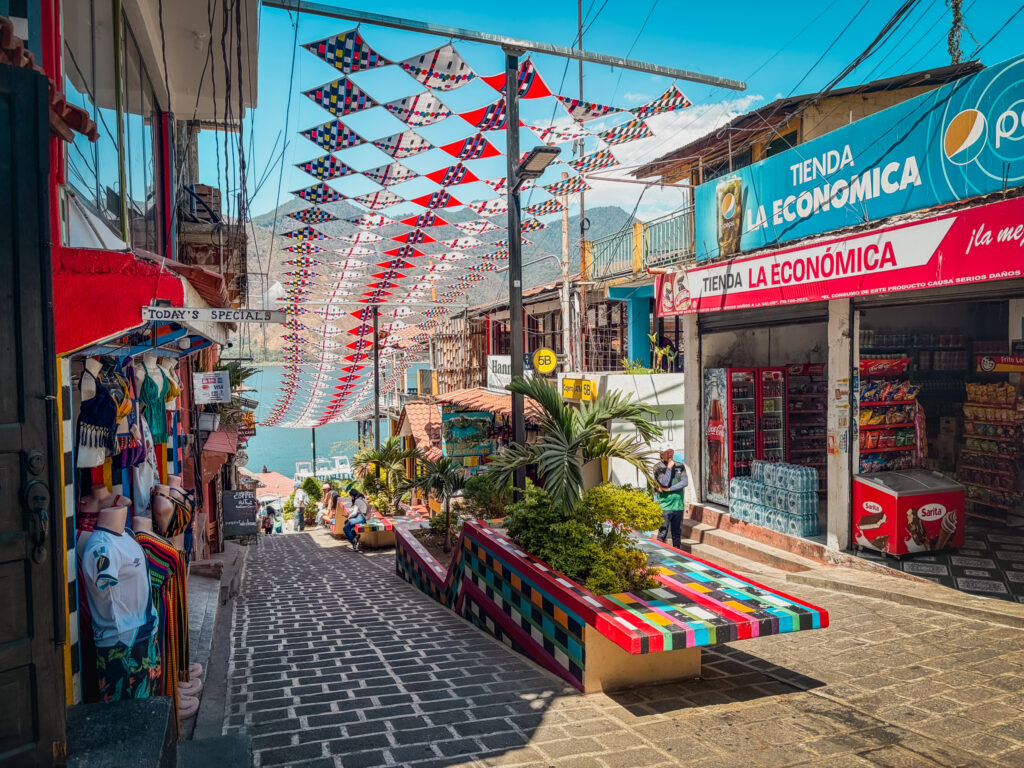
San Juan is San Pedro’s quieter, more artistic neighbor, known for its painters’ cooperative and natural textile dyeing workshops. A rainbow road leads you from the lakefront to the top of the hill, with hotels, shops, cafes, and restaurants on either side, plus live music, art galleries, and photo backdrops all along the street.
Highlights: Casa Flor Ixcaco Weaving Cooperative offers demonstrations and locally made pieces. El Tata Cafe runs an excellent coffee plantation tour. The hike (or tuk-tuk ride) up to Mirador Kaqasiiwaan offers panoramic views over the lake, San Pedro, and San Juan, plus a wonderfully painted mural on the viewing platform floor.
Drawbacks: It’s a small town without the amenities of San Pedro or Panajachel, and doesn’t have volcano views. Accommodation options are still growing and it’s popularity means it’s getting crowded.
Where to Stay: Hotel Taa’ Tiin is a small boutique hotel with courtyard-style rooms, local murals, and an on-site temazcal. Eco Hotel Uxlabil Atitlán is an eco-hotel on the lakeshore just outside town, with balconies facing the water, included breakfast, and free sunrise kayaking. Casa Argentina comes in at around $30 per night and is a family-run guesthouse with a rooftop terrace overlooking the lake, a shared kitchen, and laundry service.
Getting there: 40-minute lancha from Panajachel, or a short tuk-tuk from San Pedro (10 quetzales).
See our Guide to San Juan la Laguna
San Marcos La Laguna
Vibe: Spiritual and serene, yoga retreats, sound healing, and holistic living.
San Marcos is a one of a kind town on the lake. Our taxi driver called it the hippie town – and that is in fact pretty accurate. San Marcos is the go-to town for yoga lovers, spiritual seekers, and anyone craving a slower, more intentional pace. The lake’s most spiritual town and considered an “energy vortex.” The town is full of yoga studios, sound healing centers, cacao ceremonies, and holistic practitioners.
You can read my complete guide to San Marcos.
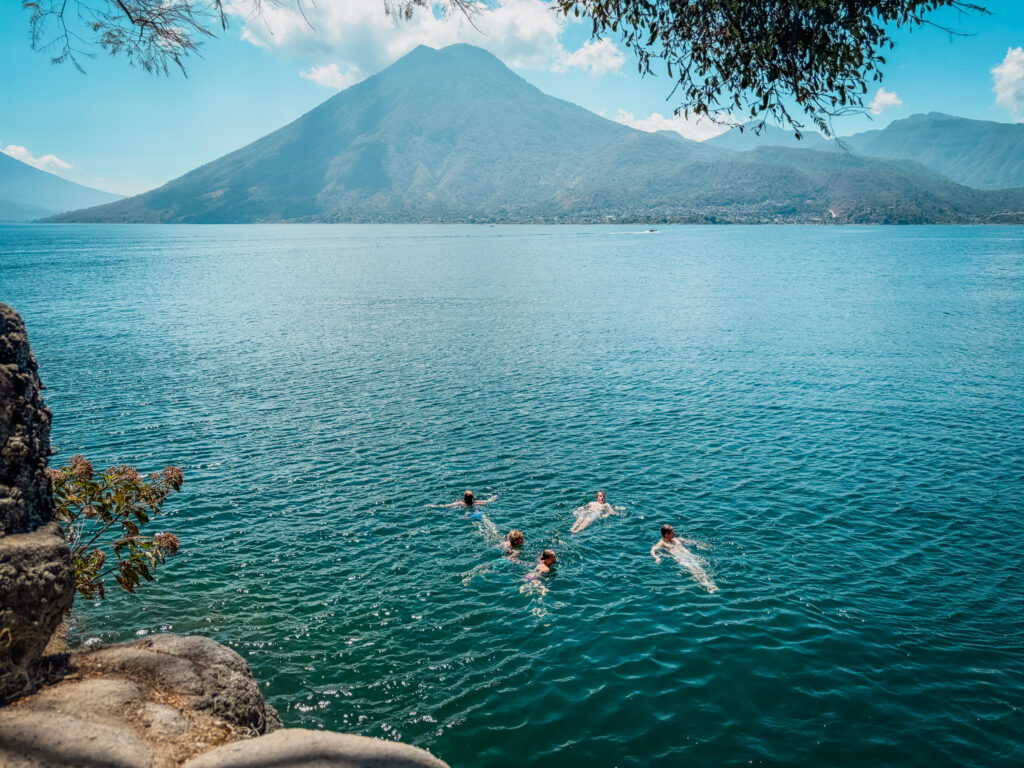
Highlights: Swimming:the cleanest swimming area on the lake is around San Marcos. The Cerro Tzankujil Nature Reserve and surrounding hiking offer incredible views and the perfect hang out area on the lake.
Drawbacks: Prices at San Marcos are said to be some of the highest on the lake, and it’s one of those places where you’d be more likely to find acai bowls than tamales, meaning it can feel disconnected from authentic Guatemalan culture. Honestly, I didn’t love San Marcos but enjoyed the views and cliff jumping.
Where to Stay: San Marcos has a range of accommodation options that cater to its laid-back, wellness-focused crowd. Here are three options at different price points to suit every budget. We did not end up staying in San Marcos (we stayed in the nearby Casa Del Mundo). Hostel del Lago: For travelers keeping an eye on their spending, San Marcos has a handful of simple guesthouses and hostels tucked along its winding paths. Another option we looked at based on a recommendation was Lush Atitlan. This is priced higher but looks amazing.
See more details on visiting San Marcos.
Santa Cruz La Laguna
Vibe: Quiet and secluded: boat-access only, peaceful.
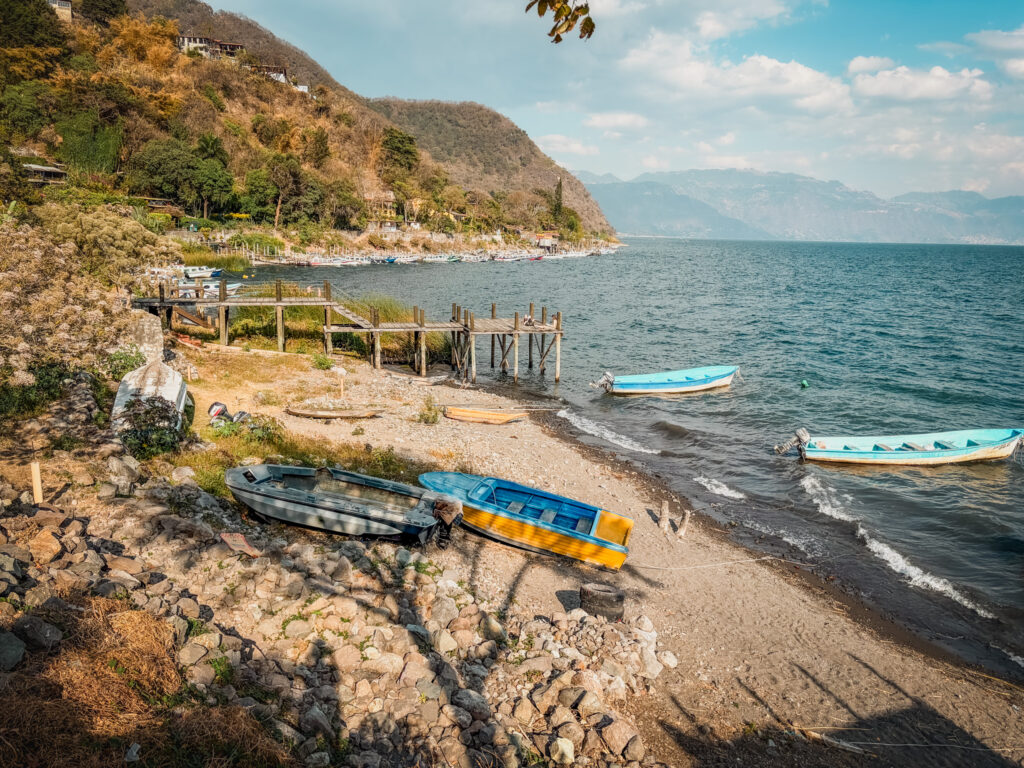
Santa Cruz is a quiet, scenic village with big views of Lake Atitlán on one side and jungle-covered hills on the other. This is where I stayed during my first visit to the lake 20 years ago. It’s only accessible by boat, which gives it a more secluded, low-key feel compared to busier towns.
Highlights: The best hiking trail around Lake Atitlán runs between Santa Cruz and Jaibalito there’s no road access on this part of the lake, so the trails are the primary means of getting around. Midway along, you pass the famous Hotel Casa Del Mundo, with panoramic views changing with each turn of the trail where we stayed.
Drawbacks: Steep terrain means a workout just getting around. Very limited dining and shopping options.
Where to Stay: Atitlan Sunset Lodge (spectacular lake views, kitchens, and balconies) and La Iguana (dorms to suites).
Getting there: Boat-only. 10 minutes from Panajachel. It is one of the closest to the town by boat.
Jaibalito
Vibe: The most remote and secluded town for escape-seekers.
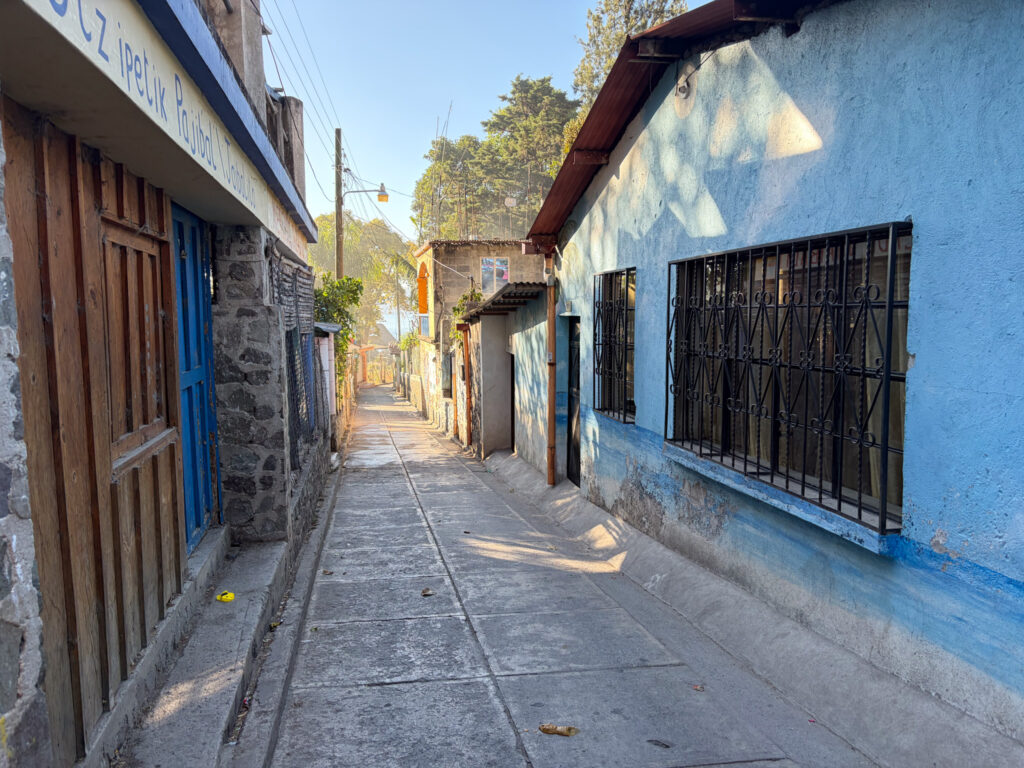
Jaibalito is one of the best towns for soaking up the natural beauty of this part of Guatemala.Stay here if you’ve been to the lake before, you want genuine solitude, and you’re comfortable with very basic infrastructure. We didn’t stay in town, but in the adjacent Hotel Casa Del Mundo and we enjoyed walking into town.
Highlights: The Santa Cruz–Jaibalito hiking trail.
Drawbacks: Almost no restaurants or shops, boat-only access, and it can feel isolating.
Santiago Atitlán
Vibe: The most authentically indigenous town on the lake a living cultural experience.
Santiago Atitlán maintains the strongest indigenous character of any lakeside town, and unfortunately it was the only town we didn’t visit during our stay. Based on our friends who stayed here for a month, you’ll hear Tz’utujil Maya spoken at least as much as Spanish, and women wear traditional huipiles (embroidered blouses) daily, not just for tourist photos.
Highlights: The town is known for traditional weaving, the Maximón shrine (a Maya-Catholic folk saint), and Friday market days Hiking options include Cerro de Oro and Mirador de Tepepul, both offering great views, cloud forest, and bird-spotting opportunities.
Drawbacks: Accommodation is limited and affordable ($20–60/night), and the town has fewer tourist services. It’s busy and loud, and vendors can be persistently eager to sell.
Santa Catarina Palopó
Vibe: Colorful and close-in: artistic, photogenic, easy to reach.
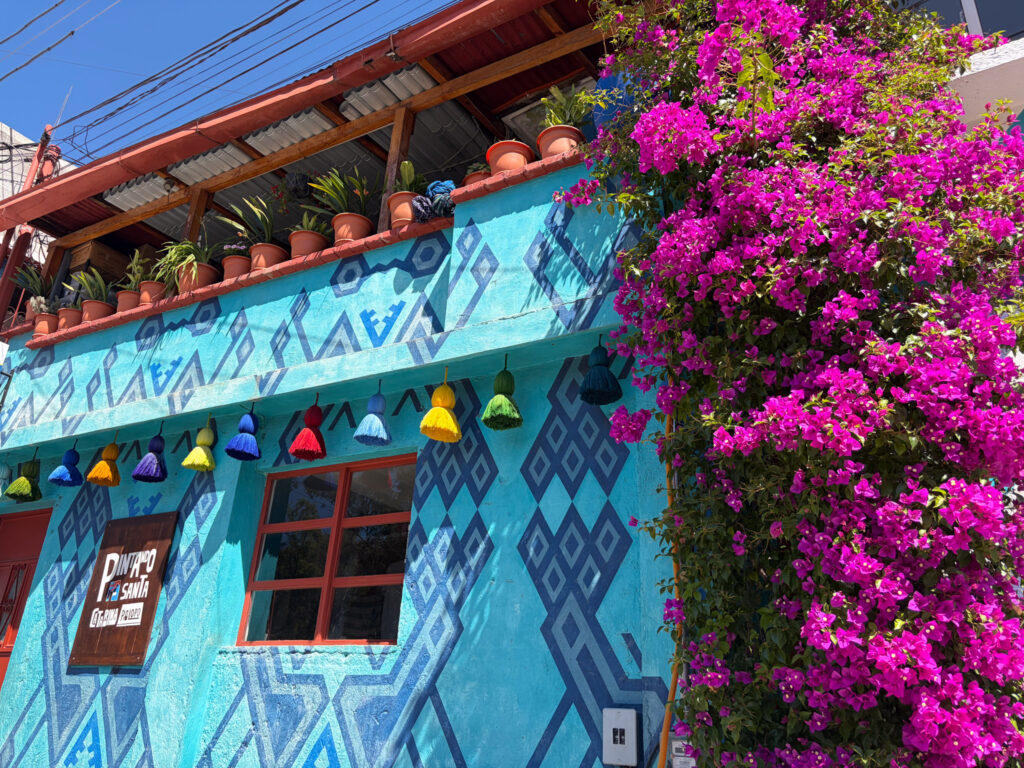
Santa Catarina Palopó is one of the most visually striking villages on the lake, famous for the vivid murals painted across its buildings and streets in shades of blue, teal, and indigo. It sits just a short tuk-tuk or boat ride from Panajachel, making it one of the easiest day trips on the lake but it feels a world apart. The town is known for its weaving traditions, and you’ll find local women selling beautifully made textiles throughout the village. We stayed for a few days in an AirBNB between Santa Catarina Palopó and Panajachel.
Highlights: The murals alone are worth the trip: the whole town was repainted as a community art project and it’s genuinely stunning..
Drawbacks: Its proximity to Panajachel means it gets more day-tripper traffic than some of the quieter villages and there are limited overnight options.
Getting there: 15 minutes by tuk-tuk from Panajachel, or a short public boat ride. One of the most accessible villages on the lake.
San Antonio Palopó
Vibe: Traditional and unhurried: authentic village life, fewer tourists.
San Antonio Palopó sits just south of Santa Catarina along the eastern shore, and while the two towns are neighbors, San Antonio feels noticeably quieter and more traditional. There is currently a construction project looking to improve the waterfront in this town. This is a working village where you’re far more likely to see locals going about their day than other travelers.
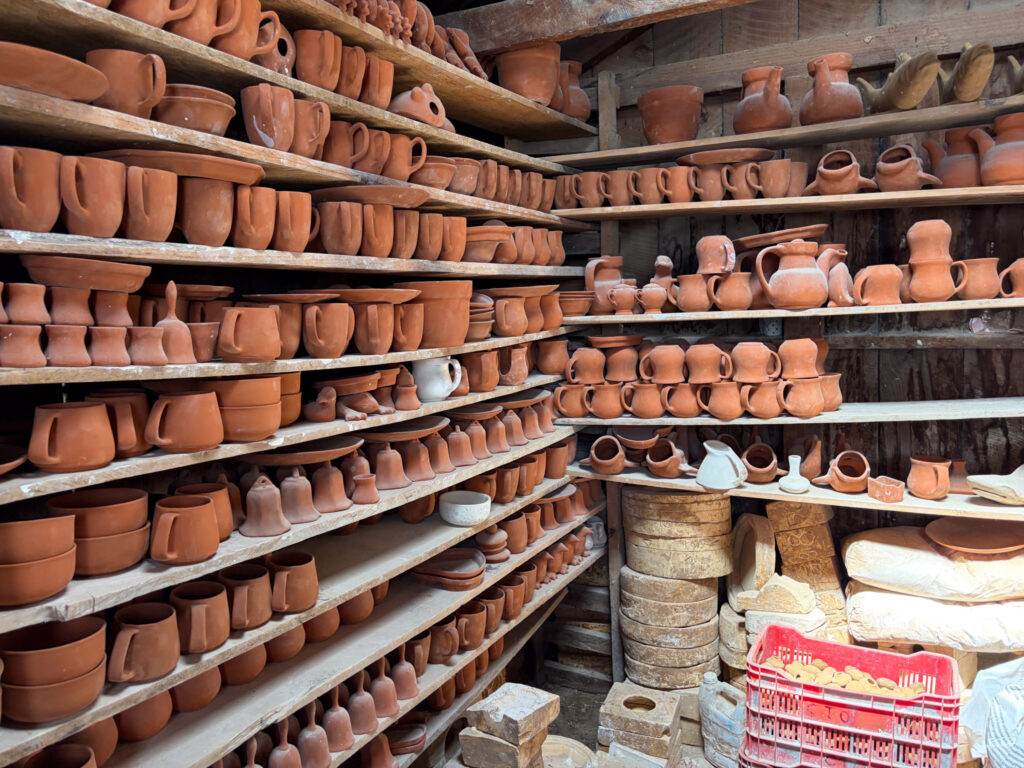
Highlights: San Antonio has a strong ceramics tradition alongside its weaving” look for distinctive pottery in the local market and small shops. The 16th-century church at the center of town is worth a visit, and the steep cobblestone streets give the whole place a timeless feel.
Drawbacks: Very limited restaurants and amenities.
Where to Stay: Most visitors come as a day trip from Panajachel or Santa Catarina. For overnight stays, options are very limited, best to stay in Panajachel and take the boat over.
Getting there: Boat from Panajachel (roughly 20 minutes) or by road from Santa Catarina Palopó (short tuk-tuk ride along the lakeside road). It’s perfect to visit along with Santa Catarina.
Lake Atitlán: Final Thoughts
After spending time exploring the towns around Lake Atitlán, I can honestly say this is one of those places that gets under your skin. Every town on this lake has its own distinct personality, from the chaotic energy of Panajachel to the hushed trails of Jaibalito, and no two visits feel quite the same.
If I had to give one piece of advice, it’s this: don’t just pick one town and stay put. The boat network makes it genuinely easy to hop around, and the best way to experience the lake is to let each village surprise you. Spend a morning watching weavers work in San Juan, an afternoon swimming off the rocks in San Marcos, and an evening watching the sun drop behind the volcanoes from wherever you happen to be.