 Gretchen Stuppy Carlson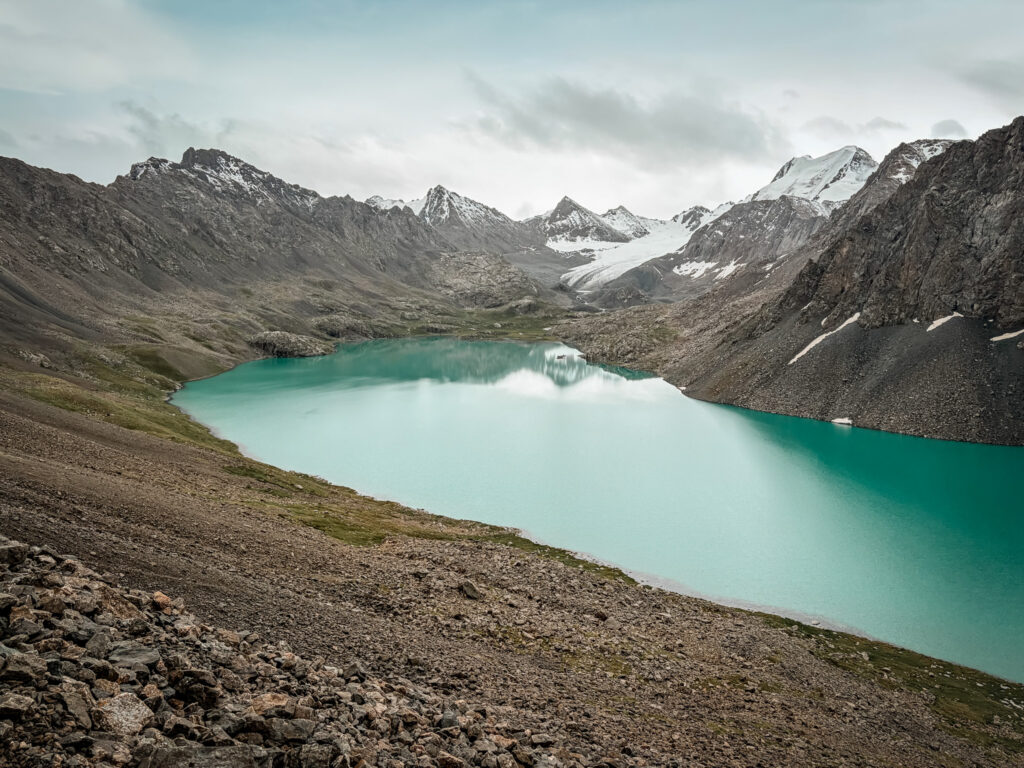
If you are looking for a stunning hike is a remote and wild part of the world, this is it!
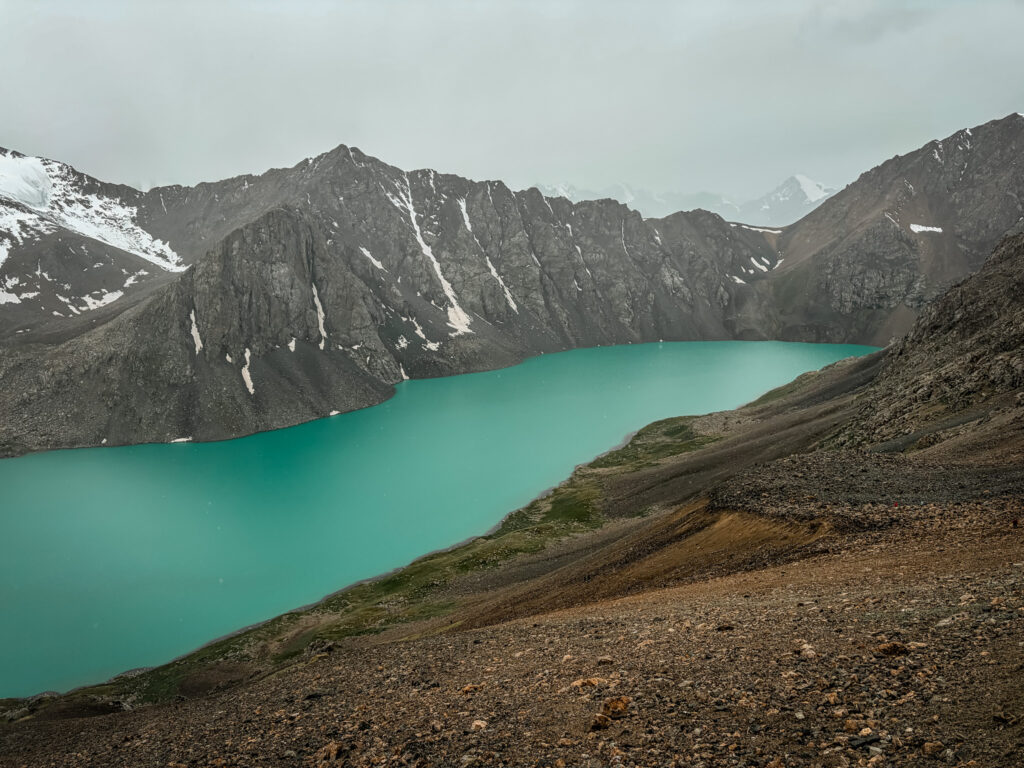
The Ala Köl trek (also called the Ala Kul trek) is a multi-day hike in Kyrgyzstan’s Tien Shan mountains that climbs from the Karakol Valley up and over a rocky pass to Ala Köl, a turquoise glacial lake sitting at nearly 12,000 feet: and it’s one of the most popular treks in Central Asia for good reason.
The Ala Köl Trek offers incredible mountain views, awesome yurt stays and just the right amount of a challenge. The starts in Karakol Valley and then takes you up through pine forest and alpine meadow, over a rocky, glacier-rimmed pass, and down to a lake that is incredibly turquise. You don’t need mountaineering experience to do it, just a decent level of fitness and a willingness to get your legs under you.
Below you can see the details of how to plan and do the Ala Köl Trek with options for 2-4 days and a few alternate suggestions. It’s important to note that with the popularity of this trek recently, lots has changed, so it’s important to get updated information. This trek can feel a little complicated to plan so I’ve tried to lay out all the details you need to know.
I’ve spent decades exploring family adventures, epic hikes, and National Parks across the world. For more inspiration, check out my National Parks Page or see some of my favorite destinations to plan your next adventure and make sure to join my weekly newsletter.
Ala Köl Trek at a Glance
Distance: Roughly 35–40 km (22–25 miles) one-way from Karakol Valley to Ak-Suu, depending on exact route and detours.  There are several ways to make this trek shorter.
Total elevation gain: Around 1,500–2,500 m (5,000–8,000 ft) across the full trek (this depends on your starting point)
High point (Ala Köl Pass) 3,860–3,920 m (12,660–12,860 ft)
Lake elevation 3,530 m (11,580 ft)
Days needed: 3–4 days (it's possible to do it in 2 as well)
These details start in the Karakol Valley. It’s also possible to hike to the lake via Altyn Arashan. In fact, many people take horses partway up and then hike up to the lake. This is a good option as well, and is faster, although you have a very steep climb up to the ridge. If you are doing this route, I recommend booking through a tour group.
Where Is Ala Köl & How to Get There
Ala Köl sits in the Terskey Alatau range, part of the greater Tien Shan mountains in eastern Kyrgyzstan, not far from the shores of Issyk-Köl. The trek starts near Karakol, a small city that’s become the adventure hub for this whole region.
If you are coming from Bishkek, the drive takes about 6 hours, although the main road was under construction when we were there and this drive will likely get shorter after the new highway is put in. There are plenty of hotels to stay in in Karakol – we stayed in the Caravan Hotel.
We hiked the Ak-Suu approach, which starts in the Karakol Valley itself.
Doing this On your Own or on a Tour
The first decision you’ll want to make is whether to do this trek on your own or to do it as part of a tour. Both are good options. If you are a confident hiker this trek is absolutely doable on your own. The hardest part is booking the different parts. As a family of 5 who’s trekked around the world, we did this hike on our own.
On the other hand, a tour company can get you the best yurt and camping stays and will provide support. We saw a few very cold hikers on this route and the tour companies were able to help with support. If you are going to book a tour, there are LOTS of option at different price points. After talking to folks, the concenses is that you get what you pay for. Here are a few recommended tours:
Wild Camping or Staying In Yurts/Tents
Another decision to make is whether to stay in a yurt/tent or to backpack and stay in your own tent. We loved staying in the yurts, getting warm food, and not carrying a huge pack. If you are hoping to camp up at the lake, and are in good backpacking shape, camping along the way is also a good option.
To book a yurt or tent stay, you can find a few options on Booking.com or you can book at destination Karakol.
Getting to the Trailhead
From Karakol, you will need to get to the trailhead. Most people take a car or transport to either First Bridge or Second Bridge. There is a lot of incorrect information on where these bridges are both online and in person: we asked to go to second bridge and ended up getting a ride to First Bridge.
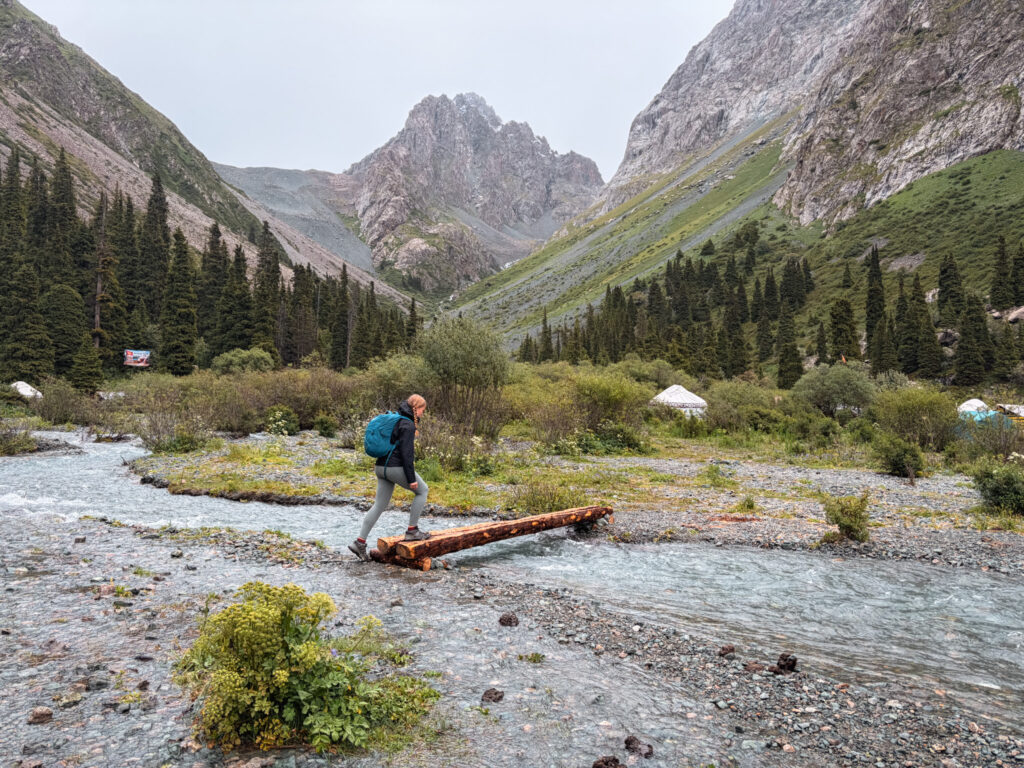
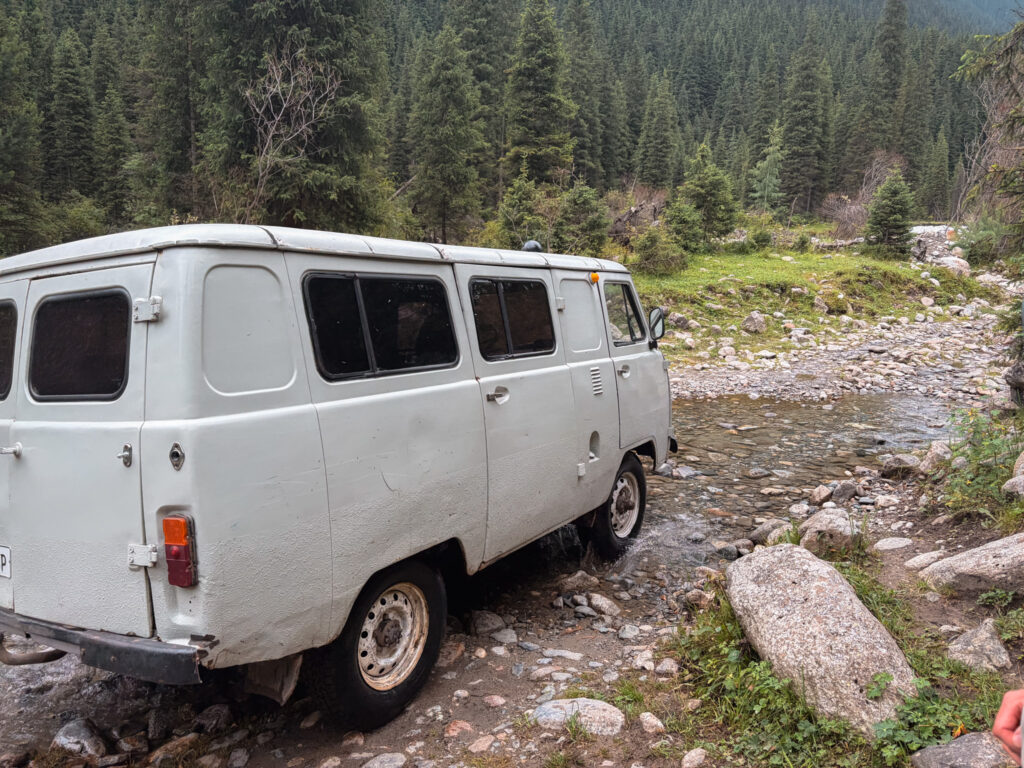
First Bridge is a great spot if you have time and you will hike up a beautiful valley on a dirt road. We actually really enjoyed this walk and it was a good intro to the overall hike. First bridge can be reached with a 4×4 taxi. If you are short on time, you can also get a ride to Second Bridge. There are some very old vehicles that make the rough drive up to Second bridge. This saves about 1500 feet of elevation AND 6 miles of hiking.
You can book a ride from Discover Karakol in Town
| Feature | First Bridge | Second Bridge |
|---|---|---|
| Transport Type | Standard car / regular taxi | 4×4 off-road vehicle only |
| Cost from Karakol | ~1,500 – 2,000 som | ~6,000 – 9,000 som |
| Distance Saved (from park entrance) | ~3 – 7 km of road | ~10+ km / nearly a half-day |
| Trek Pace | Ideal for a standard 3-to-4 day relaxed pace | Ideal for a fast 2-to-3 day push |
Best Time to Hike Ala Köl
The trekking season runs roughly late June through September. Outside that window, the pass is often snow-covered or closed, and even in peak summer it’s not unusual to hit fresh snow near the top the weather at nearly 4,000 m changes fast, regardless of what the forecast says down in Karakol.
We did this hike right at the beginning of July and while the path was clear, there was plenty of snow and it was cold. The yurt camps are barely open in late June, so it’s best to do this as a summer hike.
A quick note about the weather…
This area gets extreme weather, from pleasant warm days to freezing cold, snow and rain even in the summer. We saw several people who were boardline hypothermic in early July at the lake. It’s also pretty common to get heavy rain which causes flooding on the roads in and out of the area. The week after we left, Second Bridge washed out, which isn’t uncommon. If you have the time, it’s worth choosing a window where the weather is good.
A Quick Note about the Altitude…
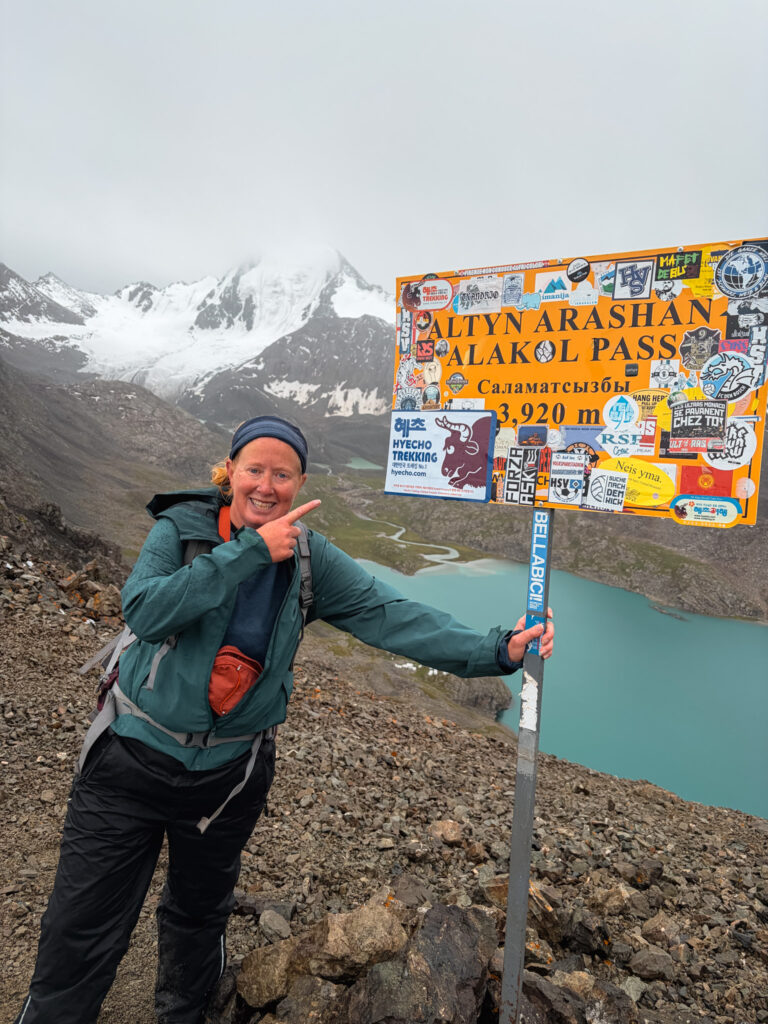
The pass above Ala Kol Lake is at 12,860 feet or 3,920 meters. This makes hiking hard! If you can acclimatize for a few days before the trek in Karakol, your lungs will thank you. On the 2nd day of our trek, we climbed from Sirota Camp up last the lake over the ridge and down. It was under 5 miles but felt like 8 due to the altitude. If you plan to camp at the lake, take this into account as well and drink plenty of water.
Map of the Ala Kol Trek
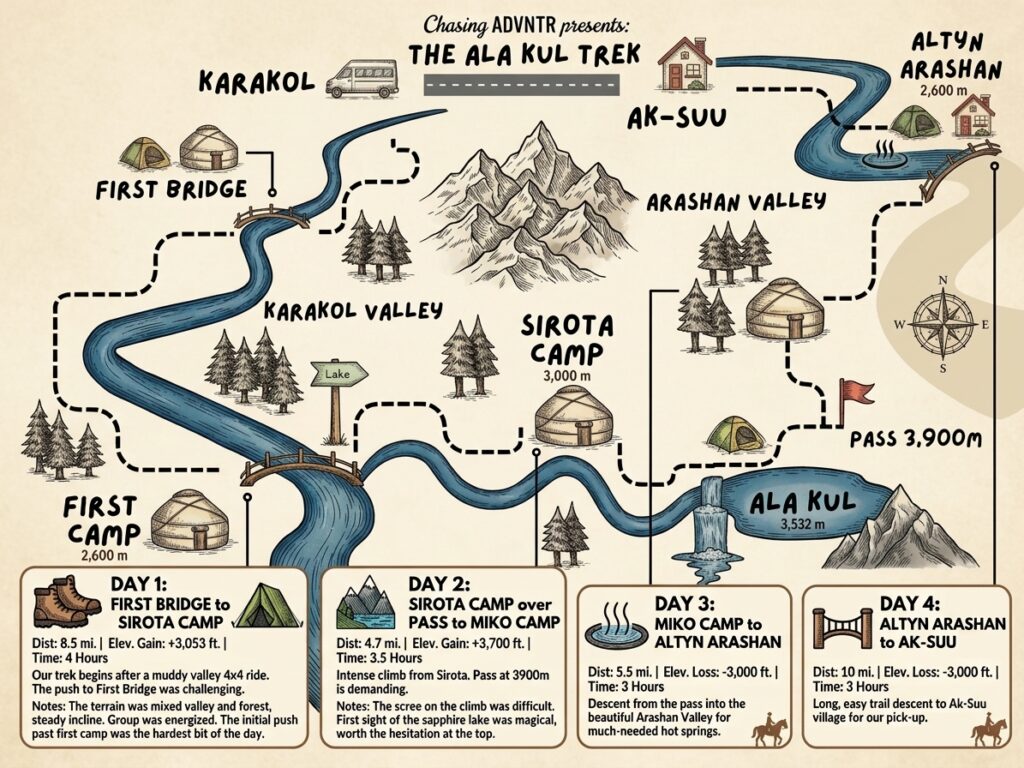
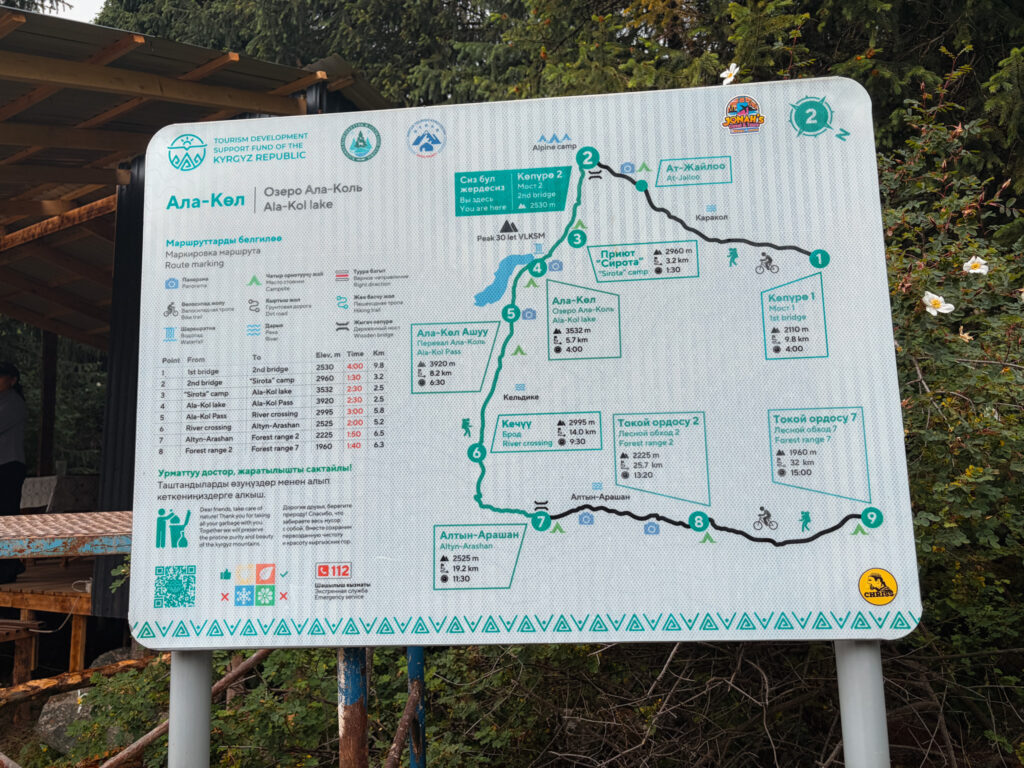
Day-by-Day Itinerary
Below you can find general information on the trek and our day to day reports.
Day 1: First Bridge to Sirota Camp
- Distance: 8.5 miles
- Elevation gain: 3,053 ft
- Hiking Time: 4+ Hours
After rolling into town on the day before and getting set up with reservations, a taxi ride and hiking poles in town, we got an early start (taxi pick up at 7 am) for First Bridge. The day promosed rain so we figured the earlier we hiked the better.
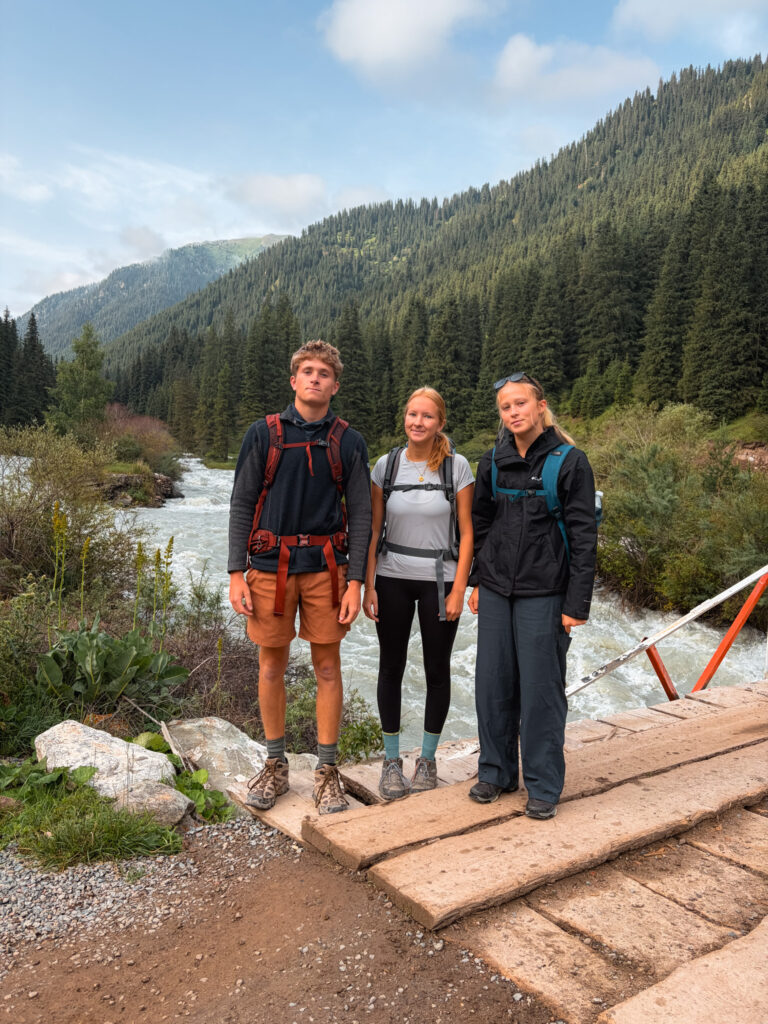
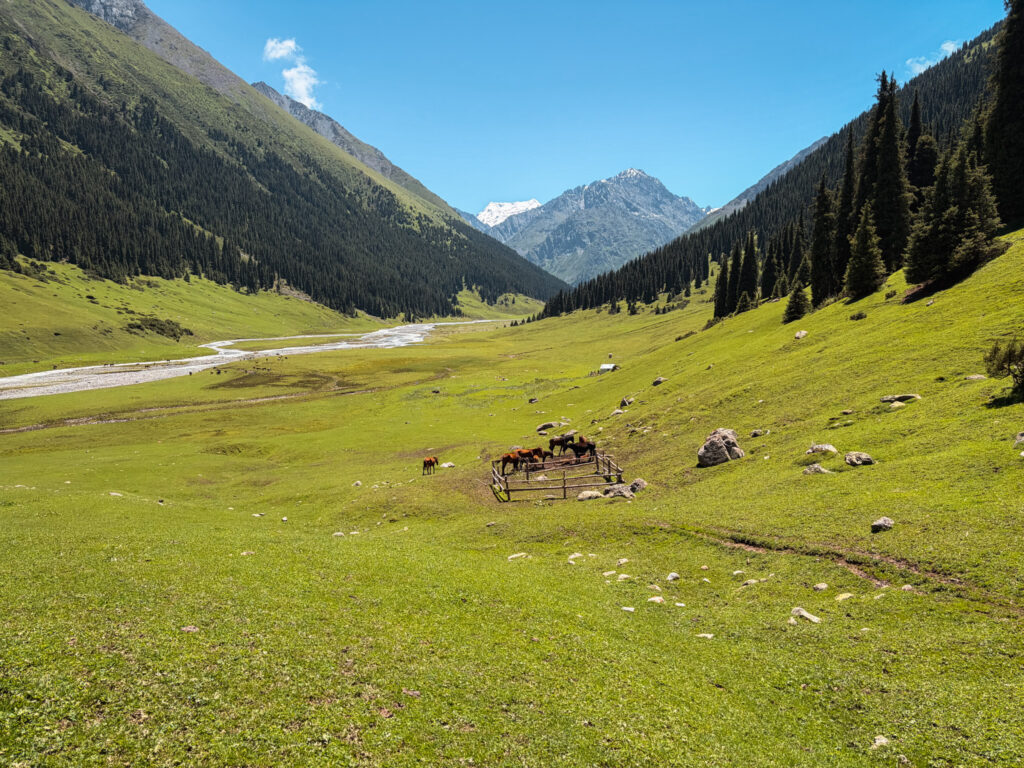
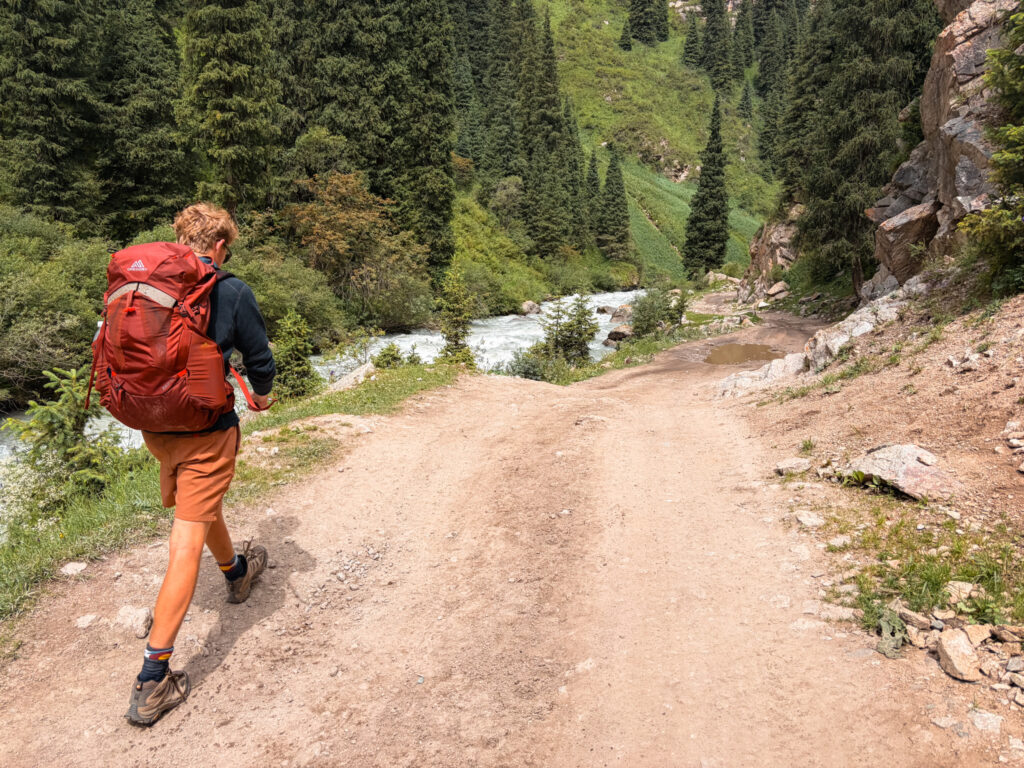
The hike up from First Bridge to Second Bridge is a lovely stretch with few other hikers, although you will need to get out of the way for an occasional bus on it’s way to Second Bridge. The valley is open with a river and full of horses. While you will gain about 1500 feet of elevation over the first stretch, the grade is low and it’s an easy walk. We really enjoyed starting the trek with this gentle warm up.
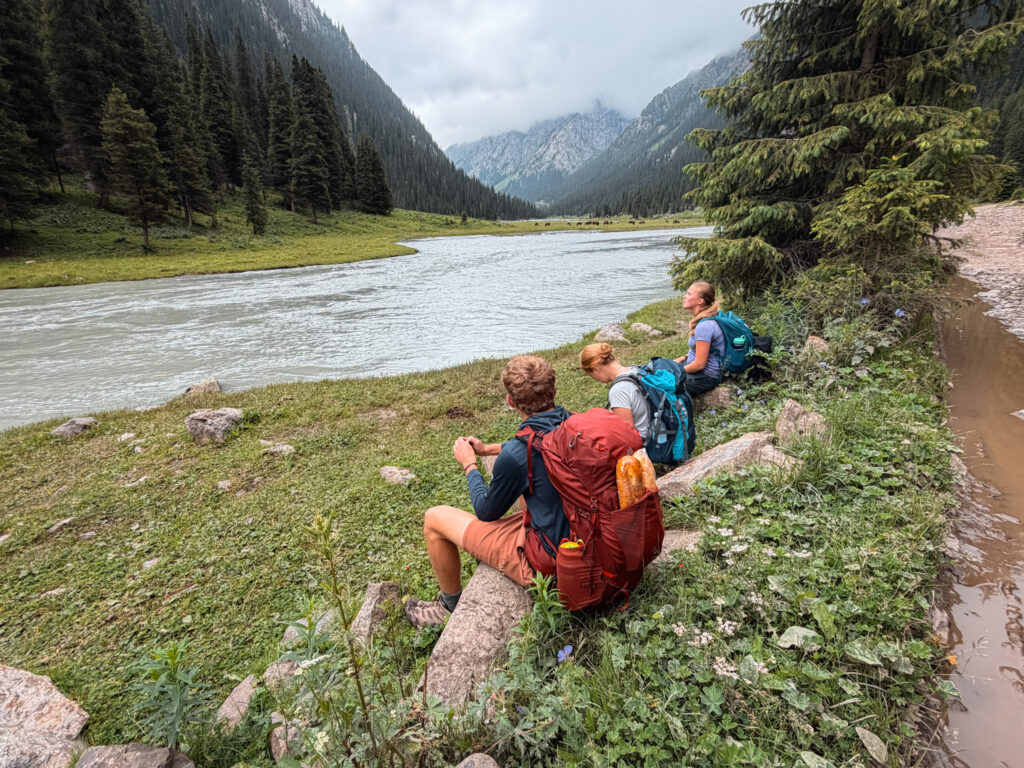
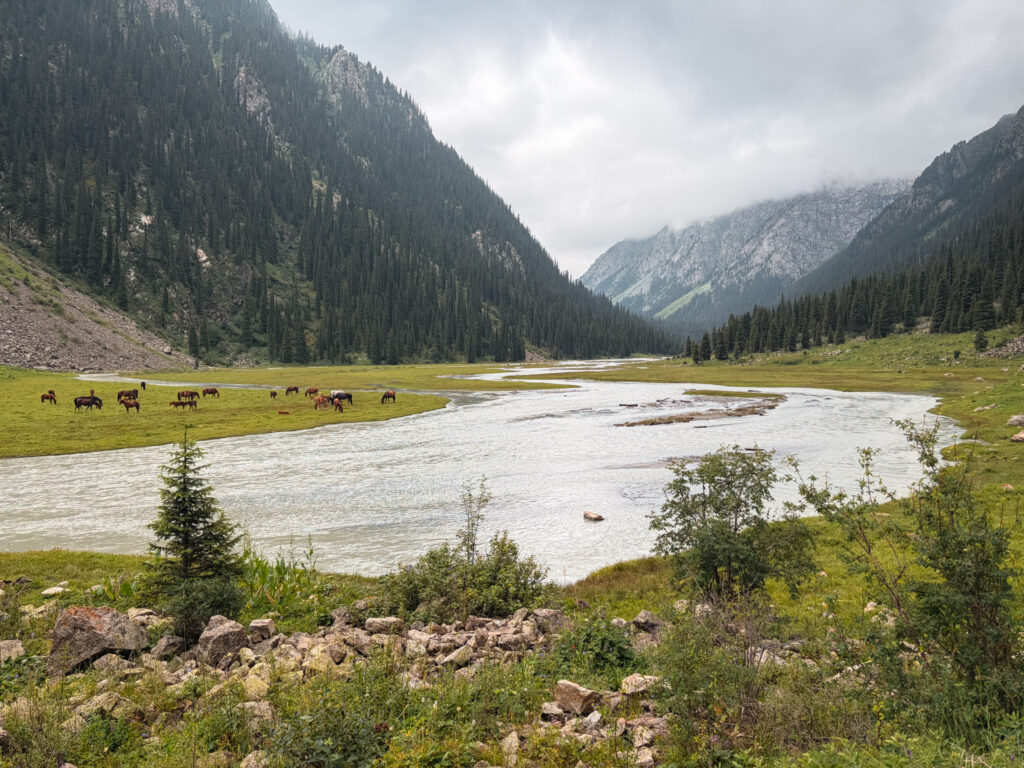
There are a few yurt camps being put up along this stretch as well. The road mostly ends at Second Bridge which is a footbridge across the river. You will find a few little restaruants here and we stopped for a snack and a cup of tea. They also sell food for lunch which we didn’t know so had brought our own.
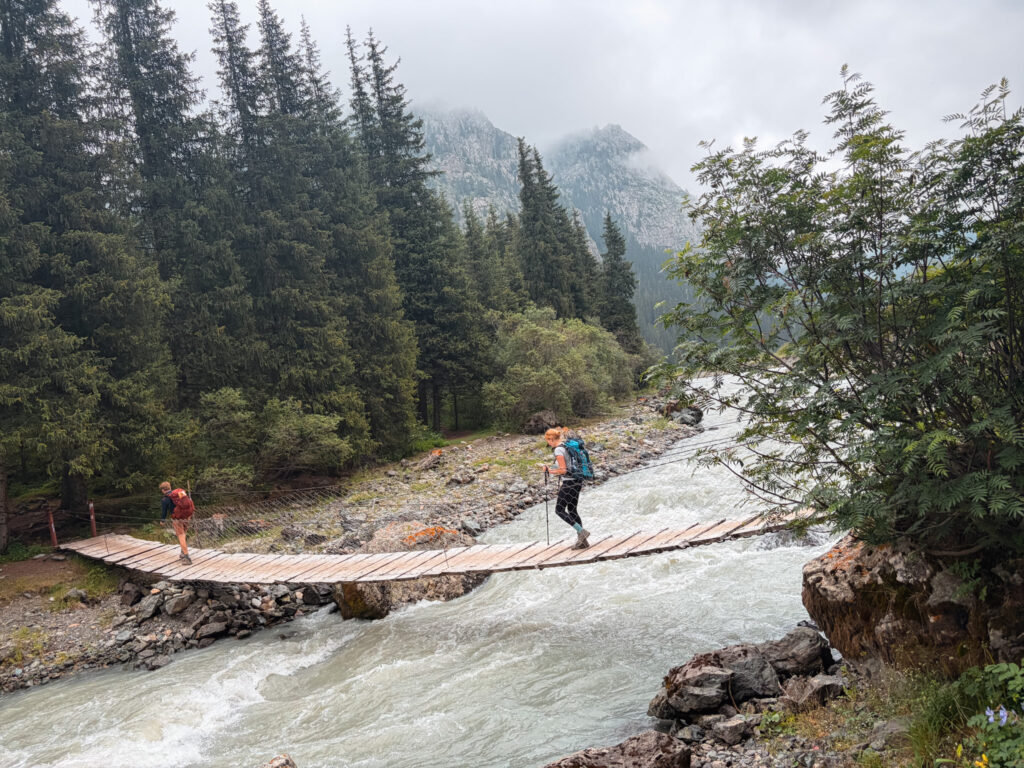
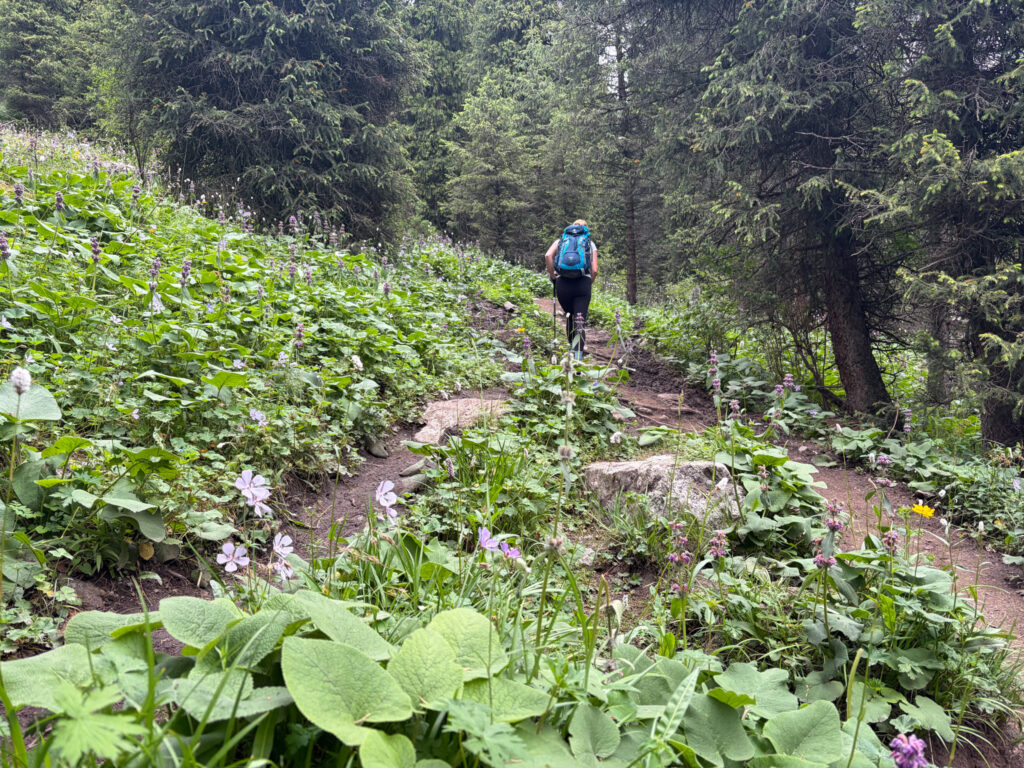
From here, the trail changes from a dirt road to an actual path that leaves the valley and ascends steadily uphill. This was the first hard part of the hike and the altitude was obvious. Hadley’s knee also started to bother her so we took it slow up through the forest and meadows. Luckily we arrive before the rain really started to come down.
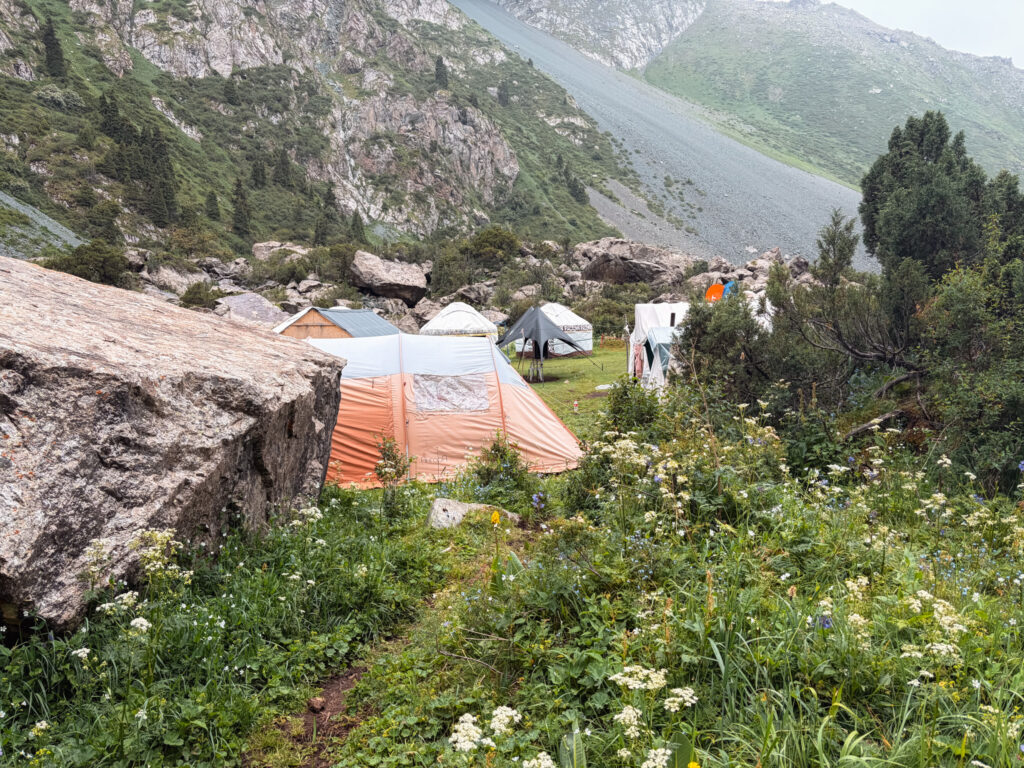
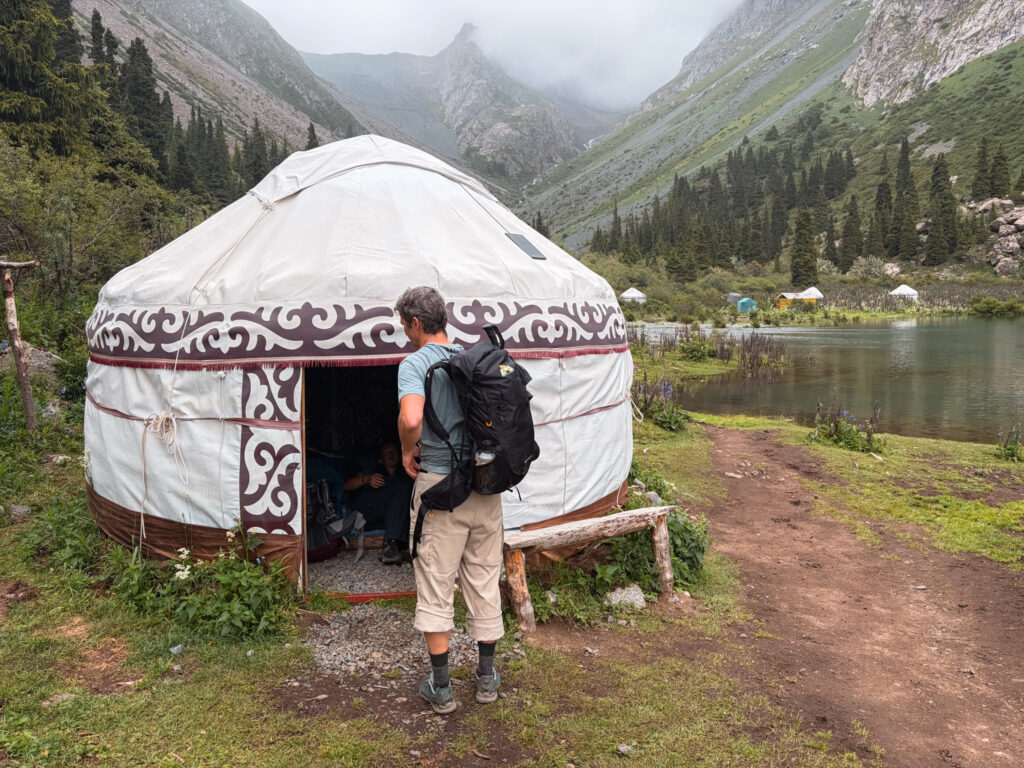
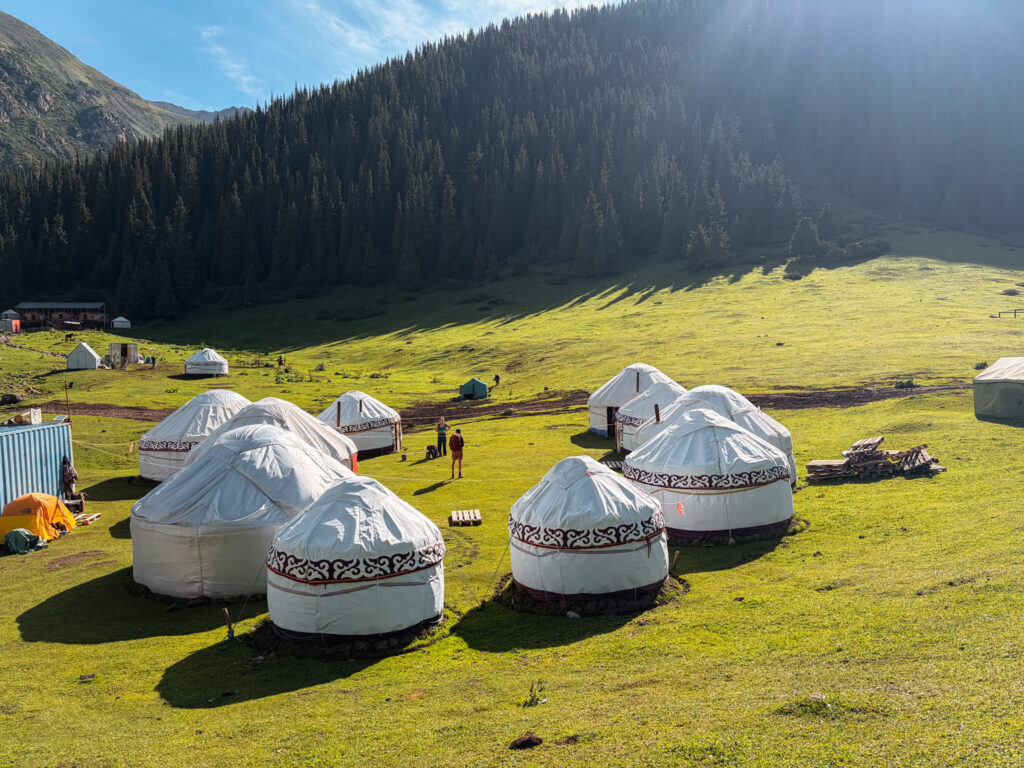
Sirota Camp is actually more than one camp. Each camp has 5-10 yurts or tents and a food tent. You can now book this Sirota Camp online (this is the one next to where we stayed).
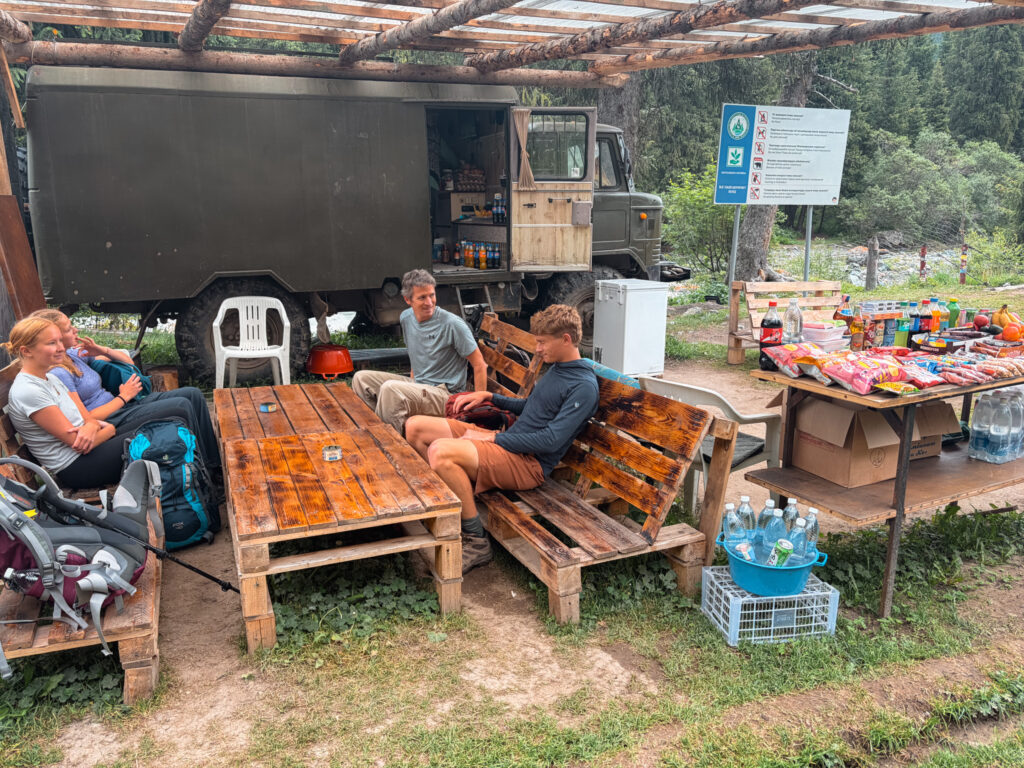
Ala Köl Trek: Day one up to Sirota Camp – stopping for a snack at Second Bridge
Day 2: Sirota Camp, Along Ala Kul over the Ridge to Keldike Camp
- Distance: 4.7 miles
- Elevation gain: 3,700 feet
- Hiking Time: 3.5+ hours
This seems like the shortest day of the trek – but is easily the hardest. It’s only 4.7 miles but a lot of elevation and since you are at altitude it’s HARD!
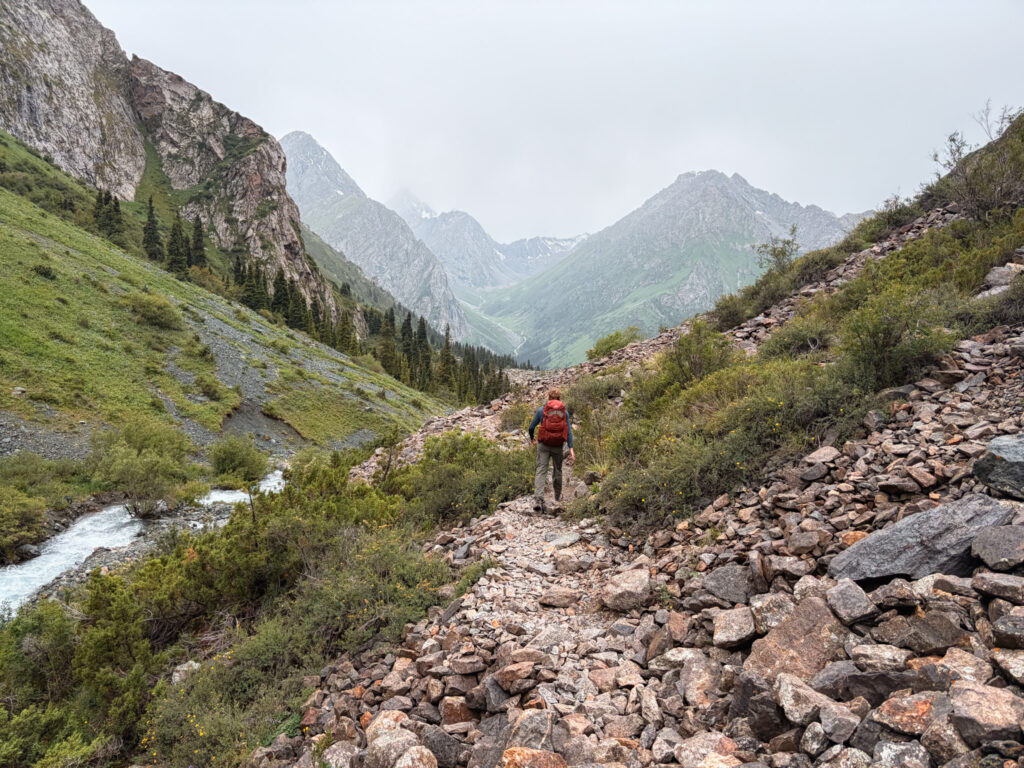
From Sirota Camp, the trail climbs steeply up alongside the flowing river with several waterfalls along the way. Since we were hiking in the rain this AM, we weren’t getting many views of the valley, but the water kept it interesting.
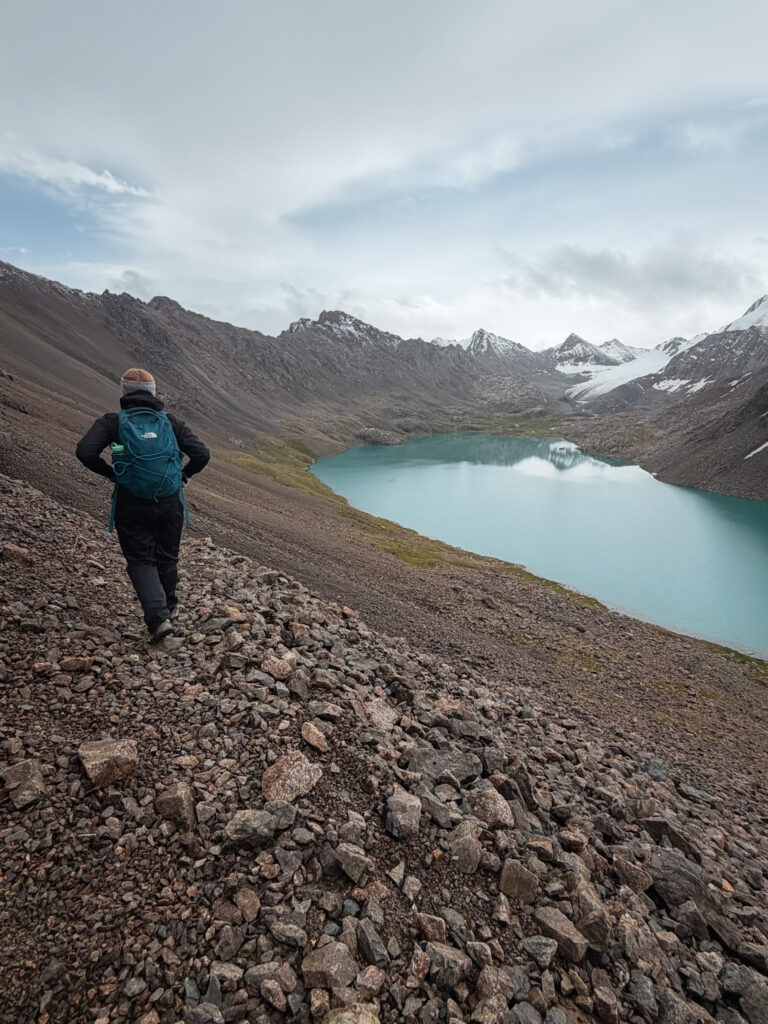
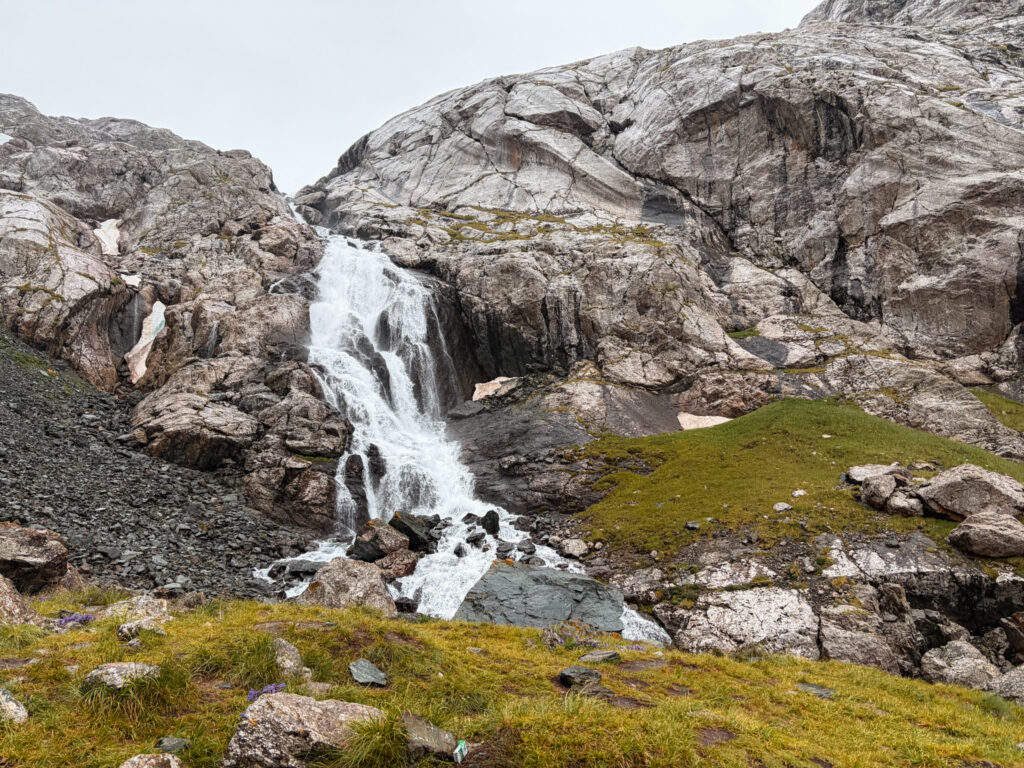
Right before you reach the lake, there is a large waterfall. Climb on the obvious trail up and around the waterfall for an instant view of the lake. By the time we reached this spot – we were very wet and very cold.
The lake is gorgeous, but since we were cold we decided to snap a few photos and keep moving. The trail moves alongside the lake but high up above it. There are some areas you can hike down to the water. After hiking for about 20 minutes we stopped for lunch and the sun came out for a bit. You will be able to see the ridge from here and the trail going up to the top – don’t underestimate – this is the hardest part of the hike, although if you take your time, you should be fine.
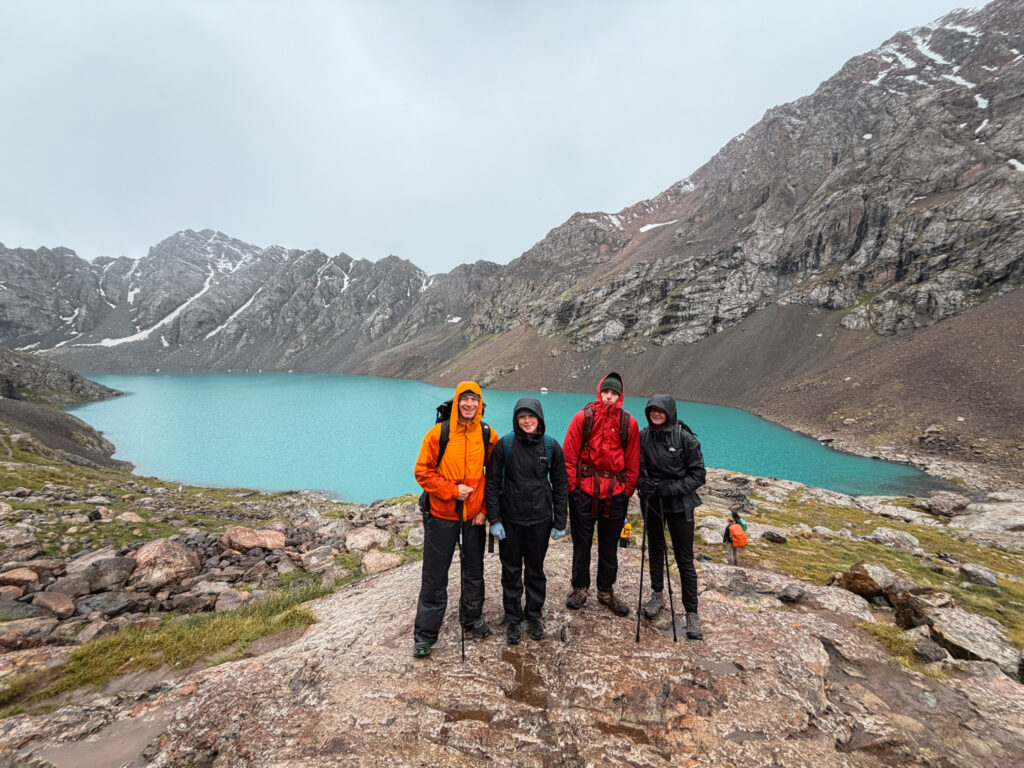
Very cold at Ala Kol Lake
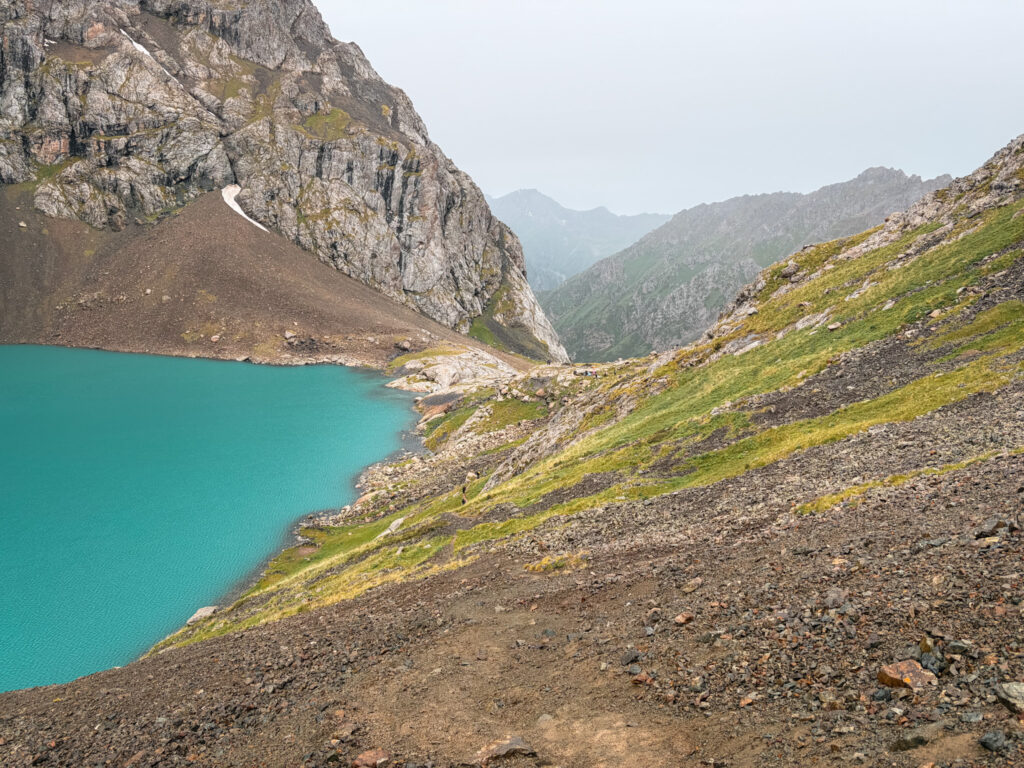
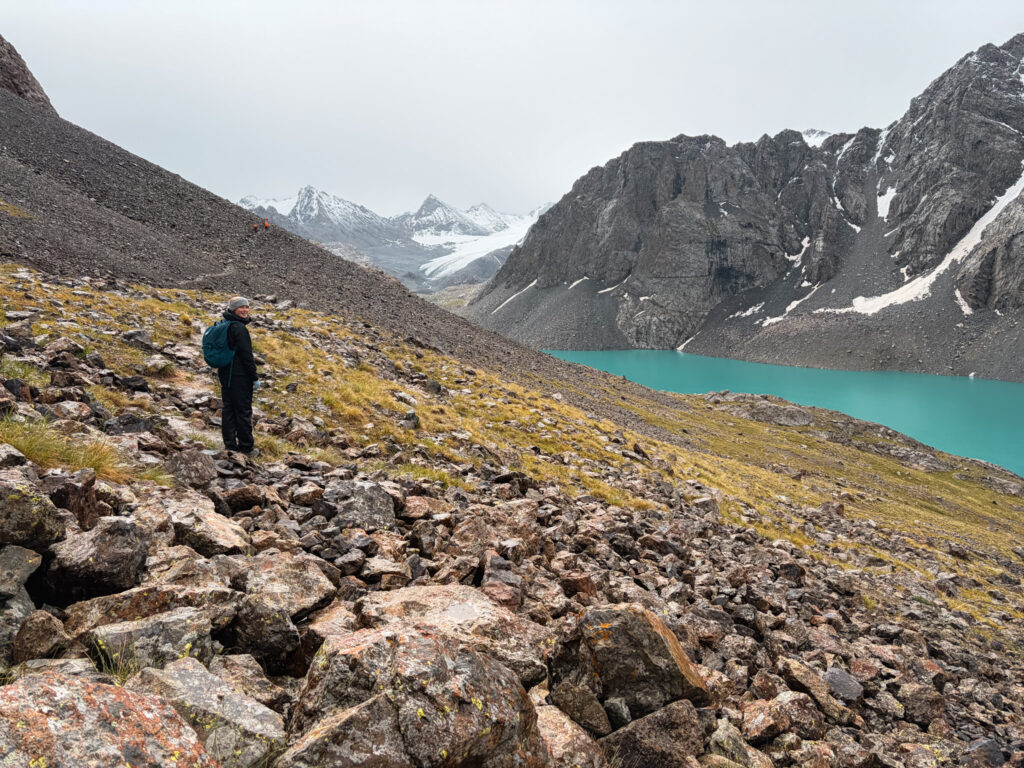
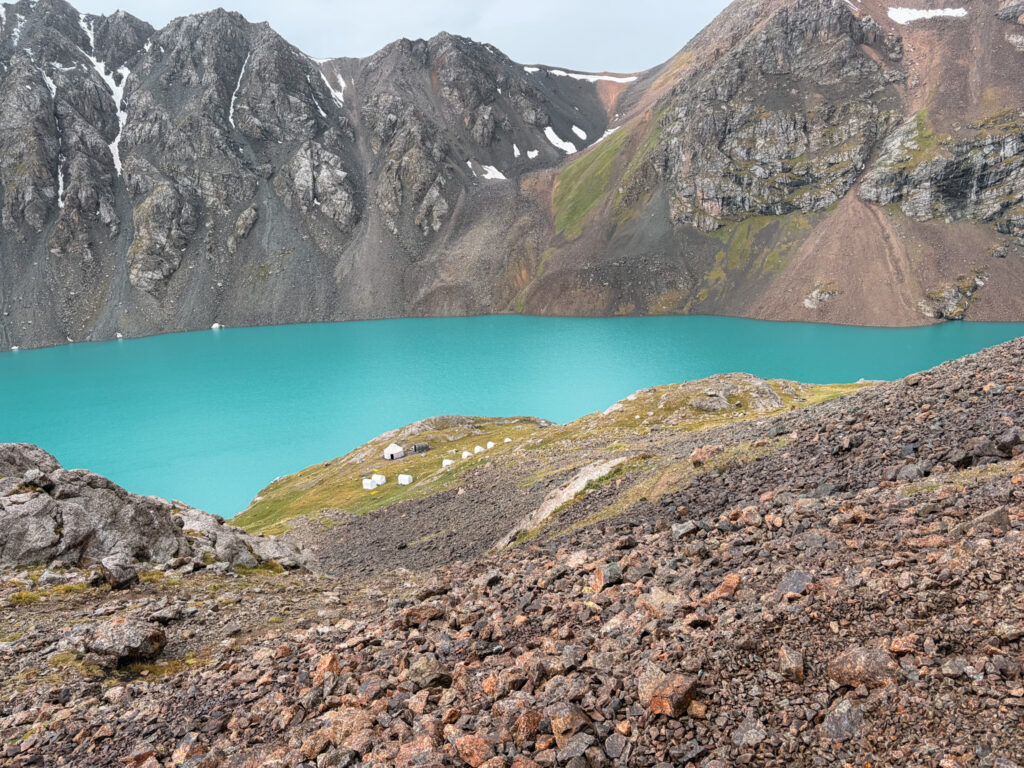
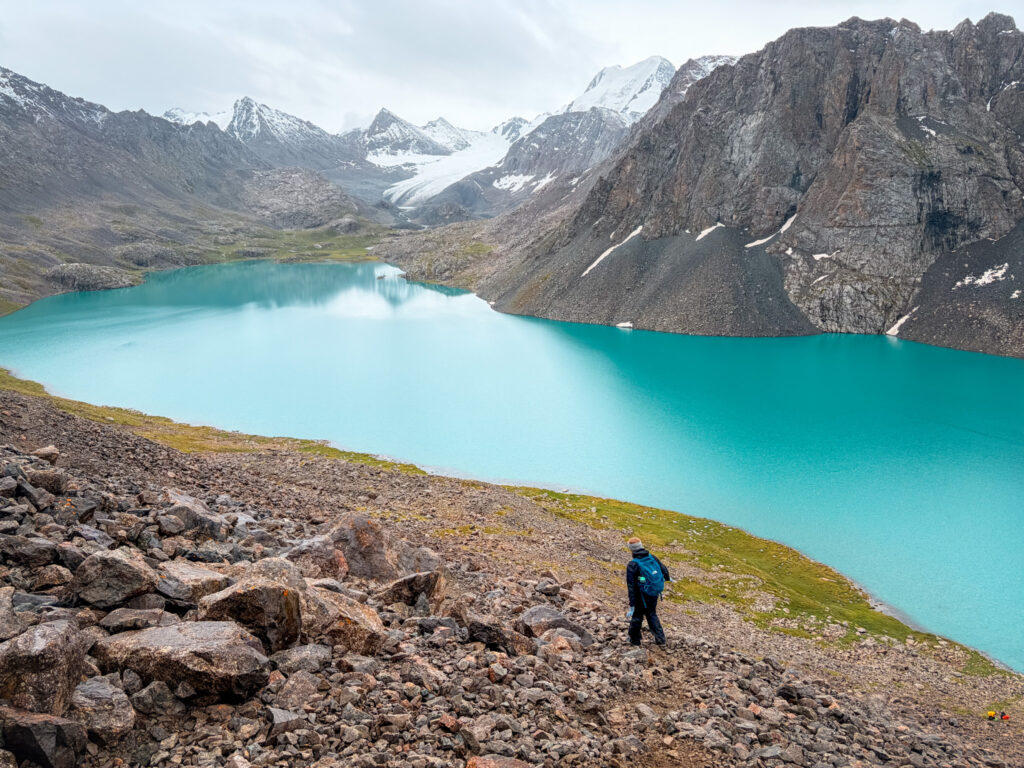
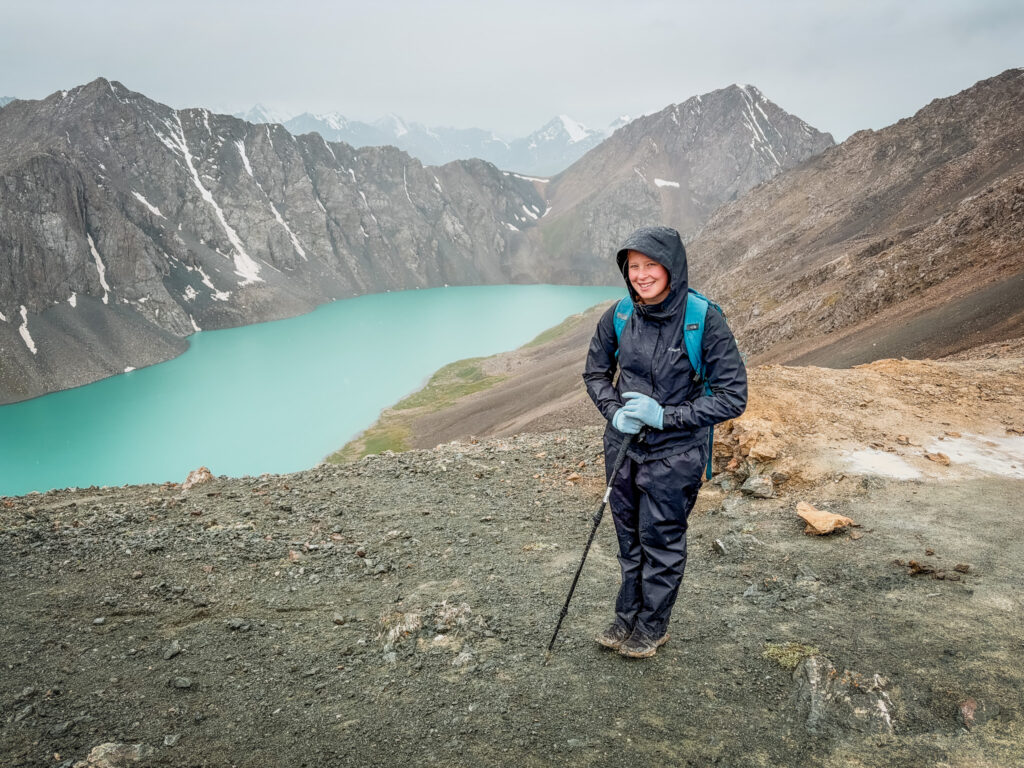
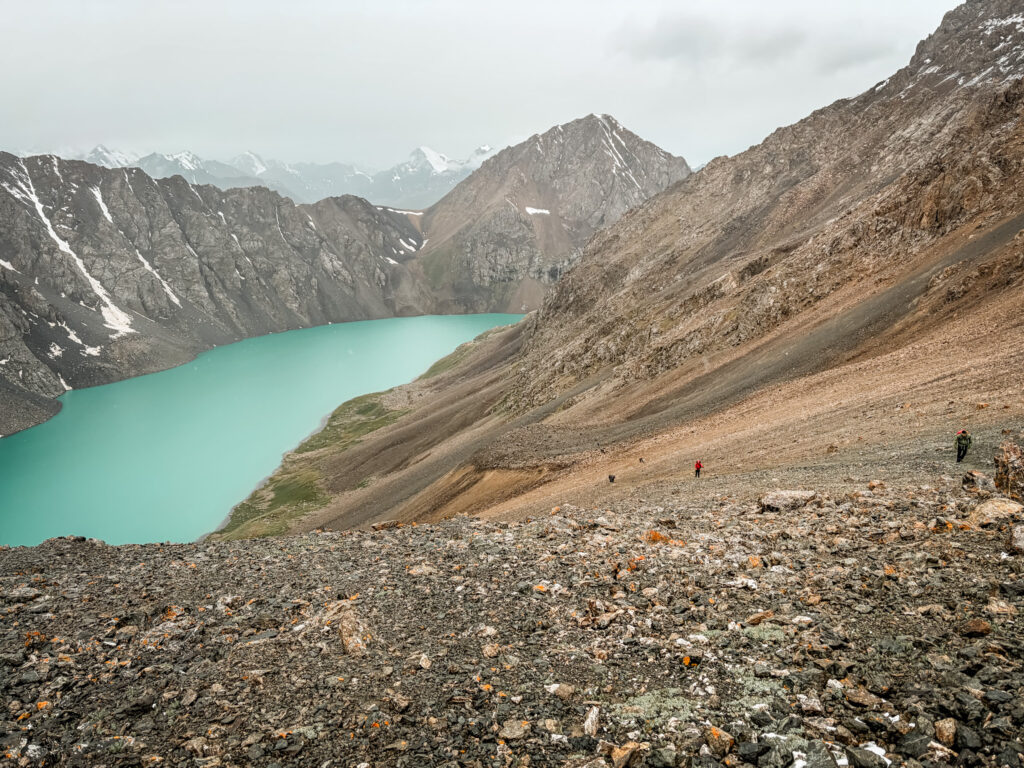
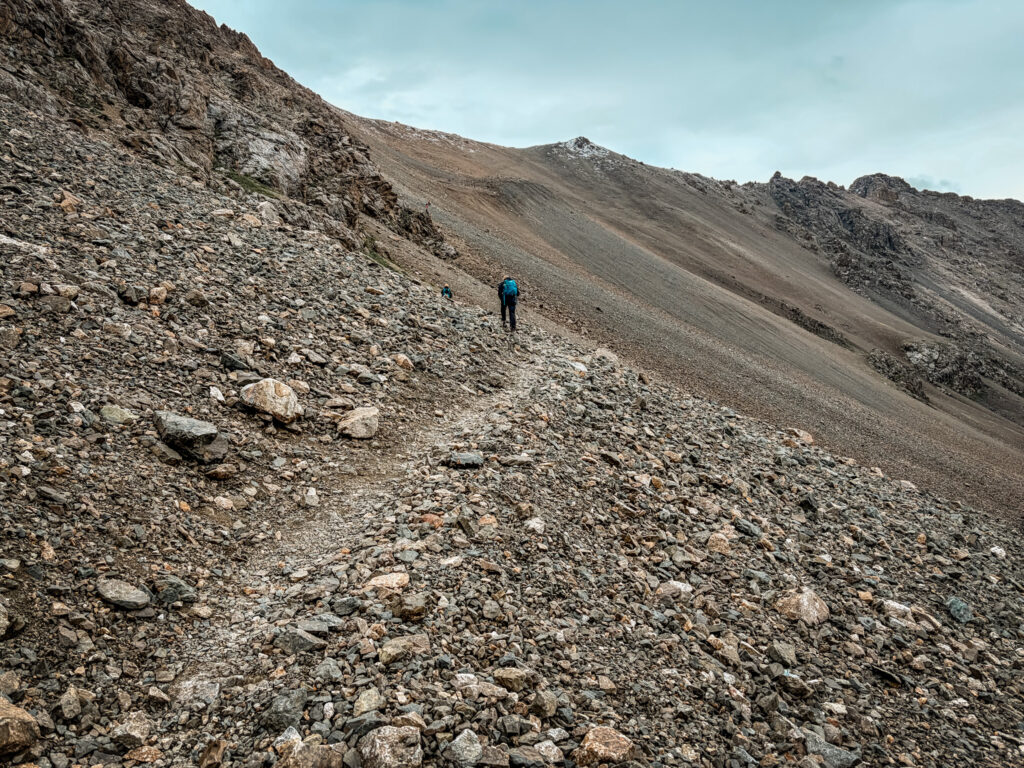
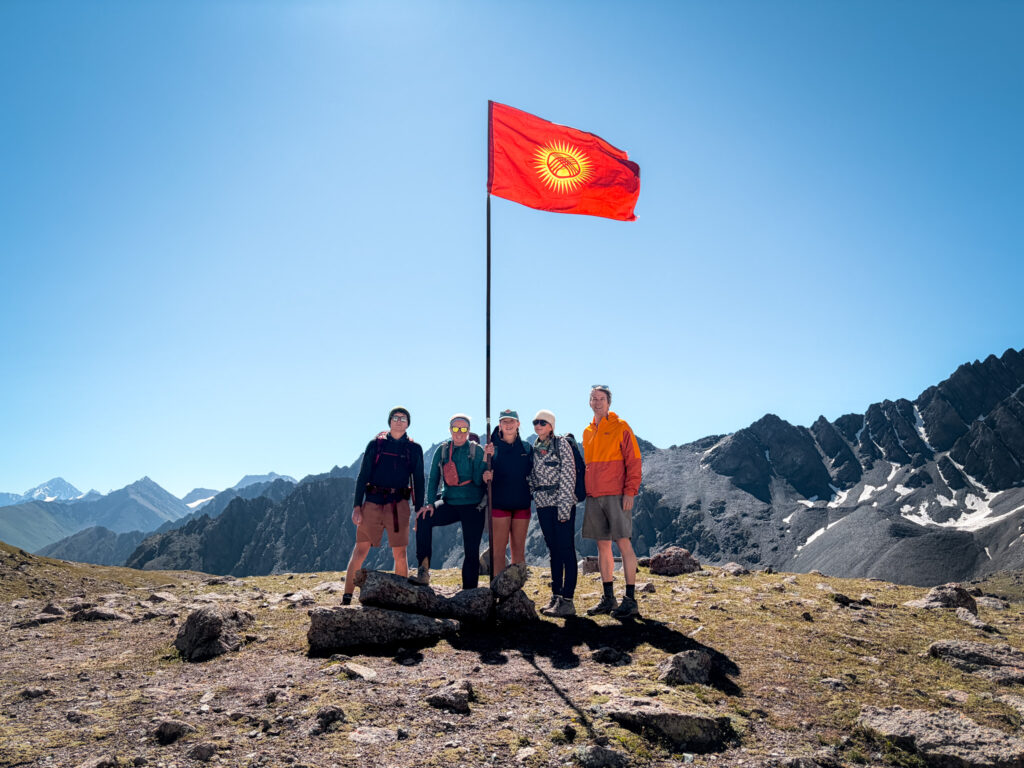
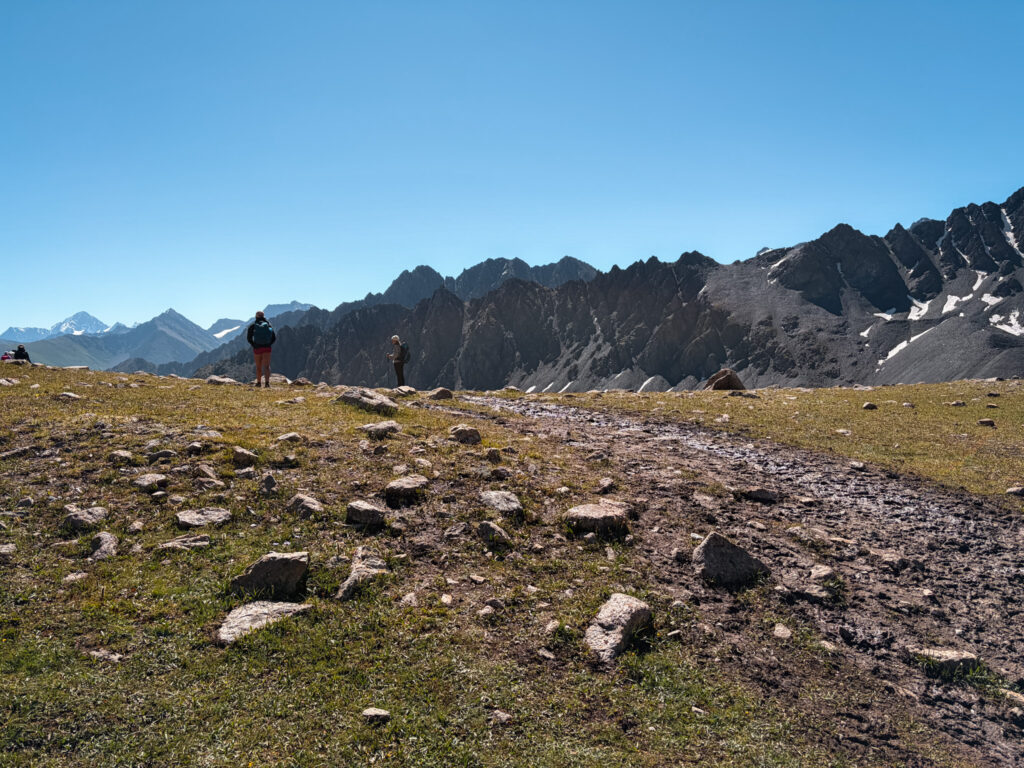
After reaching the ridge and enjoying the views, the trail descends steeply to the Keldike Yurt Camp. We had seen lots of description of this part of the trail as being sketchy with loose sliding rocks and sand. We did not find it that bad and took our time going down. You will want to be careful if you are carrying a big pack, but overall this was fine (I was glad not to be going UP this section as it’s steep).
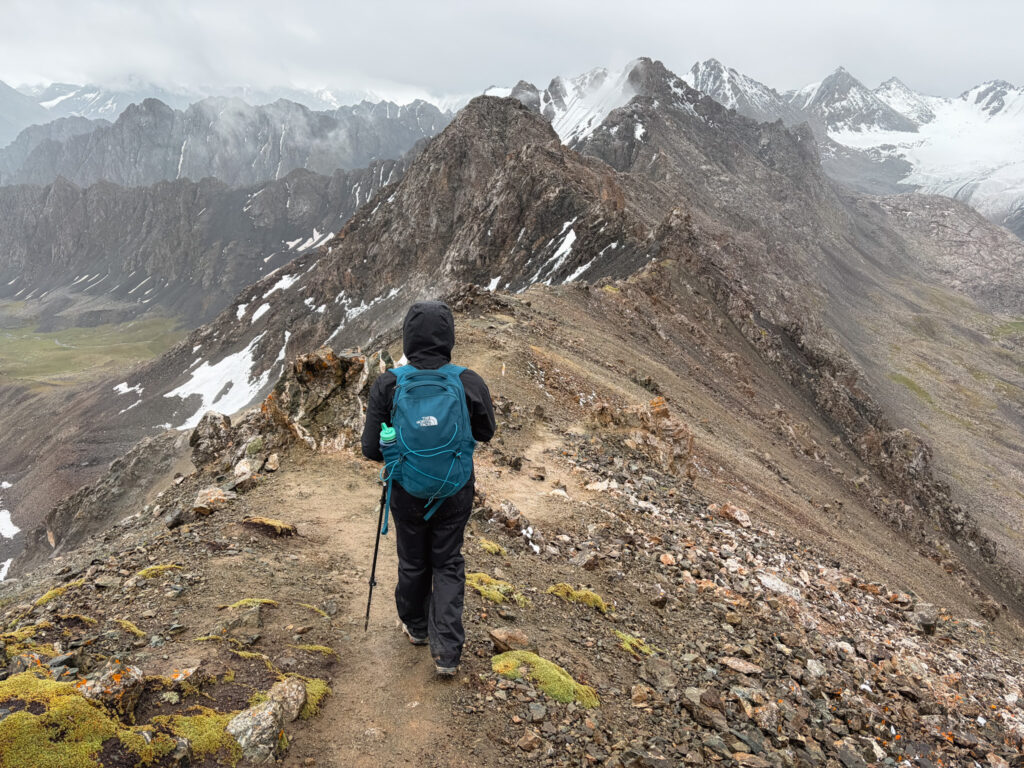
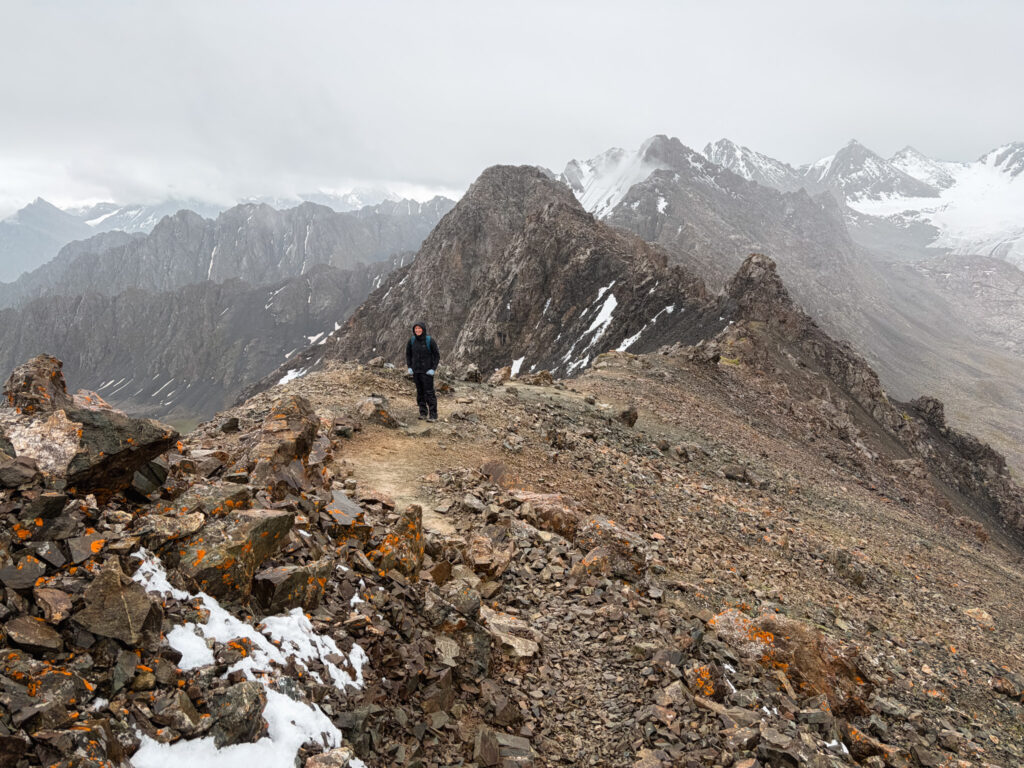
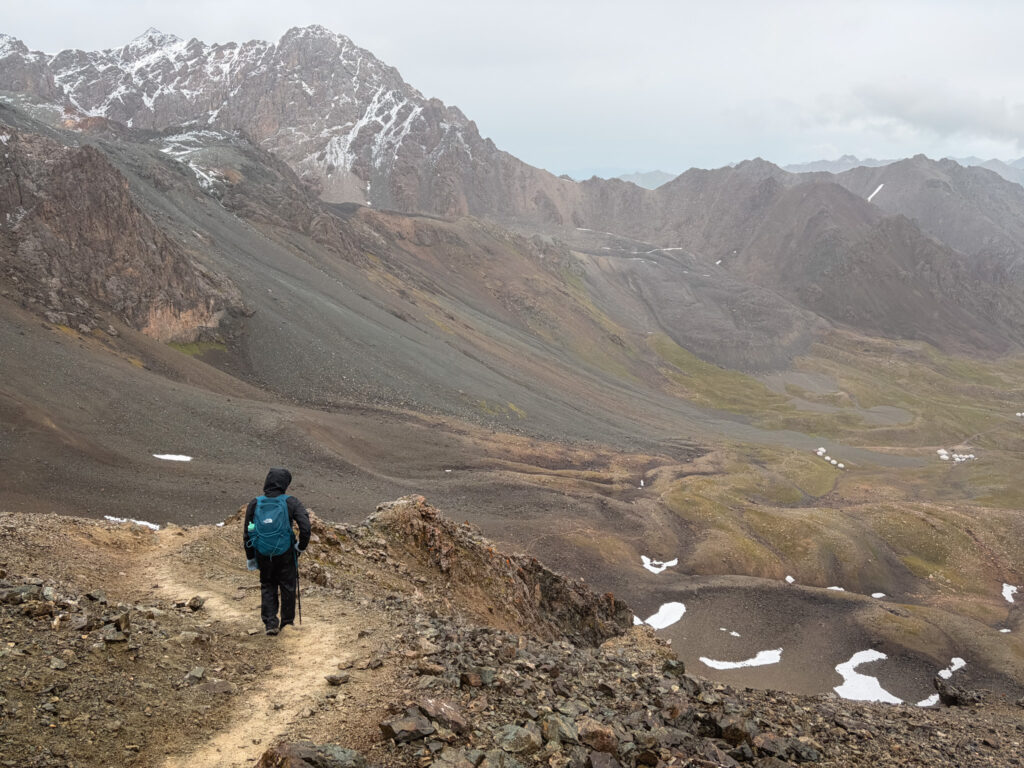
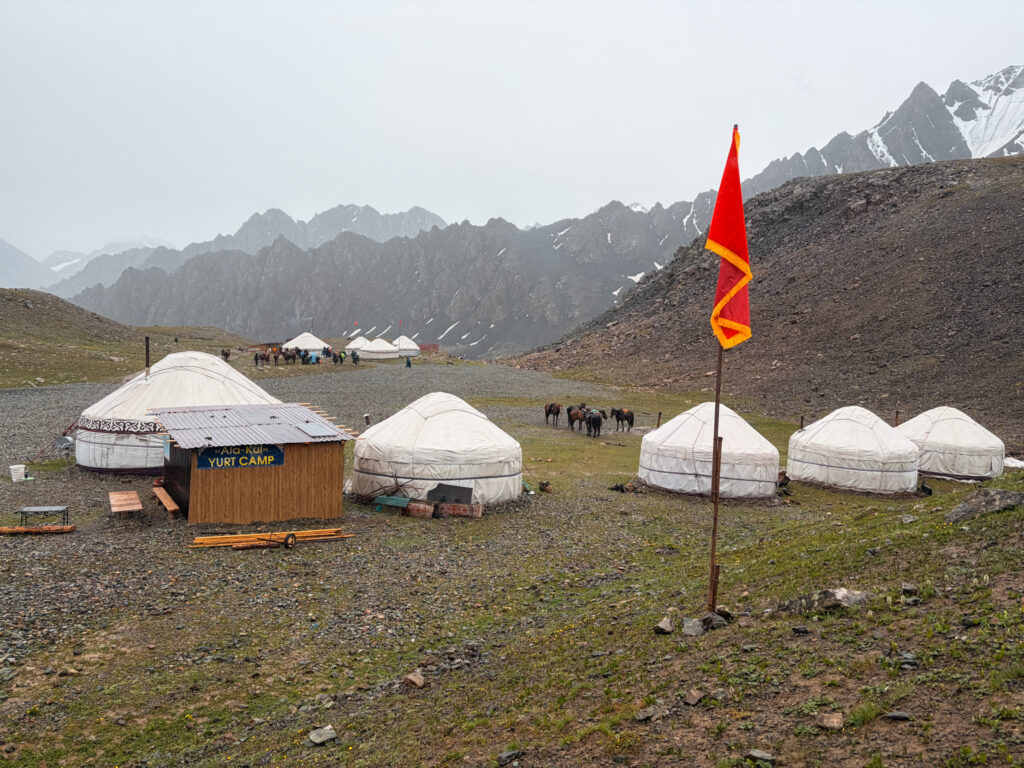
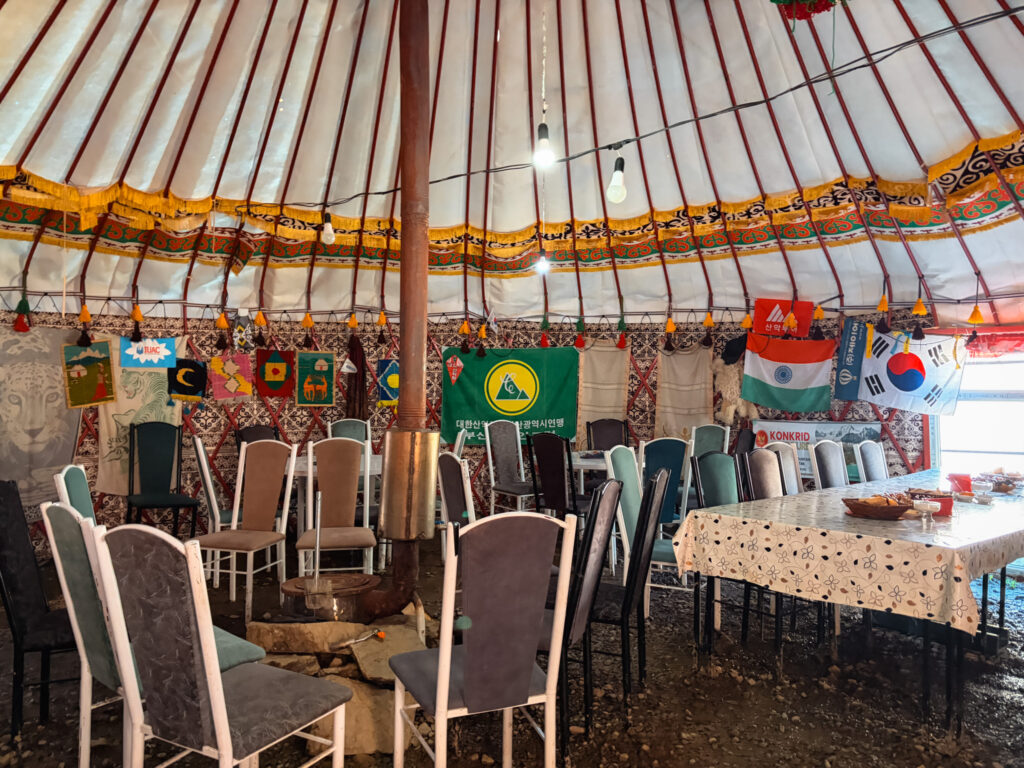
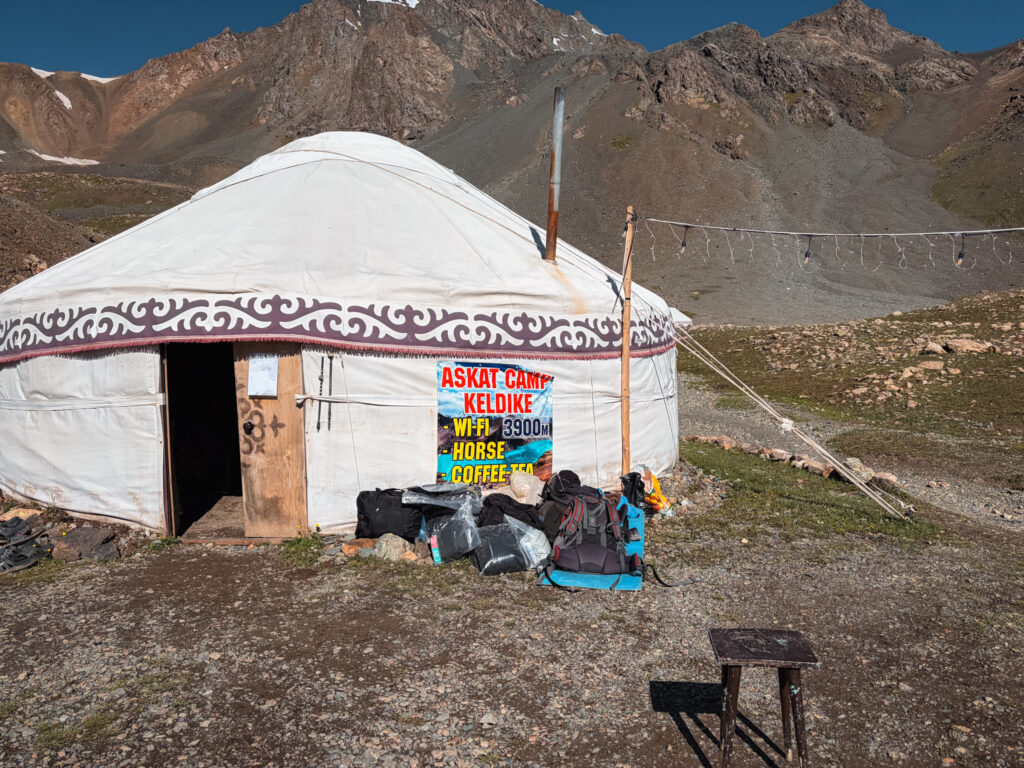
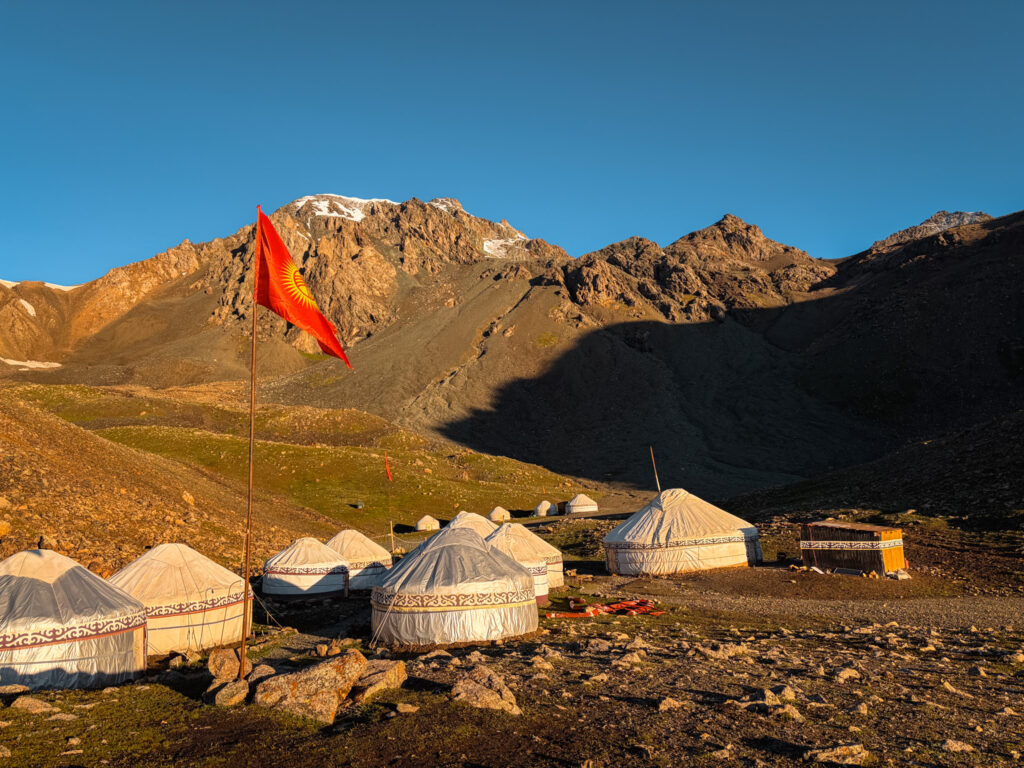
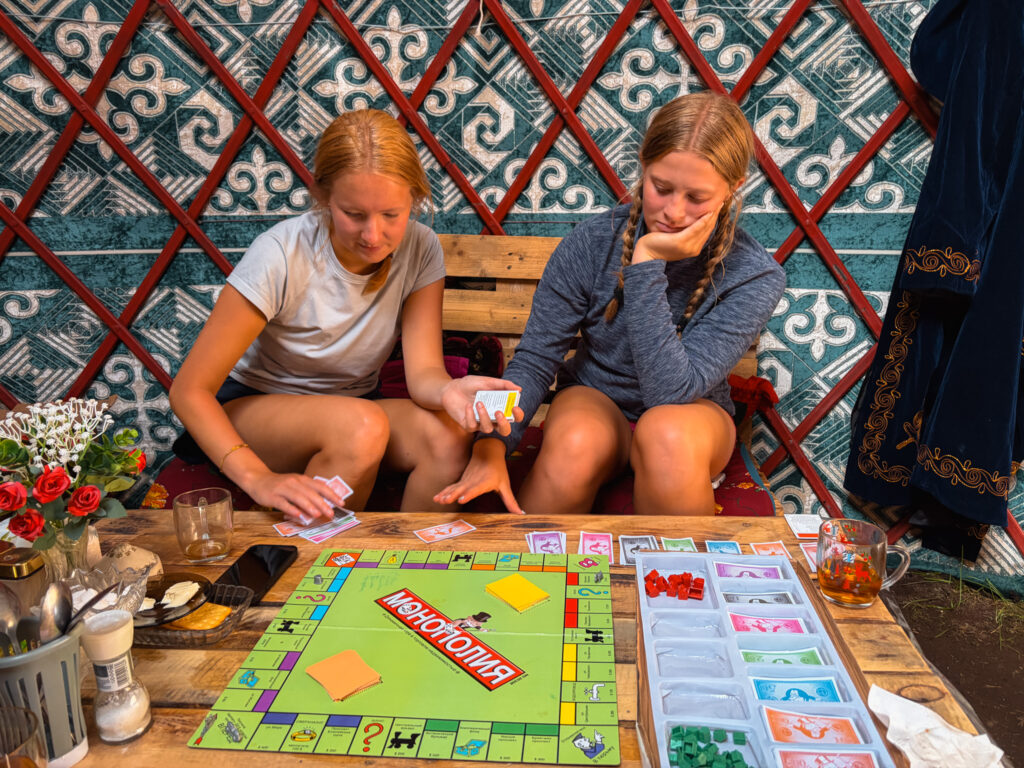
Keldike Yurt camp is located right at the base of this and you can see it from above. This camp was much bigger than the Sirota Camp and we spent the whole afternoon drinking tea in the food tent with other hikers.
It is possible on this day to hike all the way down to Altyn Arashan. We were happy to stop and enjoy the day in the yurts since it was raining, but on a sunny day we would have been happy to go all the way down.
Day 3: Keldike Camp to Altyn Arashan
- Distance: 5.5 miles
- Elevation loss: 2,700 feet
- Hiking Time: 3+ hours
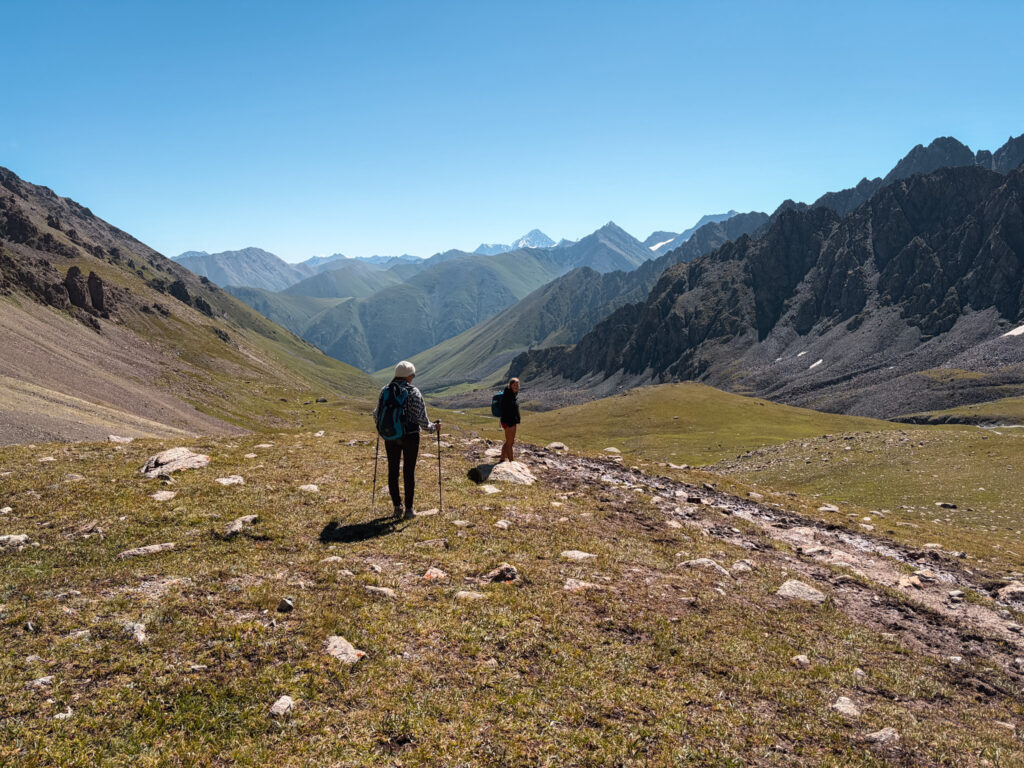
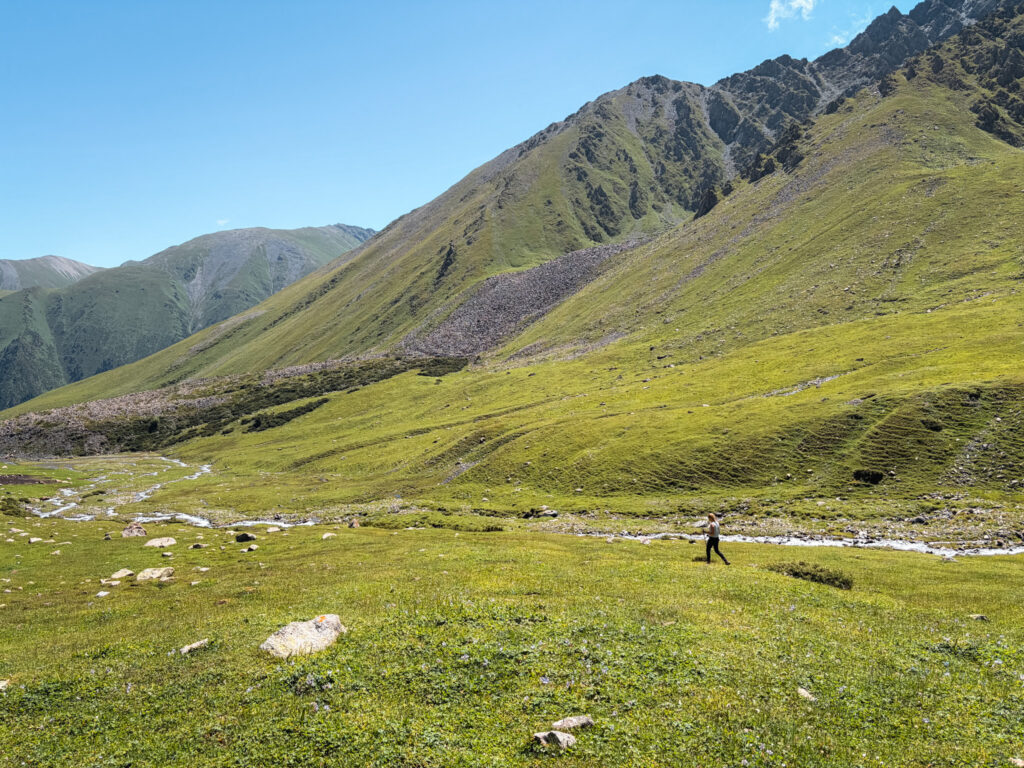
From Keldike to Altyn Arashan is another lovely hike down a valley. Luckily for us the sun came out so we were able to take our time and enjoy a few stops and the view. The valley keeps changing on the way down before opening up into the lower valley where you’ll cross the river and turn left into Altyn Arasham.
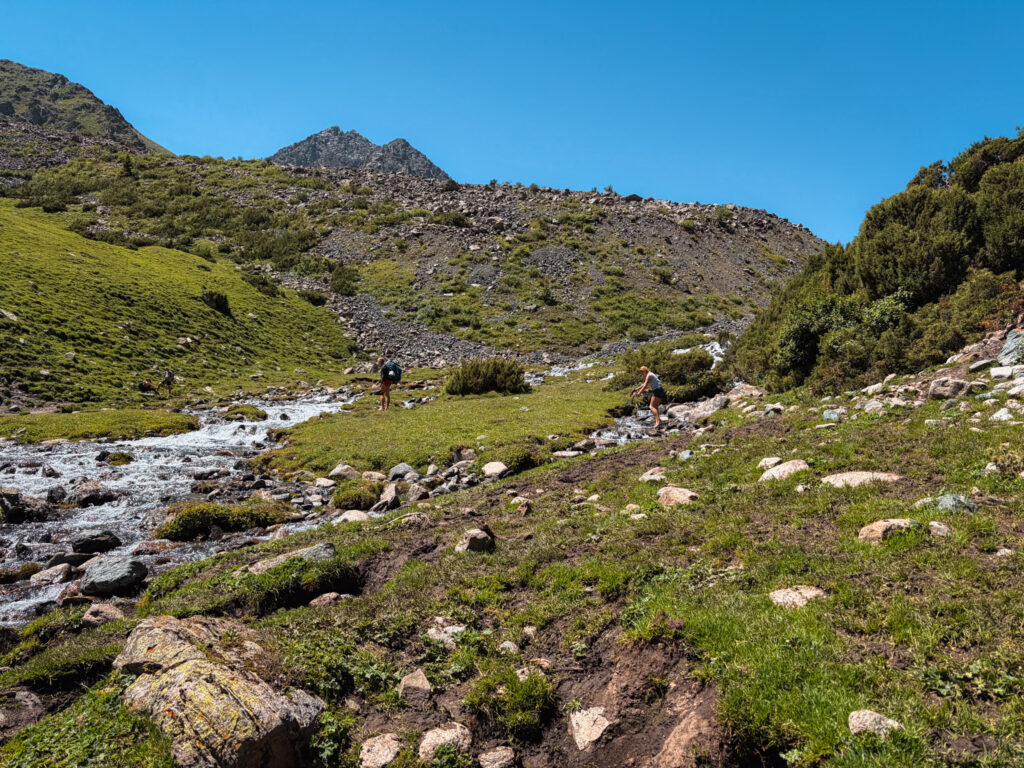
There is one river crossing here that you will have to take off your shoes to cross.
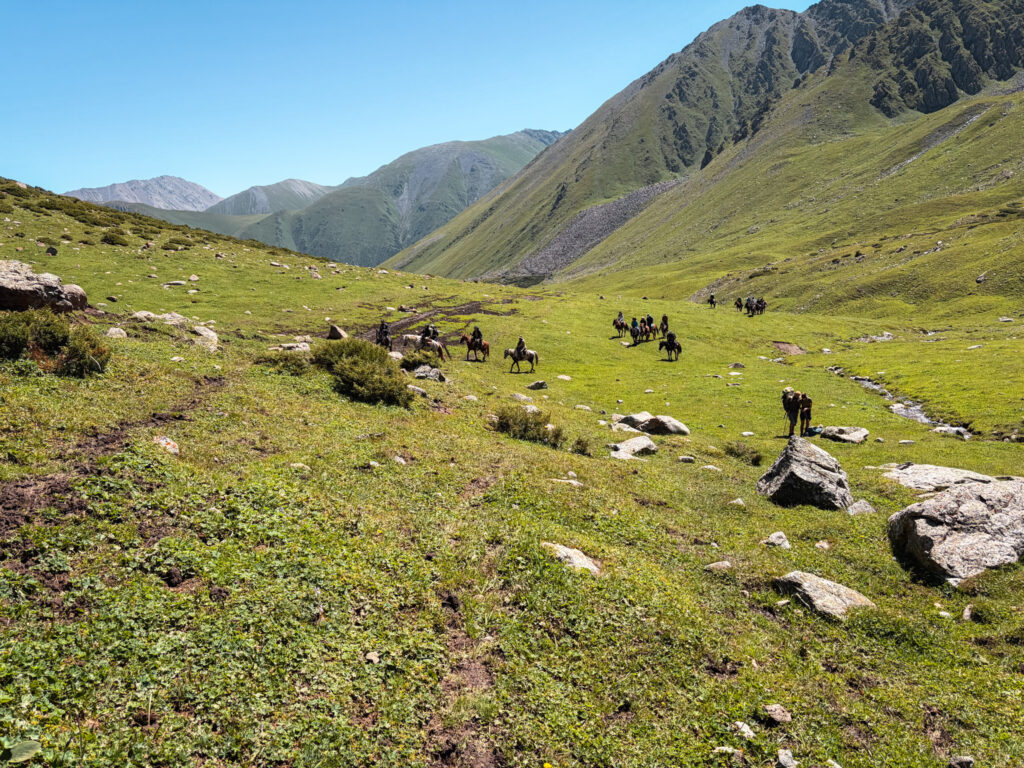
Since many people visit the lake via horse, you will pass a lot of people riding horses. This makes the trail extra muddy, so make sure you’re boots are waterproof! While we got a packed lunch from Keldike, it retrspect, we should have waited and eaten lunch on the way down or at the next yurt camp.
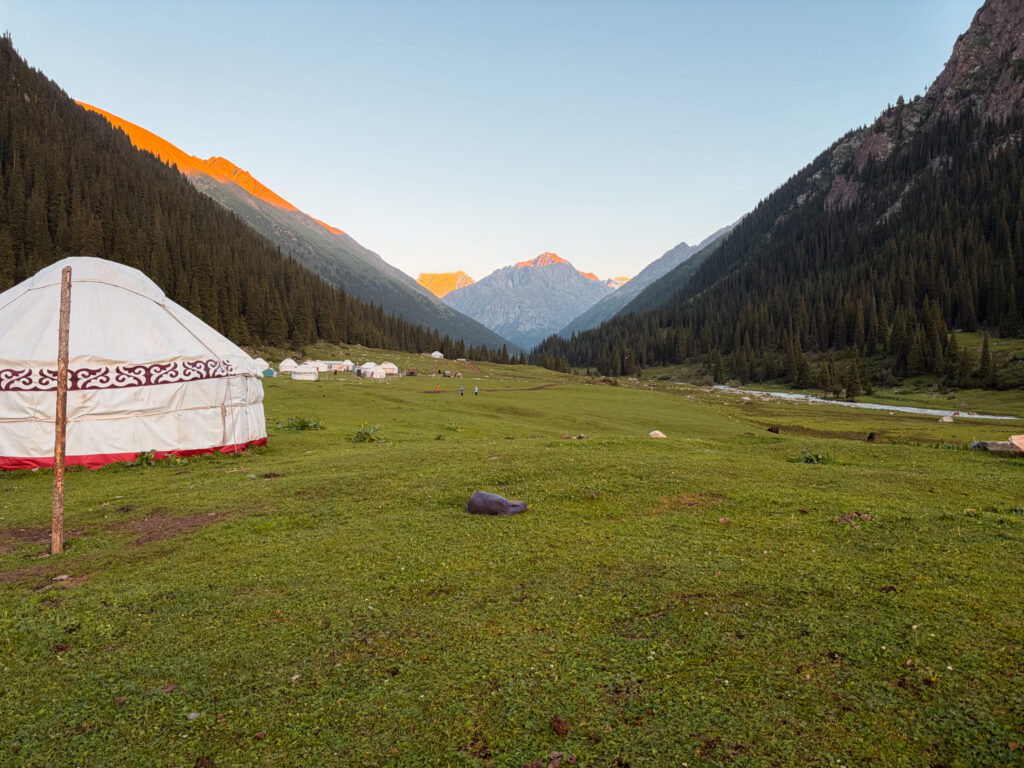
Altyn Arashan is the largest place you’ll stay and there are so many options from yurt camps to hotels and cabins. You’ll also find more options for food. We stayed at Aalam yurt camp Altyn-Arashan which we highly recommend – it was my kids favorite yurt camps of our trip. It’s not fancy, but comfortable and the owners were nice.
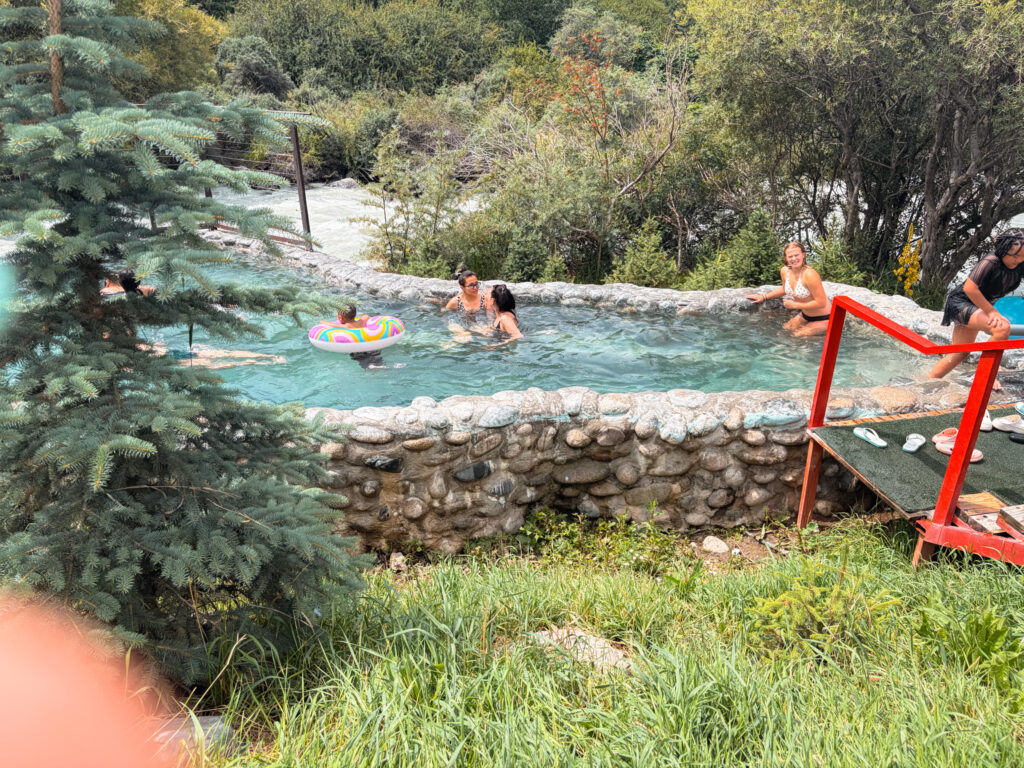
Altyn Arashan is known for its hot spring pools. There is a free public pool near the river and several hotels with their own pools. We did not go for a soak, but went to one at the end of the hike in Ak Suu instead.
Day 4: Altyn Arashan to Ak Suu
- Distance: 10 miles
- Elevation loss: 3,000 feet
- Hiking Time: 3+ hours
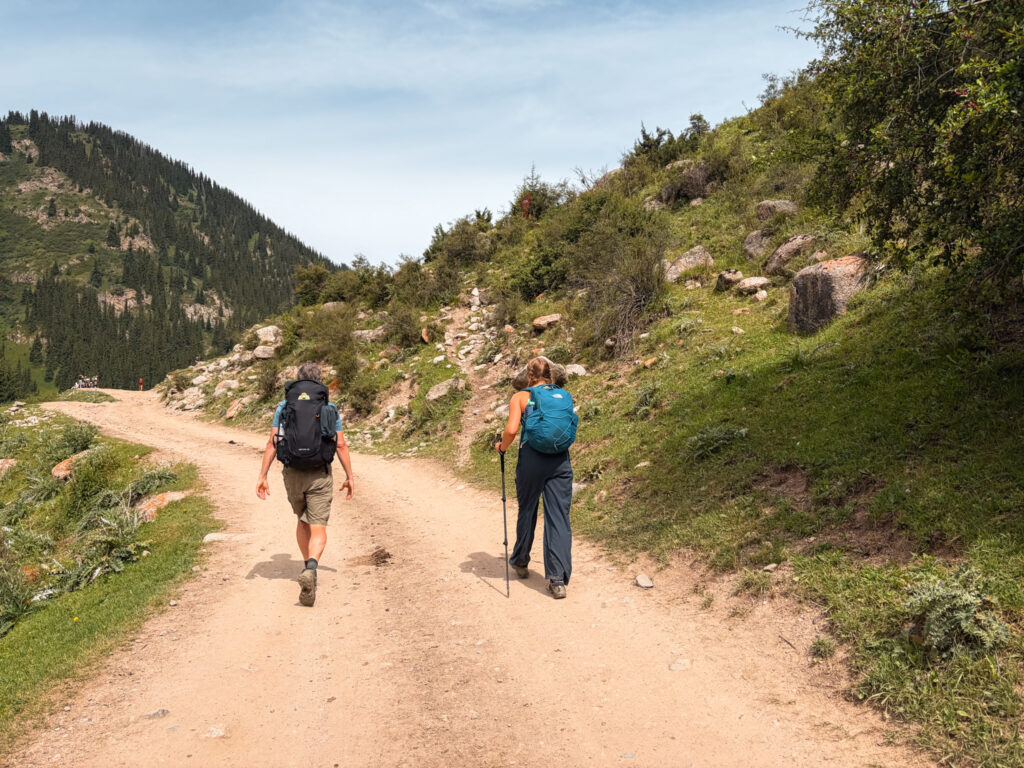
You have a few options for gatting from Altyn Arashan back to Karakol. You can book a ride from here although it will cost you. You can also walk to Ak Suu and take a taxi from here. This is what we did. The trail to Ak Suu is really just the road and while it travels along a pretty river, this was the least exciting part of the hike. The road was often muddy and generally easy hiking.
The hike is about 10 miles. Note that you will need to pay another park fee when you leave as you actually hiked through two different parks.
If you want to hit a more established hot spring, you can walk an extra two miles once you get to Ak Suu. From here waive down a taxi or order one of Yandex Go.
Hiking Ala Köl with Kids/Teens, Solo, or as a Group
While I wouldn’t put this hike right at the top of best treks with kids, this is a GREAT trek with experienced teens, solo hikers or any combination. We did this trek as a family (2 of us in our 40’s, 2 18 year olds and a 14 year old). Freja was the youngest person we saw on this trek.
Permits, Guides & Logistics
Unlike some of Kyrgyzstan’s more remote treks near the Chinese or Tajik borders, Ala Köl doesn’t sit in a restricted border zone, so there’s no special permit process to navigate ahead of time. You do need to pay the Karakol National Park entry fee (around 250 som per person) plus a small camping fee per tent, collected at a checkpoint near the trailhead.
Whether you need a guide depends on your comfort level: the trail itself is well-marked and heavily used in summer, so independent trekking is common and straightforward for fit adults. Families or first-timers to high-altitude trekking may want to hire a guide and/or horse support through one of Karakol’s trekking agencies: it takes the navigation and gear-hauling pressure off.
What to Pack
Even in summer, you’re sleeping and hiking at altitude, which means real temperature swings: hot sun at midday, and near-freezing nights.
Exactly what you pack depends on whether you are self camping or staying in a yurt. We did not bring our own tent although that is a good option. There are several stores in town where you can rent gear. Here is a list of what we packed for staying in Yurt’s along the way.
Altitude & weather essentials:
- Warm layers for camp (nighttime temps drop well below what the daytime warmth suggests) We brought fleeces and puffy jackets. Also bring rain coats and pants for warmth.
- A sleeping bag liner. The yurts have sleeping bags, a liner keeps it clean and even warmer.
- Waterproof, broken-in hiking boots: the descent off the pass is loose scree and sometimes wet
- Trekking poles (genuinely useful on the descent) We rented these in town
- Sun protection: the UV at this altitude is intense even on cool days
- Water purification, since most of your water will come straight from mountain streams
A Bit More about the Yurt Camps
We decided to stay in yurt camps throughout the stay. We booked directly through Destination Karakol and through booking.com. If you are travelling during the busy summer season, you should book maybe a month in advance.
Sirota Yurt Camp: You can now book this Sirota Camp online (this is the one next to where we stayed).
Keldike Yurt Camp: This one can’t currently be booked online.
We stayed at Aalam yurt camp Altyn-Arashan which we recommend, although there are MANY options in this area.
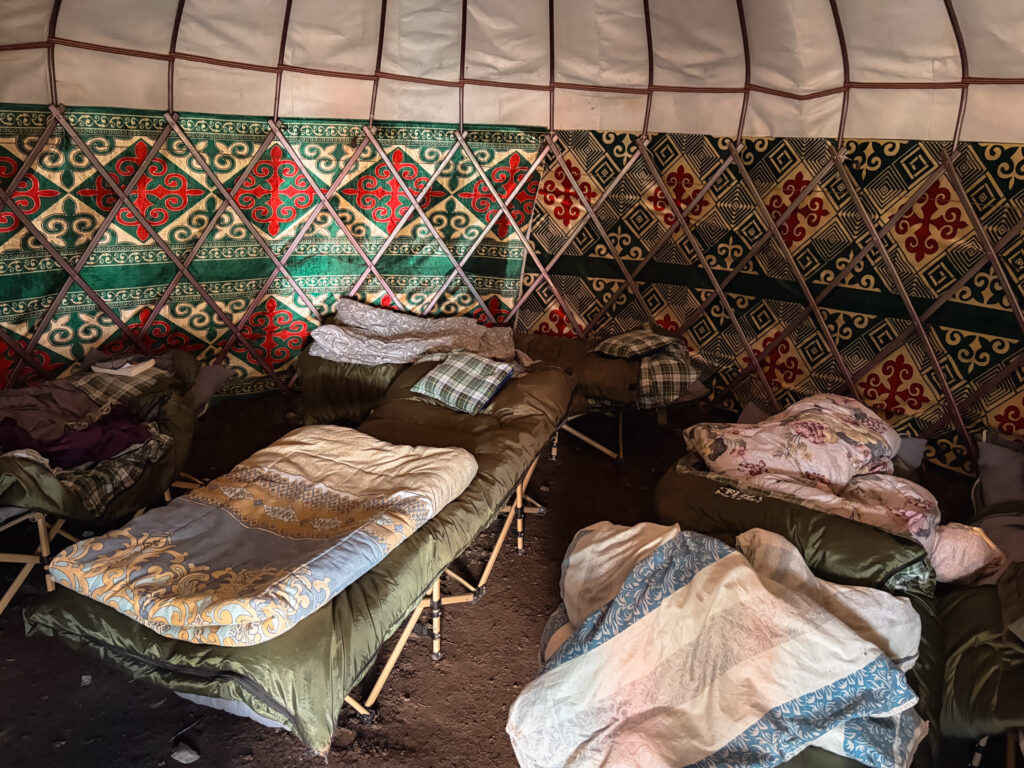
The yurt camps all offered breakfast and dinner and would make a bagged lunch if requested. (don’t get one from Keldike!) The yurts are either shared or private and have sleepting bags, pads, and basic facilities. The main yurt is usually heated and has Wifi- like really goot wifi.
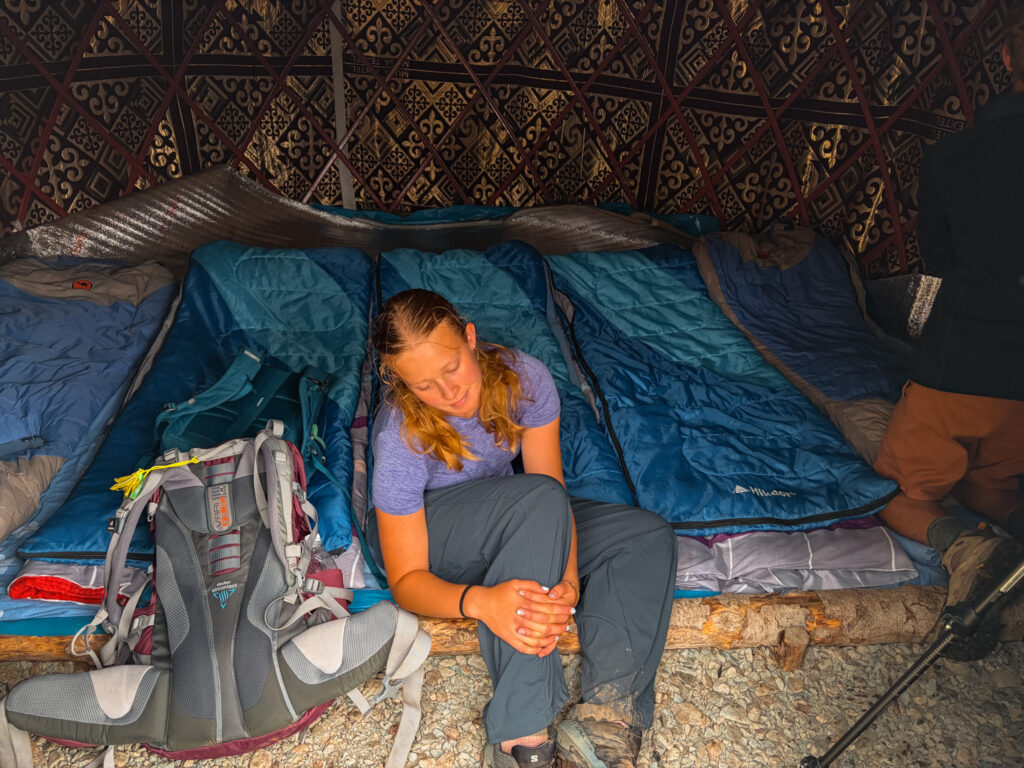
Inside the yurt – sleeping bags and pads for sleeping. Sirota Camp
Food on the Trek
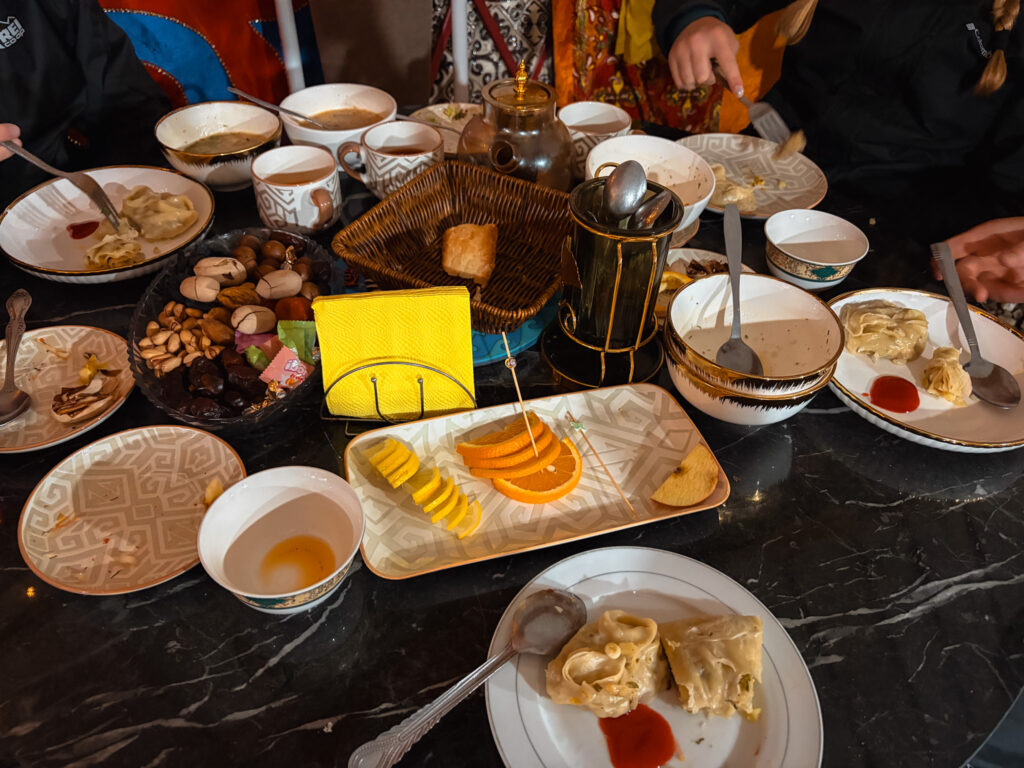
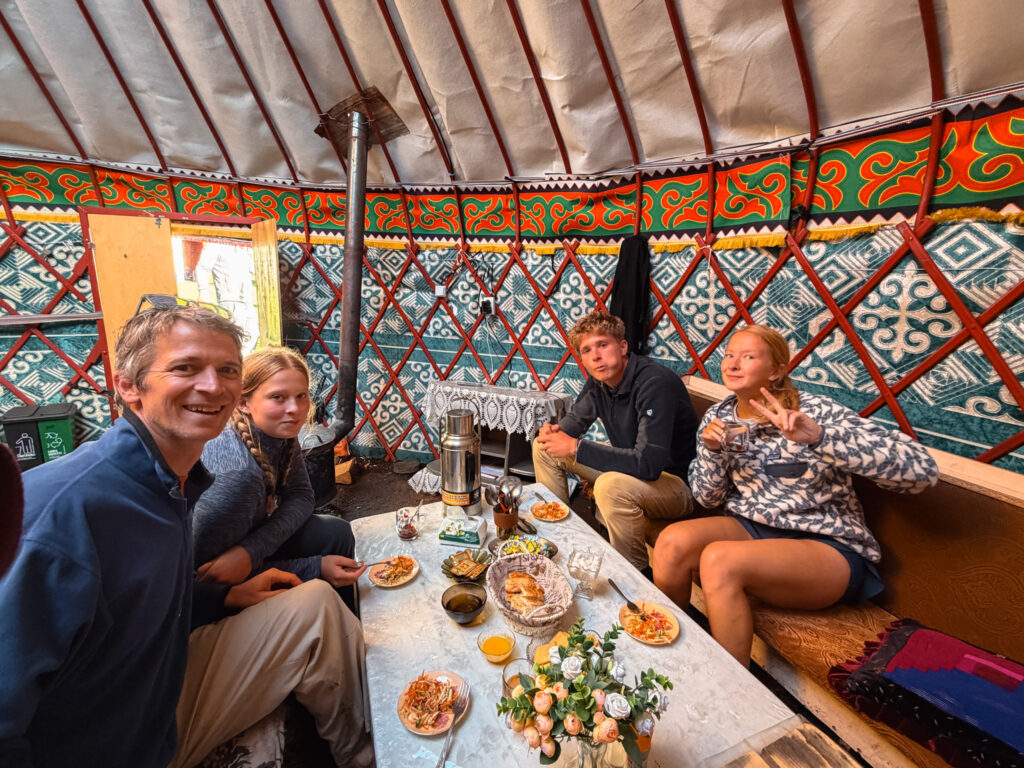
We packed a bunch of snacks like granola bars, bread, and fruit. We also enjoyed breakfast and dinner at the yurts and they offer snacks and tea throughout the day. I was a bit worried about lunch but we were able to order a packed lunch from the yurts, although these were of varied quality.
Food in general was soups or rice with meat, dumplings, and breakfast was eggs or oatmeal.
Bathrooms
Bathrooms are an experience in Kyrgystan in general, and this trek is no exception. Most of the bathrooms are a simple pit in the ground. Usually there is a building with a door although a few of these were missing as well. I recommend bringing a bit of your own toilet paper as well although most yurts have some.
Water
We carried a lot of water and also brought tablets to treat water. We also brought our own life straws. Some people drank directly from the mountain streams, but we didn’t want to chance it, so only drank treated water and tea.
FAQs
Is the Ala Köl trek hard? It’s rated moderate to challenging: mainly because of the sustained elevation gain to the pass and the loose, steep descent on the other side, not because of any technical climbing. Most people in at least moderate shape can do this. That said – it’s a hard trek.
How long does the Ala Köl trek take? Most people do it in 3 to 4 days. Four days is the more comfortable pace, especially for families. We had mixed feelings about whether 3-4 days was right. We enjoyed the flexbility with 4.
Do you need a guide for Ala Köl? Not strictly, the trail is well-marked and popular in summer, but first-timers to high-altitude trekking, or families, often find a guide worth the cost.
Is altitude sickness a risk on this trek? Yes, the pass sits close to 3,900 m, high enough that altitude sickness is a real possibility, especially if you haven’t spent a few days acclimatizing in Karakol first. We were all very out of breath at the top of the rigde. Give yourself more time than you think.
When is the best time of year to hike Ala Köl? Late June through September, with July and August being the most reliable for stable weather and a snow-free pass.
Related Reading
Kyrgystan
- A Guide to Exploring and Hiking Ala Archa National Park
- Song Kul Lake: Sleeping in a Yurt on Kyrgyzstan’s High-Altitude Plateau
- Skazka Canyon (Fairytale Canyon)
Looking for more hikes around the World? Explore some of our favorites.