 Gretchen Stuppy Carlson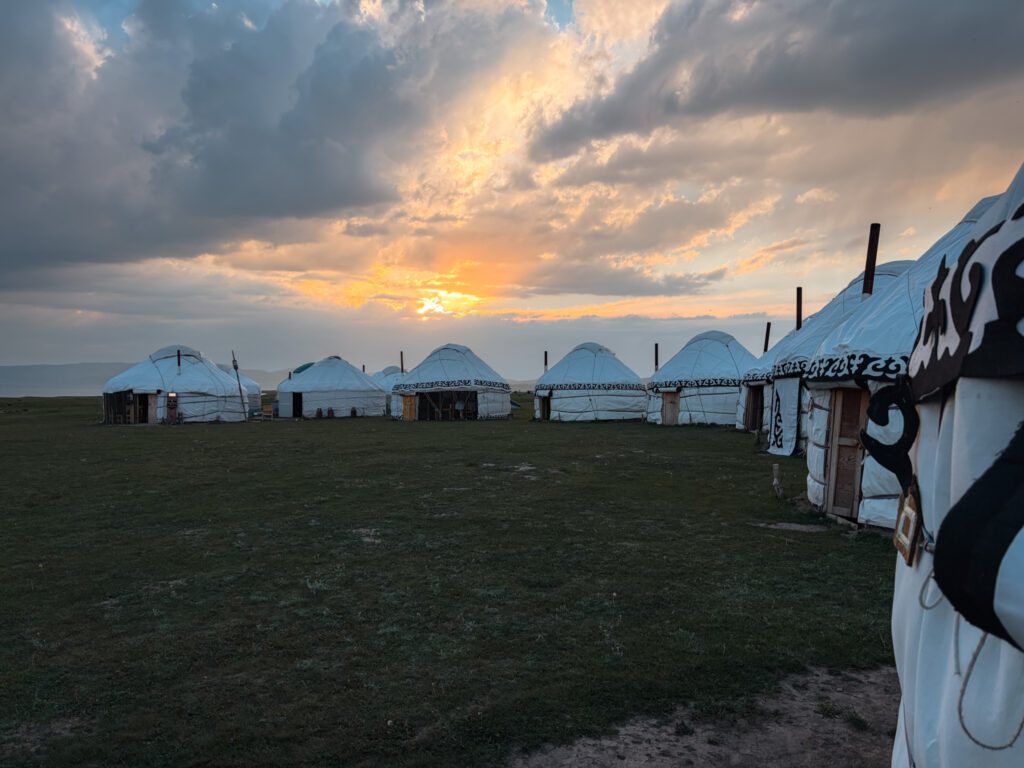
Kyrgyzstan had been on our travel list for several years before we finally made the trip. I kept seeing photos of turquoise alpine lakes, enormous mountains, horses roaming across open valleys and yurts tucked into the landscape, and it looked exactly like the kind of place we love to explore.
After traveling independently through Kyrgyzstan as a family of five, I can confidently say that it lived up to the hype.
But Kyrgyzstan is also a little different from many places we’ve traveled. Planning a trip here takes some extra work, especially if you want to travel independently, rent a car or do some of the multi-day hikes, and travel here is changing fast as roads are built and hotels go online. It’s another reason to plan a visit sooner rather than later.
We rented our own car, stayed in yurt camps, rode horses at Song Kul, drove through some questionable roads, dealt with an overheating rental car, hiked the four-day Ala Köl Trek and generally figured things out as we went. Were there things I wish I knew before the trip – Absolutely. Was Kyrgyzstan easy to navigate indeendently – definintely.
If you’re planning your first trip, this Kyrgyzstan travel guide covers the practical things you need to know before you go, including transportation, money, road conditions, cell service, food, yurt camps, hiking, weather and a few things that surprised us.
Planning your trip? Start with my 10-Day Kyrgyzstan Itinerary, which follows almost the exact route we traveled.
Kyrgyzstan at a Glance
Capital: Bishkek
Currency: Kyrgyz Som (KGS)
Languages: Kyrgyz and Russian
Best time to visit: June through September for most hiking and mountain travel – even this time of year, the roads often wash out.
Getting around: Rental car, private driver, shared taxi or marshrutka
Best for: Hiking, mountains, horseback riding, road trips, yurt stays and adventure travel
How long to spend: At least 7–10 days; two weeks is even better
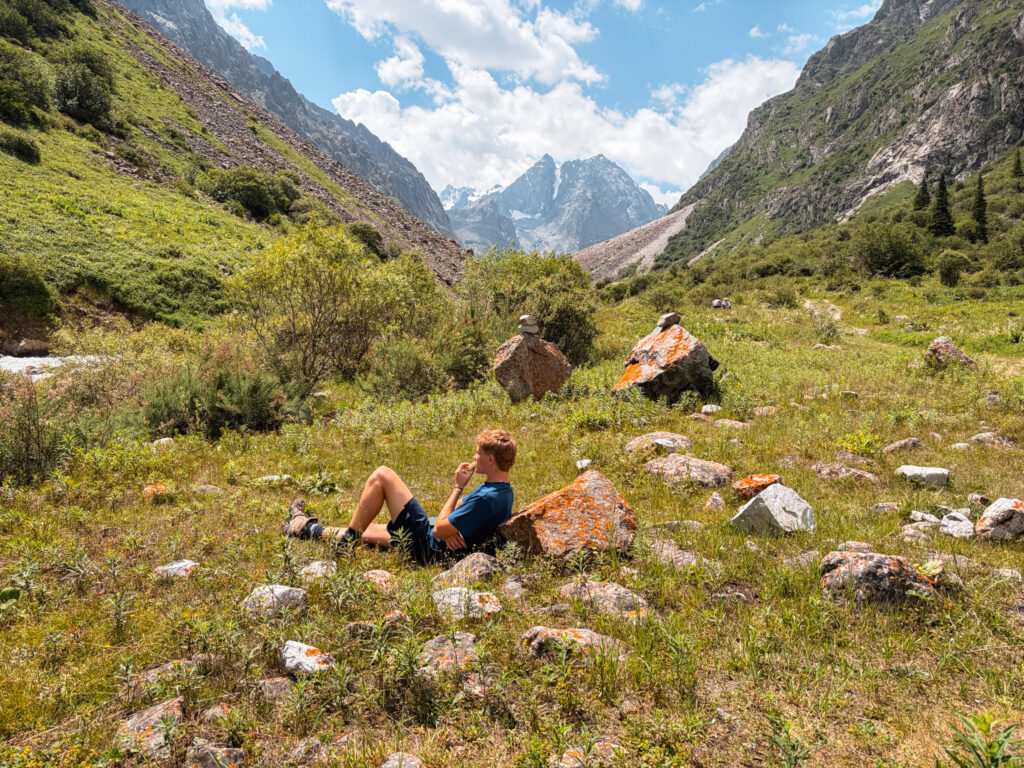
Kyrgyzstan is located in Central Asia and shares borders with Kazakhstan, Uzbekistan, Tajikistan and China. Much of the country is mountainous, and many of the places you’ll want to visit sit at surprisingly high elevations. In general it is a safe and peaceful country to visit (double check current safety updates before you visit.
That geography is part of what makes Kyrgyzstan spectacular, but it also affects everything from driving times to weather and the best time of year to visit.
Guides you might light:
- Song Kul Lake: Sleeping in a Yurt on Kyrgyzstan’s High-Altitude Plateau
- Skazka Canyon (Fairytale Canyon)
When Is the Best Time to Visit Kyrgyzstan?
For the type of trip we did, the best time to visit Kyrgyzstan is generally late June through early September. I would even argue that July and August are truly best.
This is especially important if your trip includes high-elevation destinations such as Song Kul or a trek like Ala Köl. We arrive at the very end of June and roads were clear of snow although there was a little on our hikes.
Weather can also have a big impact on roads. Just after our trip, heavy rain caused flooding and damaged roads and bridges in some of the areas we’d traveled through. The week after our trek all the bridges washed out. The weather is unpredictable and the infrastructure susceptible to damage from storms.
July and August generally give you the best chance of having accessible mountain roads and hiking trails, but they’re also the busiest months.
If hiking isn’t the main focus of your trip, you have a little more flexibility. Bishkek, Issyk Kul and lower-elevation areas can be visited outside the short summer trekking season.
My pick: For an adventure-focused first trip, I’d choose late June through August and pack for everything from hot sun to near-freezing mountain weather.
How Many Days Do You Need in Kyrgyzstan?
I recommend at least 10 days for a first trip to Kyrgyzstan. This was barely enough time to do this itinerary and there are plenty of other destinations you could visit.
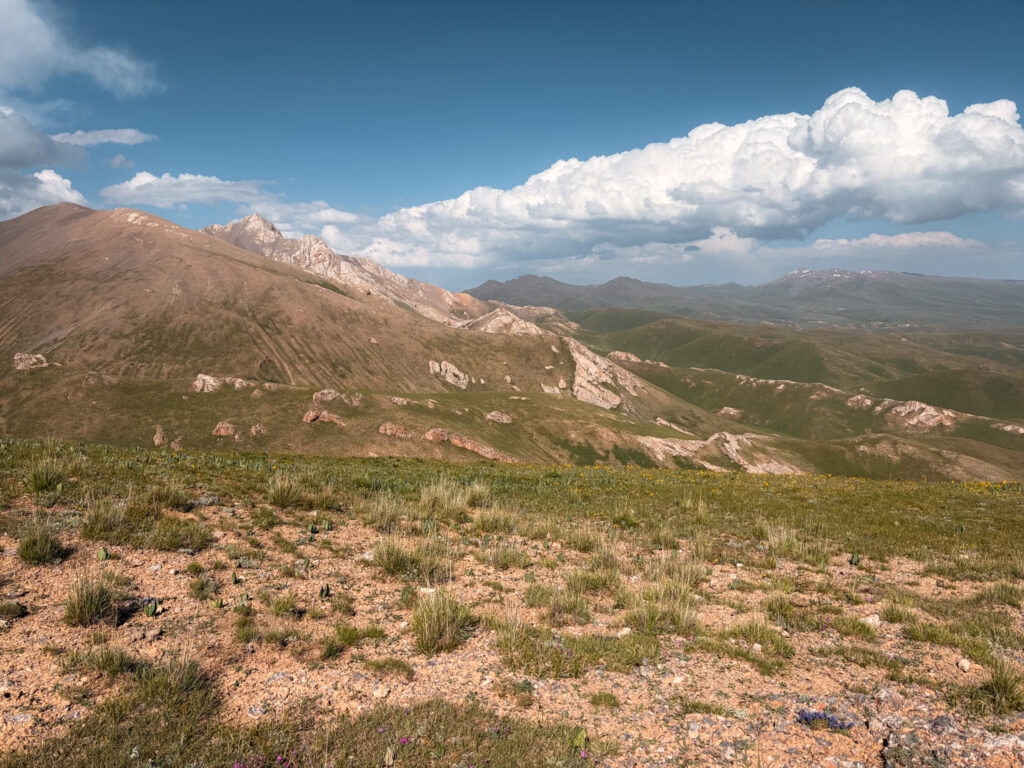
We spent 10 days traveling from Bishkek to Ala Archa, Song Kul, Issyk Kul and Karakol before completing the four-day Ala Köl Trek.
Ten days was enough to see a lot, but it didn’t feel like we’d exhausted the country at all. We could easily go back for another trip.
If you have two weeks, even better.
With additional time, I’d consider adding places like Kel-Suu, Tash Rabat or Jyrgalan Valley, or simply spending longer around Song Kul and Karakol.
If you only have a week or even less, I’d focus on one region rather than trying to see the entire country. You could easily base yourself in Bishkek and day trip from here or just choose one destination.
See all our guides to Kyrgyzstan.
Getting to Kyrgyzstan
Most international travelers will begin their trip in Bishkek, the capital of Kyrgyzstan. We flew from Istanbul to Bishkek directly.
Another option is flying into Almaty, Kazakhstan, and combining the two countries. If you do start from Alamty, make sure your car can cross the border.
Before booking your trip, always check the current entry and visa requirements for your nationality. These rules can change, so this is one detail I would verify directly with an official government or embassy source rather than relying on an older travel blog.
Getting Around Kyrgyzstan
One of my biggest questions before our trip was how difficult it would be to travel around Kyrgyzstan independently.
The answer is that you have several options, and each has a plus and minus.
Rent a Car
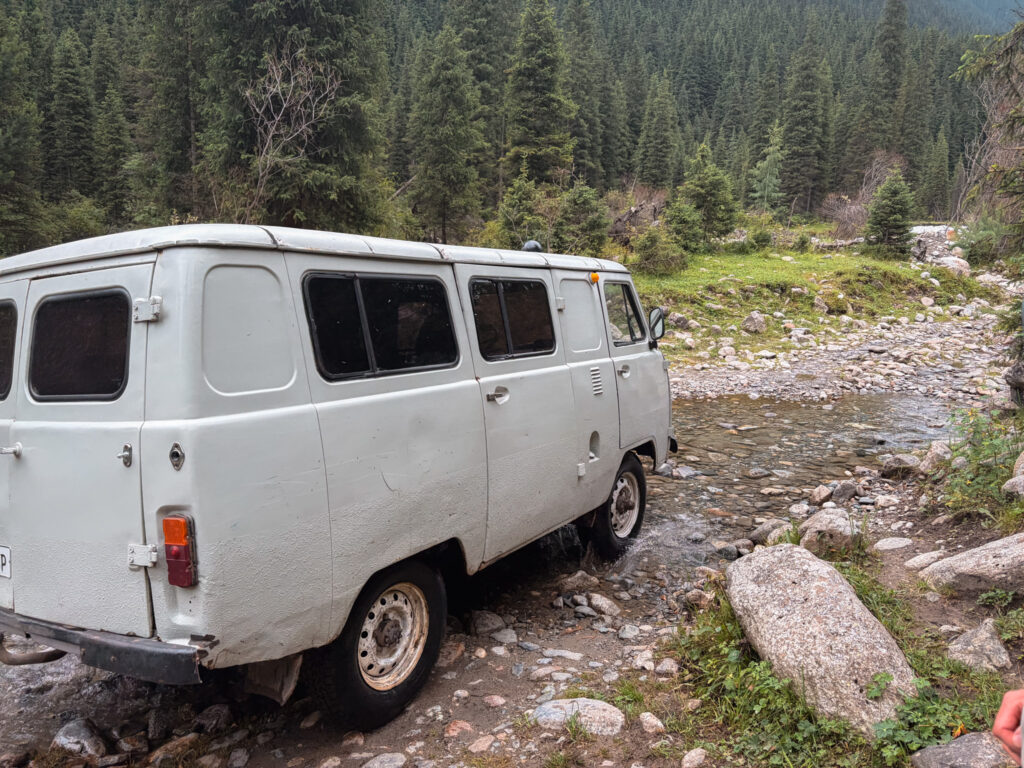
We rented a car and drove ourselves.
For us, this offered the most flexibility. We could stop for hikes, explore smaller places and adjust our schedule without coordinating transportation every day. It was also good since there were 5 of us.
It was also an adventure.
We rented our car from Iron Horse Nomads in Almaty and had repeated problems with it overheating. On the climb toward Song Kul, things got bad enough that part of our family eventually hitched a ride farther up the mountain.
After leaving Song Kul, we stopped in Kochkor and found someone who repaired the car for about $10.
The repair lasted approximately one day.
That experience probably tells you quite a lot about road-tripping in Kyrgyzstan.
I would absolutely consider renting a car again, but I would go into it knowing that vehicles may be older, roads can be rough and you need some flexibility when things don’t go exactly according to plan.
Hire a Driver
Hiring a private driver is a great alternative if you want the flexibility of independent travel without actually driving yourself.
This would probably be my recommendation for someone who isn’t comfortable dealing with rough roads or possible car trouble but also doesn’t want to join a fully organized tour.
You can still book your own hotels, yurt camps and activities and simply arrange transportation between destinations. We’ve done this in other countries and it works well. You can also join a guided tour – there are lots of great options and they are general cost effective.
Marshrutkas and Shared Taxis
You can also travel around Kyrgyzstan without either a rental car or a private driver.
Shared minibuses called marshrutkas connect many towns and cities and are inexpensive.
Shared taxis are another common option.
These are less flexible than having your own vehicle, but they’re an excellent choice for budget travelers or anyone spending more time in the major towns. This is the way most locals get around the country.
What Are the Roads Like in Kyrgyzstan?
The answer ranges from completely normal highway to I can’t believe this is the road.
Major routes around Bishkek and Issyk Kul are generally straightforward, although construction can significantly increase driving times. There was a lot of counstruction during our visit in 2026.
Mountain roads are another story.
The road to Song Kul climbs high into the mountains and can be rough depending on which route you take and recent weather conditions.
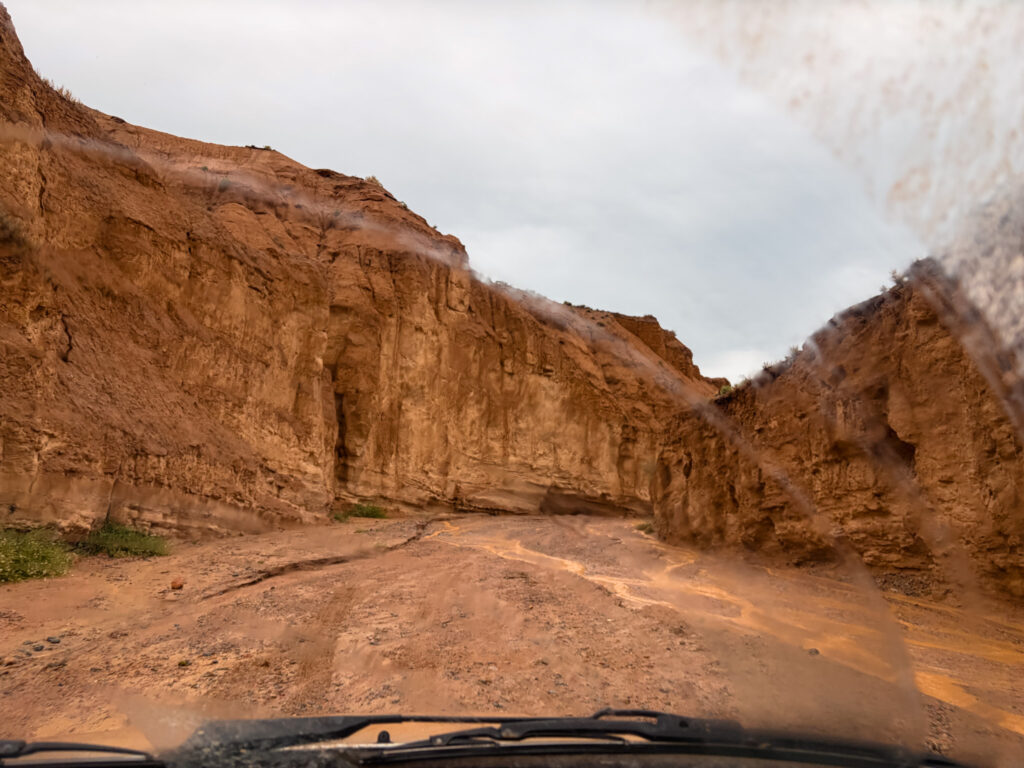
To reach our yurt camp on the southern shore of Issyk Kul, we drove directly down a wash through a canyon just after a rainstorm.
It was one of those drives where you spend quite a bit of time wondering whether you’re still on the road.
If you’re renting a car, make sure you ask specifically where you’re allowed to drive it. Some rental companies restrict vehicles from certain mountain roads, including some routes to Song Kul. You can always drive to the nearest town and get a ride if you still want to access an area and your car won’t make it.
I would also avoid planning your days based entirely on Google Maps driving estimates. Roads, construction, livestock, weather and random car problems can all make a drive take much longer than expected. Some rides were correct and sometimes the route too over twice as long.
Build some flexibility into your itinerary.
Google Maps Isn’t Always Your Best Option
This is something I wish we’d understood before arriving.
We found Yandex Maps much more useful than Google Maps in Kyrgyzstan.
I also recommend downloading Maps.me and offline maps before heading into remote areas.
Do this while you have good Wi-Fi rather than waiting until you’re standing somewhere in the mountains trying to figure out which dirt road you’re supposed to take.
Money, ATMs and Credit Cards
Kyrgyzstan uses the Kyrgyz Som (KGS).
You’ll find ATMs in the larger towns and cities, but cash becomes increasingly important once you head into rural areas. I will say that I was expecting NO ATMs in rural areas and we found more than earlier reports.
This was especially true for us at yurt camps, small restaurants, shops and activities.
We made a point of getting cash when we had the opportunity. Kochkor, for example, was an important stop for us before heading farther into the mountains.
My general rule would be:
If you’re heading somewhere remote and see a working ATM, don’t assume there will be another one where you’re going.
Cards are increasingly accepted in cities and larger businesses, but I would never travel into the mountains relying exclusively on a credit card. But just like the ATM’s more and more places were accepting credit cards.
Bring more than one card and keep enough cash to cover your accommodation, food, transportation and activities for remote portions of your trip.
Cell Service and Wi-Fi
This was one of the biggest surprises of our trip.
Cell service could be limited in remote areas, but Wi-Fi was much better than I expected – like we had better wifi in mountain yurts than we do at home.
In fact, everywhere we stayed had Wi-Fi, including remote yurt camps.
I would still download maps, reservation information and important documents ahead of time. Mountain weather, power outages and other issues can affect connectivity, and there are definitely places where you won’t have reliable service.
But we were surprised by how connected we were at the end of most days.
What Languages Are Spoken in Kyrgyzstan?
The two main languages you’ll encounter are Kyrgyz and Russian.
We found English spoken in many tourism-related businesses, especially around Bishkek and Karakol, but definitely not everywhere. A translation app is extremely useful. Download the appropriate languages for offline use before your trip.
Learning a few basic words and phrases also goes a long way.
In smaller towns and rural areas, expect more situations where nobody speaks English. Most of the time we were still able to communicate what we needed through translation apps, gestures and a little patience.
Staying in Yurt Camps
This was one of the highlights of our stay, but at the same time we enjoyed alternating this with guesthouses or hotels so we could have private bathrooms to shower and guaranteed eletricity for charging.
And don’t think of yurt camps as just accommodation. They are part of the experience.
We stayed at yurt camps in several places, including Song Kul and during our Ala Köl Trek. The level of the yurts varied a lot. Some had very rustic bathrooms (like a hole in the ground) and some had lovely flush toilets.
Meals are often included or available at the camp, and some camps can organize activities such as horseback riding. At Song Kul, our camp arranged a two-hour horseback ride for our entire family of five for under $100.
When booking a yurt camp, I’d confirm:
- Whether meals are included
- Bathroom and shower arrangements
- Bedding and blankets
- Electricity and charging
- Wi-Fi
- How payment works
- Whether they arrange horseback riding or transportation
- Exact directions for reaching the camp
That last one is especially important. A pin on a map does not necessarily mean the road getting there is obvious.
What Is the Food Like?
Food in Kyrgyzstan tends to be hearty and filling, which works pretty well after a day of hiking. We had a lot more pasta and rice than expected. Overall we liked the food but nothing (except the bread) stood out as amazing.
Common dishes include plov, a rice dish usually made with meat and vegetables; lagman, noodles often served with meat and vegetables; and manti, steamed dumplings.
Vegetarians should plan ahead a little more, especially in rural areas and at yurt camps where meals may be prepared communally.
If you have significant dietary restrictions, communicate these in advance rather than assuming you’ll be able to sort them out when you arrive. We also carried snacks with us, especially on long driving and hiking days and stopped at grocery stores for a few meals and snacks.
Hiking in Kyrgyzstan
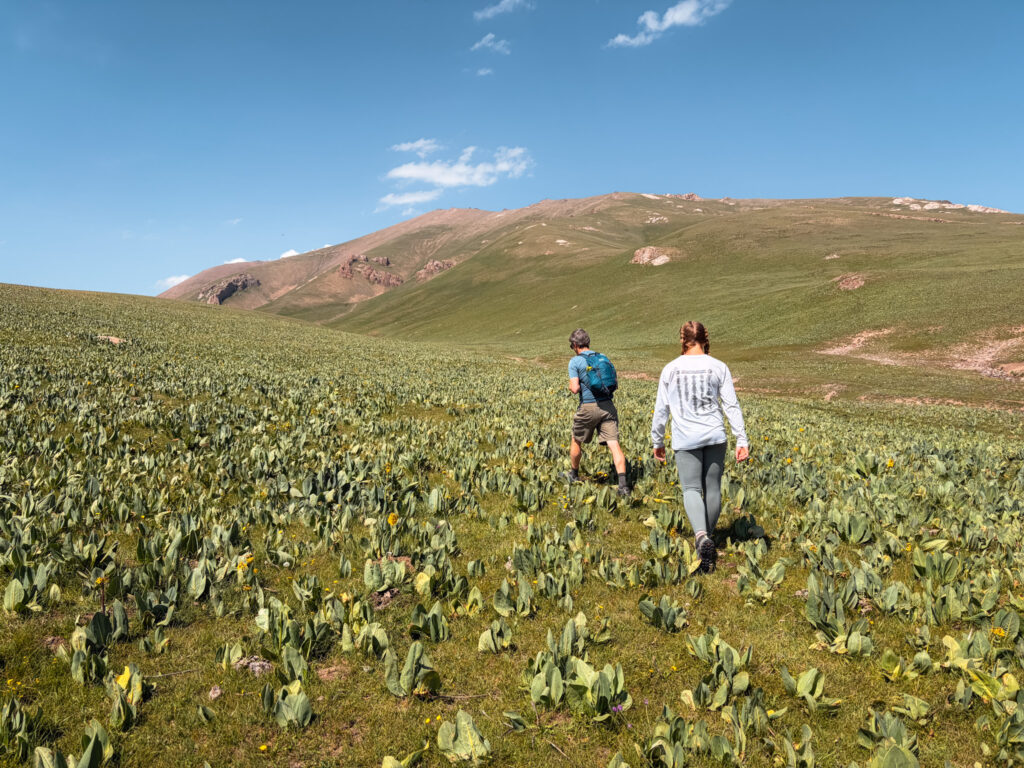
If you love hiking, Kyrgyzstan is incredible. It is honestly the best reason to come to this part of the world.
But hiking here can require a little more planning than hiking in places with heavily developed trail systems.
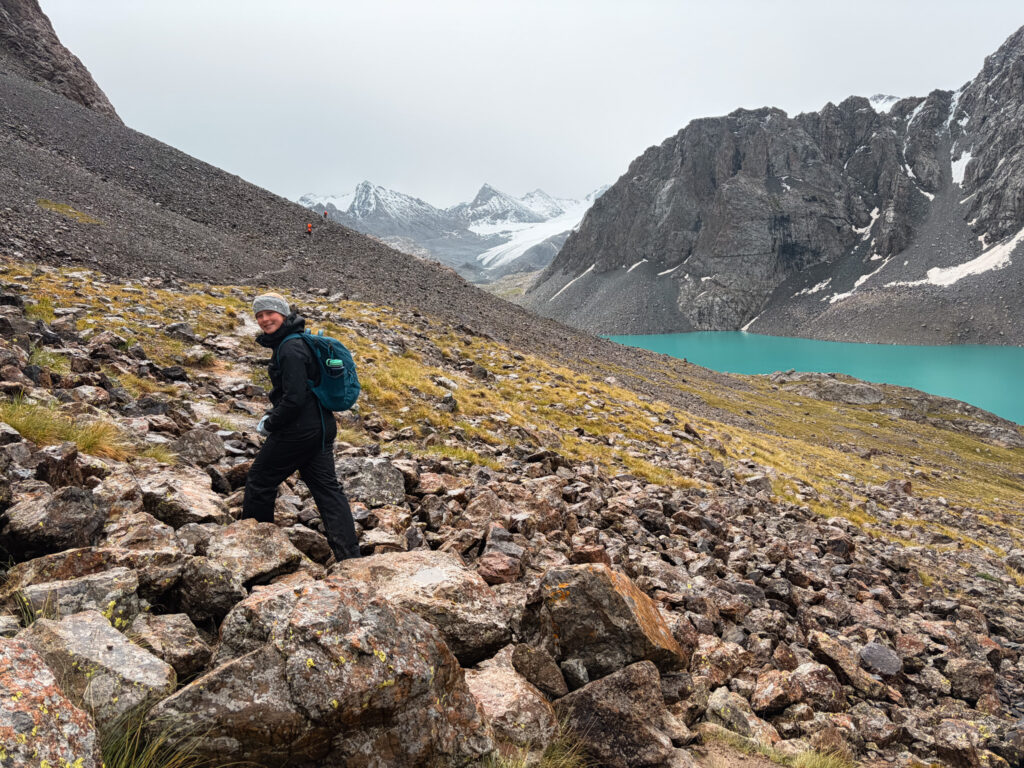
We did everything from shorter hikes at Ala Archa National Park and Konorchek Canyon to our four-day trek to Ala Köl. Places like Ala Archa are like hiking in a National Park anywhere in the world. Lots of signs, bathrooms, and food at the trailhead and lots of people. On the other hand, the 4 day trek we did was much more remote but also popular with easy to follow trails.
Download offline maps before you leave.
That combination is one of the things I loved most about hiking in Kyrgyzstan. You can spend days traveling through spectacular mountain scenery and still end the day with a hot meal and a place to sleep.
Altitude Is Worth Taking Seriously
Kyrgyzstan gets high quickly.
Song Kul sits at roughly 3,000 meters, or almost 10,000 feet, and the pass above Ala Köl reaches nearly 3,900 meters, or around 12,800 feet. We could definintely feel the altitude during our hikes.
We specifically planned our itinerary so that we spent several days at progressively higher elevations before doing the Ala Köl Trek. Finley and I had previously experienced altitude sickness while hiking in Guatemala, so this was something we were already thinking about.
Give yourself time to acclimatize, stay hydrated and remember that hiking will probably feel harder and slower than the same mileage would at home.
Weather Changes Fast
Pack for weather you don’t think you’re going to get. I can’t stress this enough! We were lucky with the weather and we still had torrential rain and cold weather.
Mountain weather can change quickly, and conditions at 12,000 feet can be completely different from what you experienced earlier in the day.
For hiking, I would bring layers, a waterproof shell, warm hat and gloves even during summer. On the other end – the temperatures in the lower elevations like Bishkek can easily get downright hot. This is a hard trip to plan for!
A lightweight puffy jacket was useful for evenings and high elevations and light clothes for lower elevations.
Sun protection is equally important. You’ll spend a lot of time at elevation with limited shade.
Should You Book Everything Ahead?
This is where planning a trip to Kyrgyzstan gets a little tricky. I really wanted to plan and book things months in advance, but that is a little harder than it sounds. When I first contacts Destination Karakol to reserve yurts for our mountain stays in April I’m pretty sure they laughed. I then tried again in early June, they told me they reserved a yurt and then we arrived and no yurt was reserved.
This can work well until it doesn’t
As more hotels and yurts come online you can reserve them through places like booking.com. Many people were booking hotels as they travelled, but in general I recommend booking about a month in advance.
Karakol is a good place to finalize trekking logistics. We found Destination Karakol helpful for local information, and there are rental shops where you can pick up trekking equipment if needed.
For activities such as horseback riding, we often found it easiest to arrange them directly through our accommodation even after arrival.
This gave us a nice balance: the major pieces of our trip were organized, but we still had room to change plans.
Is Kyrgyzstan Good for Independent Travel?
One of the biggest surprises about visiting Kyrgyzstan was how easy it was to travel independently. Before our trip, planning everything ourselves felt a little overwhelming, but once we arrived, it was much easier than we expected. We booked our own accommodations, rented a car, arranged activities, and even hiked the four-day Ala Köl trek without a guide.There were plenty of moments when we weren’t entirely sure what would happen next, but that was also part of what made the trip so memorable. You absolutely don’t need a guide or organized tour to explore Kyrgyzstan, although both are great options if you’d rather have someone else handle the transportation and logistics.
What Surprised Me Most About Kyrgyzstan
A few things were different from what I expected.
It was easier to travel independently than I expected. There is enough tourism infrastructure in the major adventure areas to organize accommodation, transportation and activities without joining a tour.
The Wi-Fi was better than expected. I wasn’t expecting to get online from remote yurt camps.
The roads were more unpredictable than expected. The main roads weren’t the problem. The mountain roads and rental car were where things got interesting.
It was incredibly affordable. From horseback riding to car repairs, many of our expenses were considerably less than we’d pay for comparable experiences elsewhere.
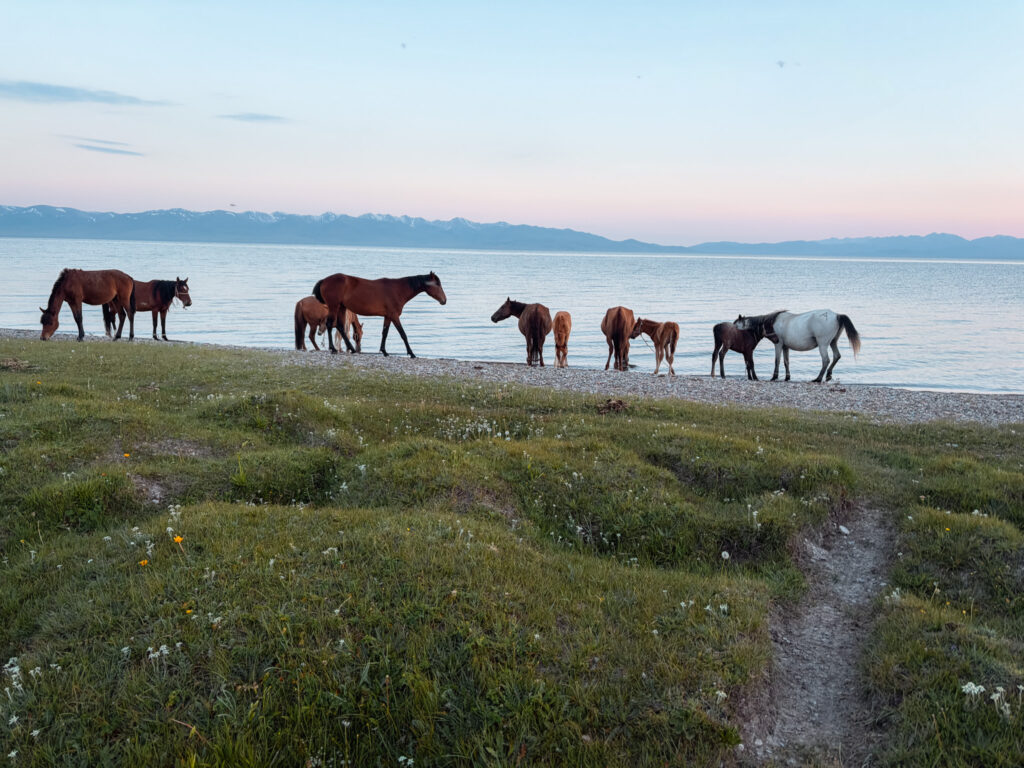
The landscapes were even better in person. Kyrgyzstan really does look like the photos: enormous open valleys, horses wandering across the landscape, alpine lakes and snow-covered mountains.
And perhaps most importantly, it still feels adventurous.
What to Pack for Kyrgyzstan
You don’t need anything particularly unusual, but the wide range of elevations means you need to pack for several different climates.
For a summer adventure trip, I recommend bringing:
- Comfortable hiking shoes or boots
- Lightweight hiking clothes
- Warm layers
- Puffy jacket
- Waterproof rain jacket
- Warm hat and lightweight gloves
- Sun hat
- Sunglasses
- Sunscreen
- Small daypack
- Reusable water bottle
- Basic first-aid supplies
- Power bank
- Offline maps
- Toilet paper or tissues
- Hand sanitizer
- Cash
- Backup credit/debit card
- Snacks for long drives and hikes
If you’re doing a multi-day trek, your exact list will depend on whether you’re camping or staying in yurt camps.
For Ala Köl, we stayed in yurts, which meant we didn’t need to carry a tent, sleeping bags, stove and several days of food. You can also rent a lot of outdoor gear in towns like Karakol.
Kyrgyzstan Travel FAQ
Is Kyrgyzstan easy to travel independently?
Yes. We traveled through Kyrgyzstan independently as a family, rented our own car, booked our accommodations and completed the Ala Köl Trek without a guide. You can also travel independently using marshrutkas, shared taxis and private drivers.
How many days should I spend in Kyrgyzstan?
Ten days is a good amount of time for a first trip, especially if you focus on Bishkek, Song Kul, Issyk Kul and Karakol. If you have the time, I recommend spending two weeks so you can travel more slowly or add another region.
Do I need a car in Kyrgyzstan?
No. Renting a car gives you flexibility, but you can travel between many popular destinations using marshrutkas, shared taxis and private drivers. Hiring drivers for specific sections can be a great compromise between renting a car and joining an organized tour.
Do I need cash in Kyrgyzstan?
Yes. ATMs and card payments are available in cities and larger towns, but you should carry Kyrgyz Som when traveling into rural areas. Yurt camps, small businesses, activities and local transportation may require cash.
Is there Wi-Fi in Kyrgyzstan?
We found Wi-Fi surprisingly widespread. Every place we stayed had Wi-Fi, including remote yurt camps, although cell service was less reliable in the mountains. Download maps and important travel information before heading into remote areas.
What is the best month to visit Kyrgyzstan?
July and August offer the most reliable access to high-elevation roads and hiking routes. Late June and early September can also be excellent, but expect colder temperatures and potentially more variable mountain conditions.
Can beginners visit Kyrgyzstan?
Yes. You don’t need to be an experienced trekker to enjoy Kyrgyzstan. There are plenty of road-trip destinations, easy hikes, horseback riding opportunities and yurt stays. If you’re uncomfortable driving or organizing transportation yourself, you can hire a private driver or join a tour for part or all of your trip.
Is Kyrgyzstan Worth Visiting?
For us, absolutely. We absolutely loved this country and definitely would come back to see the parts we missed.